Ramen
Descended from Chinese wheat noodle soups, it became a Japanese national dish in the 20th century.

Contents
Guide · Noodle soups
Broth, noodles, toppings, how to eat it: Japanese ramen and Vietnamese phở only share the bowl.
10 min read
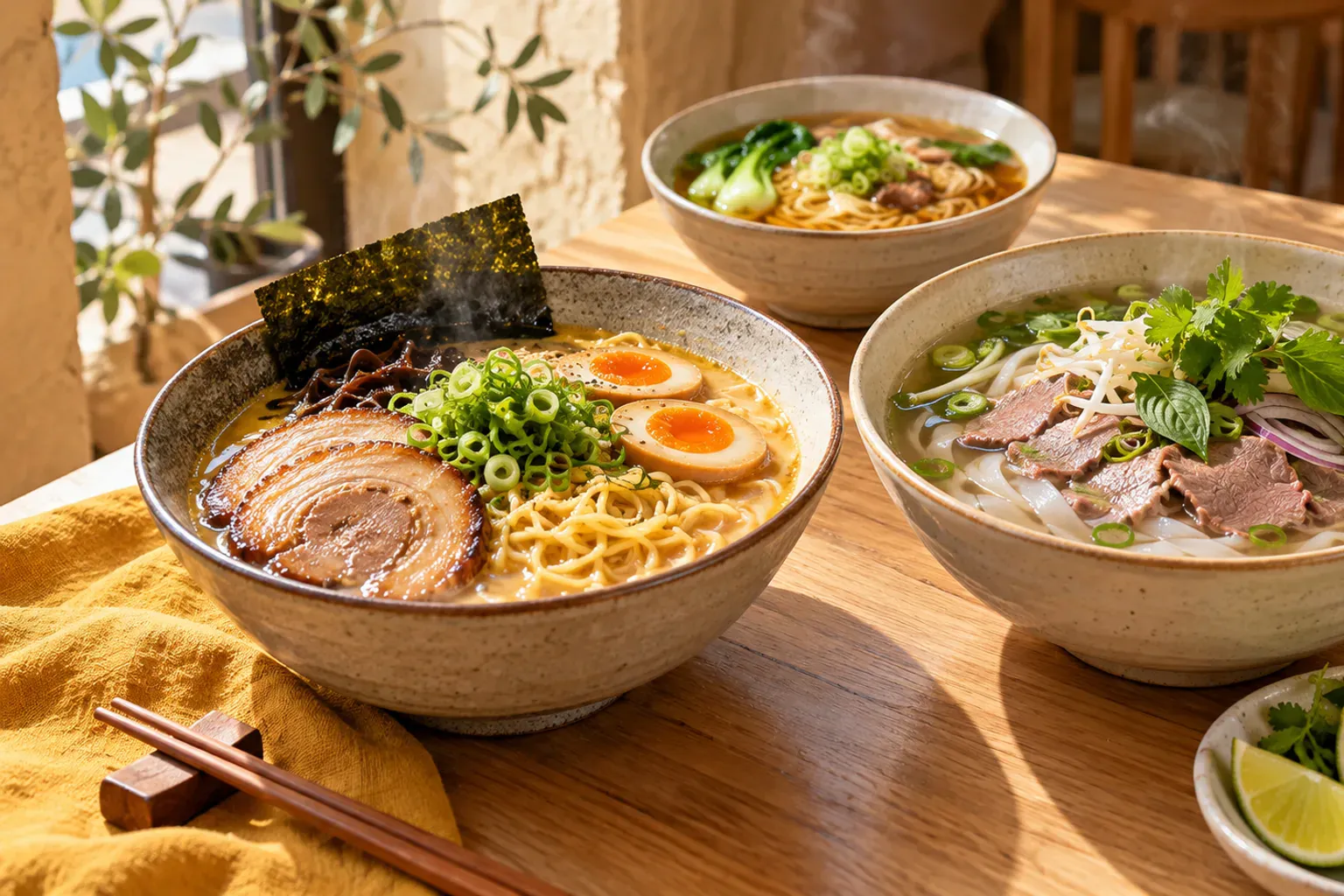
Ramen is a Japanese noodle soup of Chinese inspiration; phở was born in northern Vietnam in the early 20th century. Ramen noodles use wheat and alkaline water (kansui); phở uses flat rice noodles. Ramen broth is built from base, tare and aroma oil; phở broth is clear and scented with charred spices. Ramen arrives composed; phở is finished at the table with herbs and lime. Iwao is a ramen-ya and does not serve phở.
Starting point
Both arrive in a steaming bowl, yet they come from two countries and two ways of thinking about soup: ramen is about intensity, phở about freshness and balance.
New to ramen? Start with what is ramen?
Comparison
General trends; every region has its variations.
| Criterion | Ramen (Japan) | Phở (Vietnam) |
|---|---|---|
| Noodles | Wheat + alkaline water: yellowish, springy | Flat rice noodles: soft, translucent |
| Broth | Base + tare + aroma oil | Clear, charred spices |
| Eating | Composed in the kitchen, eaten fast | Seasoned at the table with herbs |
Yellow springy noodles = ramen; flat white rice noodles = phở.
Roots
Both belong to the wide Asian family of noodle soups.
Descended from Chinese wheat noodle soups, it became a Japanese national dish in the 20th century.
Born in northern Vietnam in the early 20th century, around beef broth and rice noodles.
The direct ancestor of ramen; for phở, influences are debated.
Ramen kept the alkaline wheat noodle but Japan built its own bowl architecture.
Read our history of ramen.
Noodles
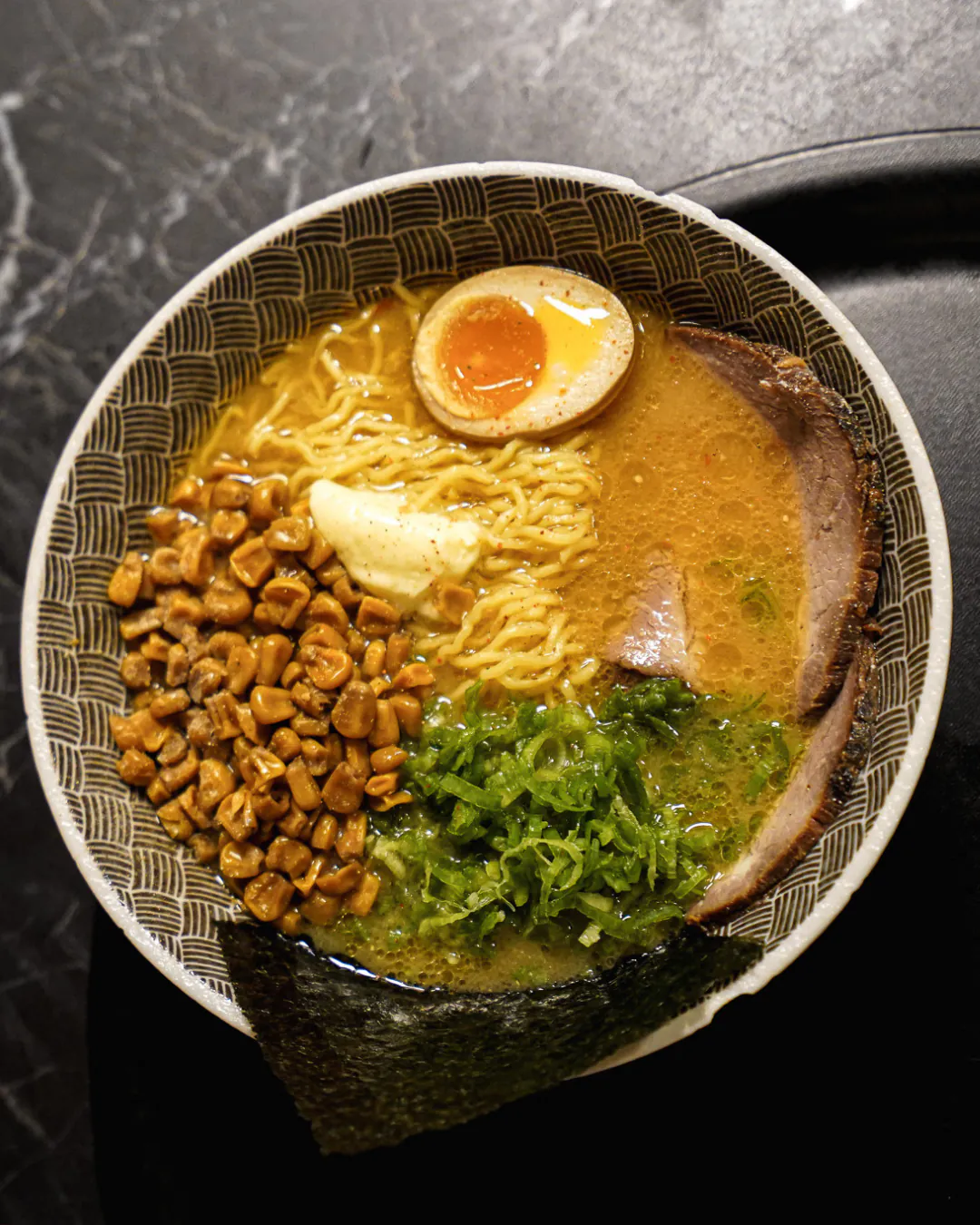
Wheat flour and kansui give a yellow tint and a springy bite.
Flat rice noodles, soft and translucent.
Ramen noodles are a lead actor; phở noodles let spices and herbs shine.
The heart
Both take hours, but they don’t aim for the same thing.
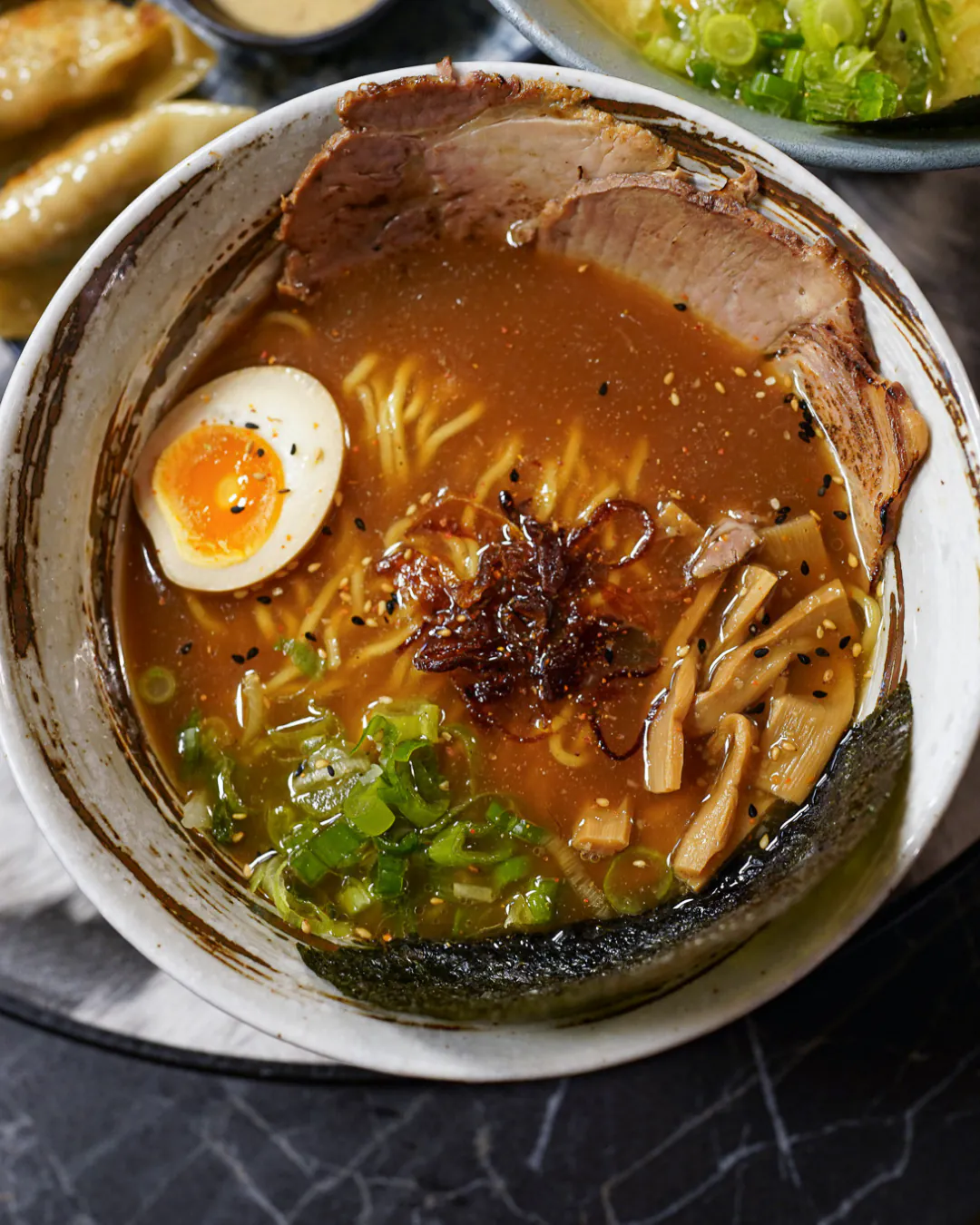
A seasoning tare sits at the bottom of the bowl, broth is poured over, oil scents the surface.
Details in homemade ramen broth: the 3 layers.
Beef or chicken broth scented with star anise, cinnamon, ginger and charred onion.
Shoyu, miso or spicy: the tare defines the bowl.
See shoyu vs miso and what is tantanmen?
Ritual
Eat it hot and fast while the noodles are firm.
Herbs, lime, bean sprouts and sauces added by each guest.
Slurping is welcome in Japan; phở customs are freer.
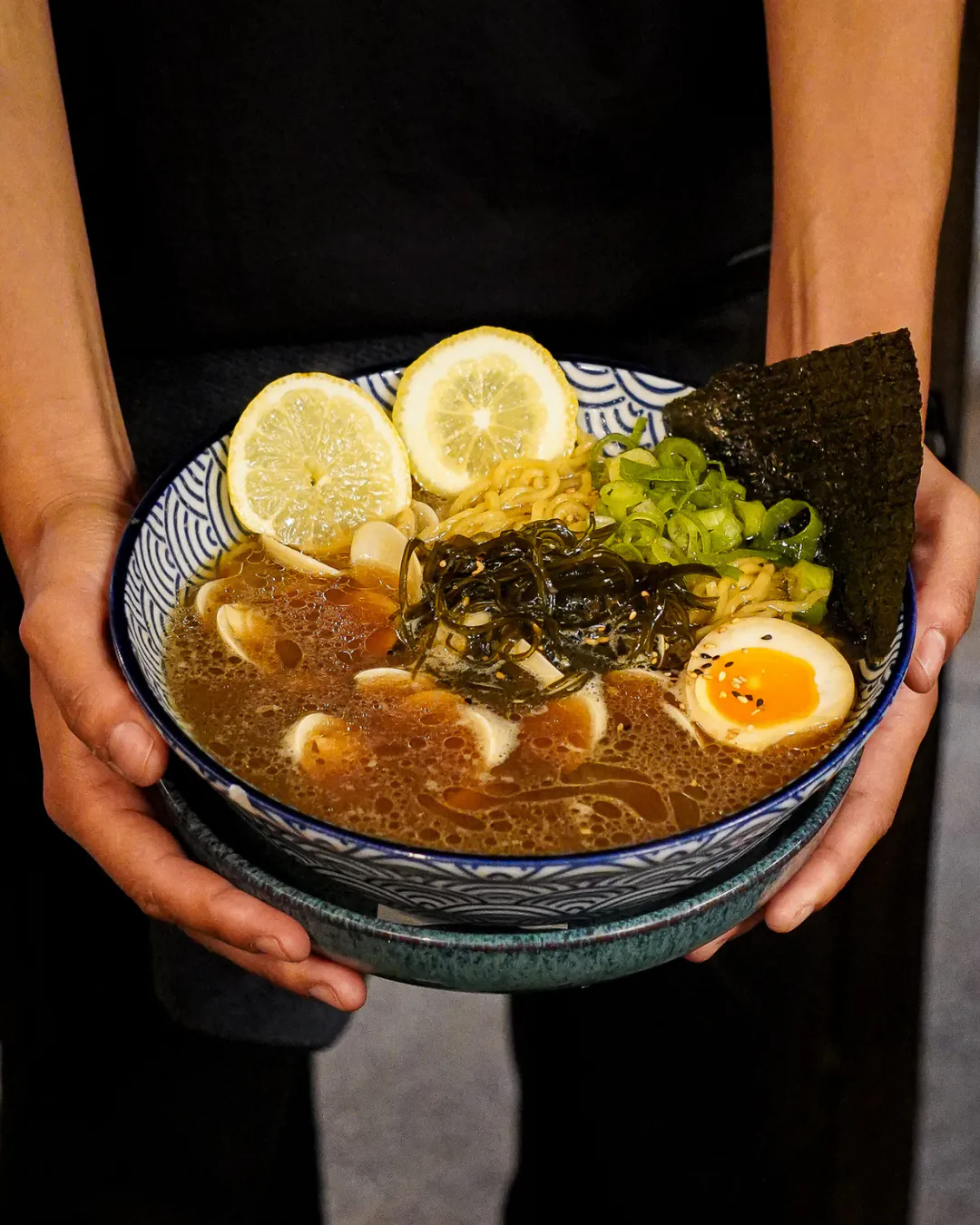
Meat-free
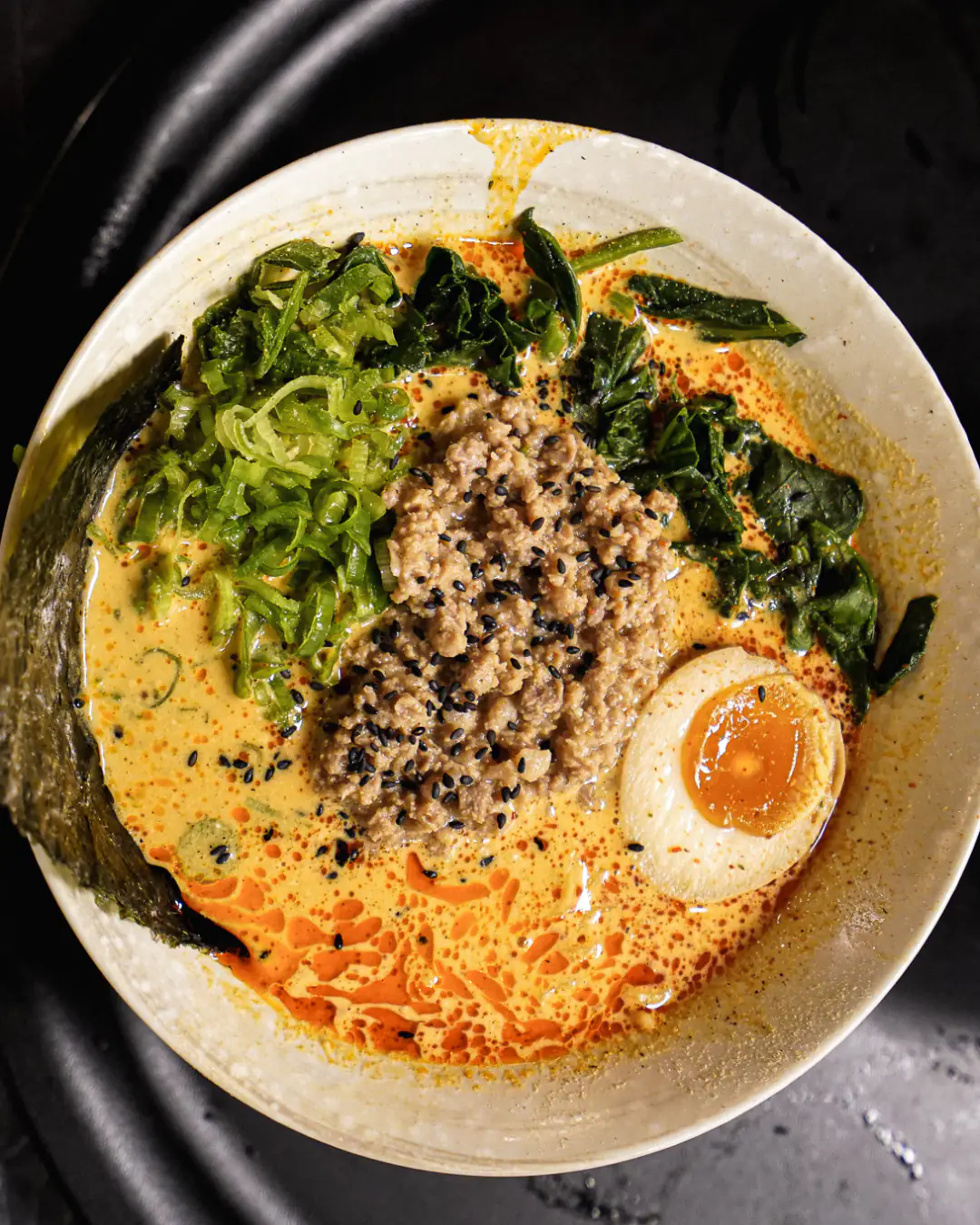
Both exist: phở chay uses vegetable broth; vegetarian ramen relies on miso, soy milk and sesame.
Read what is vegetarian ramen? — at Iwao, try the Yasai Miso.
Guide
Start from your craving.
Ramen, especially miso.
Phở, or a clear shoyu ramen.
Then read how to choose your ramen.
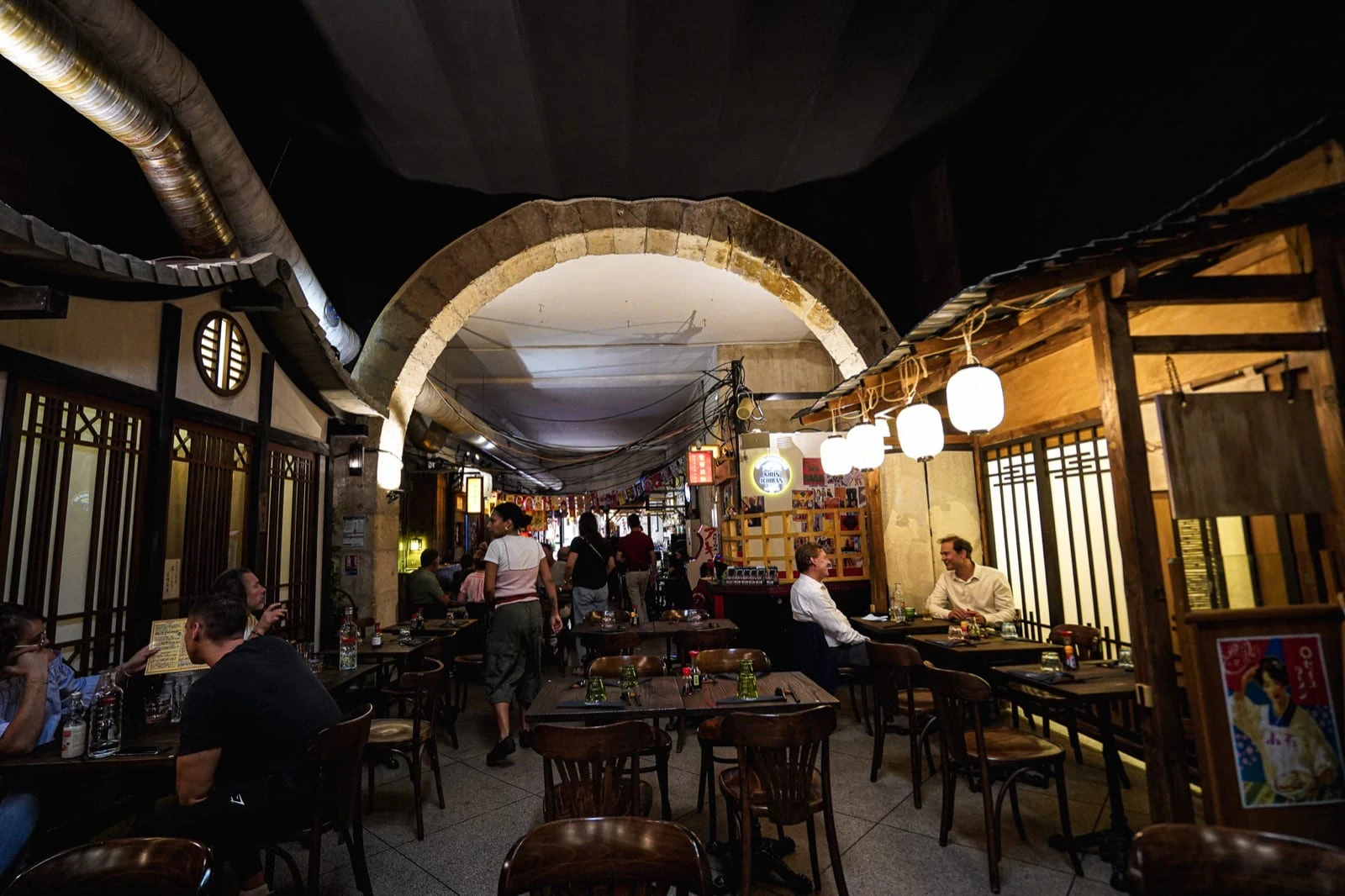
In Marseille
At Iwao, rue Sainte (13001): homemade broths, five signature ramens (Shoyu, Miso, Yasai Miso, Asari, Tantanmen) plus a kids’ ramen, in a Tokyo-alley setting. Rated 4.6/5 from 755 Google reviews. Iwao is a ramen-ya and does not serve phở.
More on our authentic ramen in Marseille and the menu.
FAQ
Explore
More guides from the Journal.
Come and try a homemade broth at Iwao, rue Sainte.