The broth
Drawn in-house for hours from bones, poultry, dried fish or vegetables. It fills the bowl and gives it body.

Contents
Guide · Japanese food
A broth, a seasoning base, wheat noodles and a few toppings: ramen comes down to four elements, yet no two bowls are quite alike. Here is what ramen really is — where it comes from, what it is made of, and why there are a thousand versions.
10 min read
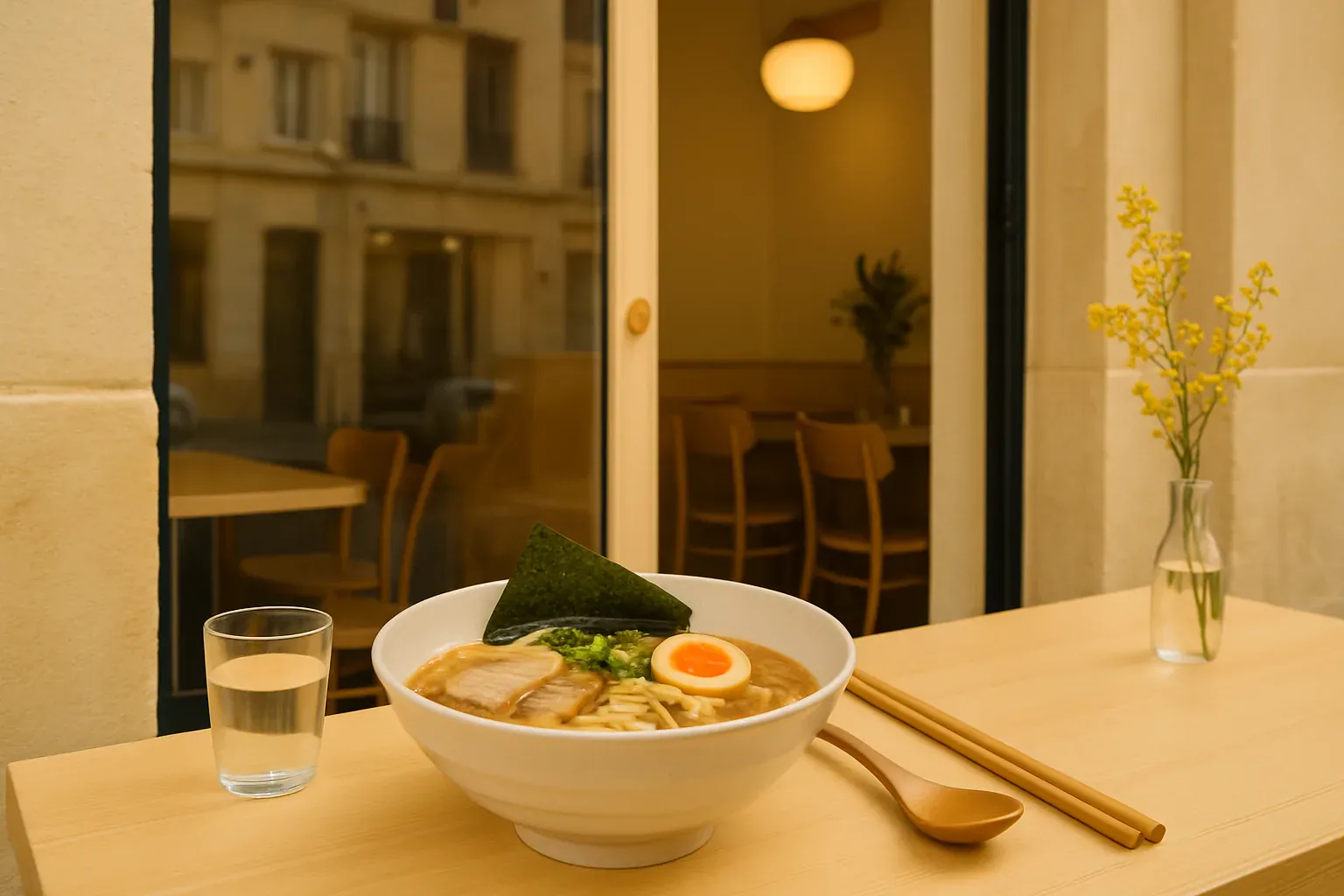
Ramen is a Japanese dish of alkaline wheat noodles served in a hot broth, seasoned by a concentrated base called tare and crowned with toppings. The word comes from Chinese lāmiàn, but the dish became fully Japanese in the 20th century. Ramen is classified by its tare — shoyu (soy), shio (salt), miso — and by its broth — clear or tonkotsu (milky pork bone). Each Japanese region has its school: miso in Sapporo, tonkotsu in Fukuoka, shoyu in Tokyo. It is neither an ordinary noodle soup nor a pasta dish, but a precise architecture where broth, tare, noodles and toppings hold together.
The definition
Ramen is a Japanese dish of noodles served in a hot, seasoned, garnished broth. It sounds like a simple noodle soup, but it is a precise assembly of four elements — a broth, a seasoning base called tare, alkaline wheat noodles, and toppings — that the cook tunes like an instrument. There is not one ramen but thousands, joined by the same architecture.
The word tells its story. "Ramen" comes from Chinese lāmiàn, hand-pulled noodles that reached Japan around 1900. Yet the dish became deeply Japanese, and now stands with sushi as a face of the country’s cuisine. To understand ramen is to see that it is neither its noodles nor its broth alone, but the way they hold together.
The composition
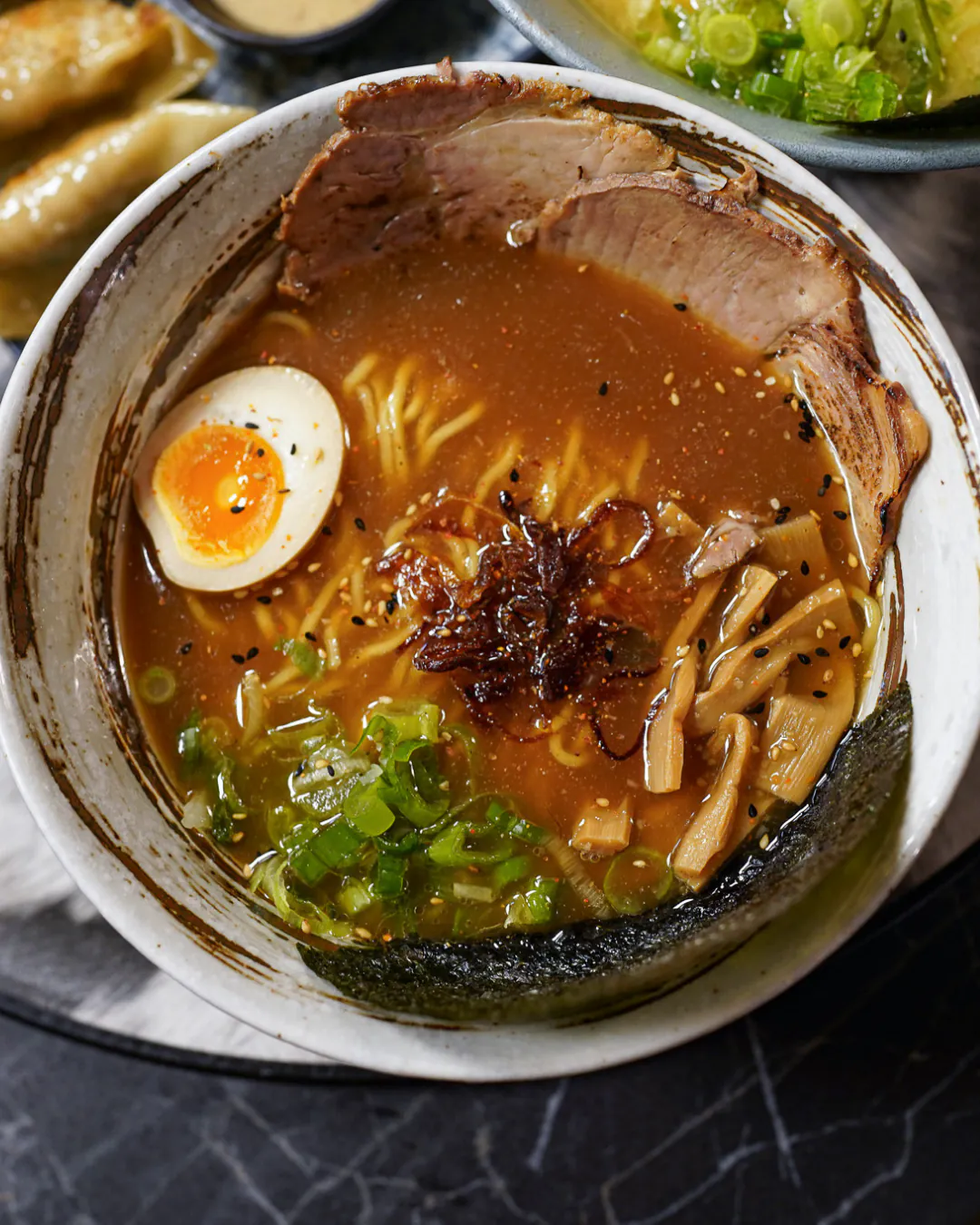
A bowl is always built on the same four layers: the tare at the bottom, the hot broth that wakes it, the noodles laid on top, and the toppings placed one by one. Change any one and you get a different ramen — that combinatorial logic explains the endless variety.
None of these layers is decorative. The tare sets the taste, the broth carries heat and aroma, the noodles give texture, the toppings add contrast. A good ramen is a balance of these four voices. Here is what each one does.
Drawn in-house for hours from bones, poultry, dried fish or vegetables. It fills the bowl and gives it body.
The concentrated seasoning at the bottom — soy, salt or miso. Invisible, but it signs the flavour and names the ramen.
Alkaline wheat noodles, yellow and springy thanks to kansui. Thin or thick, straight or wavy, matched to the broth.
Chashu, marinated egg, bamboo shoots, nori, spring onion, corn. Each is a contrast, not a filler.
The heart
If one element mattered most, it would be the broth. Pork or chicken bones, dried fish, kombu or vegetables are simmered for hours. There are clear broths (chintan) and milky ones (paitan) — tonkotsu, from pork bones, being the most famous.
Temperature matters as much as the recipe. Ramen broth is served very hot to keep the noodles firm and lift the aroma, which is why the meal is quick. At Iwao the broths are drawn in-house, and everything else is built around them.
The seasoning
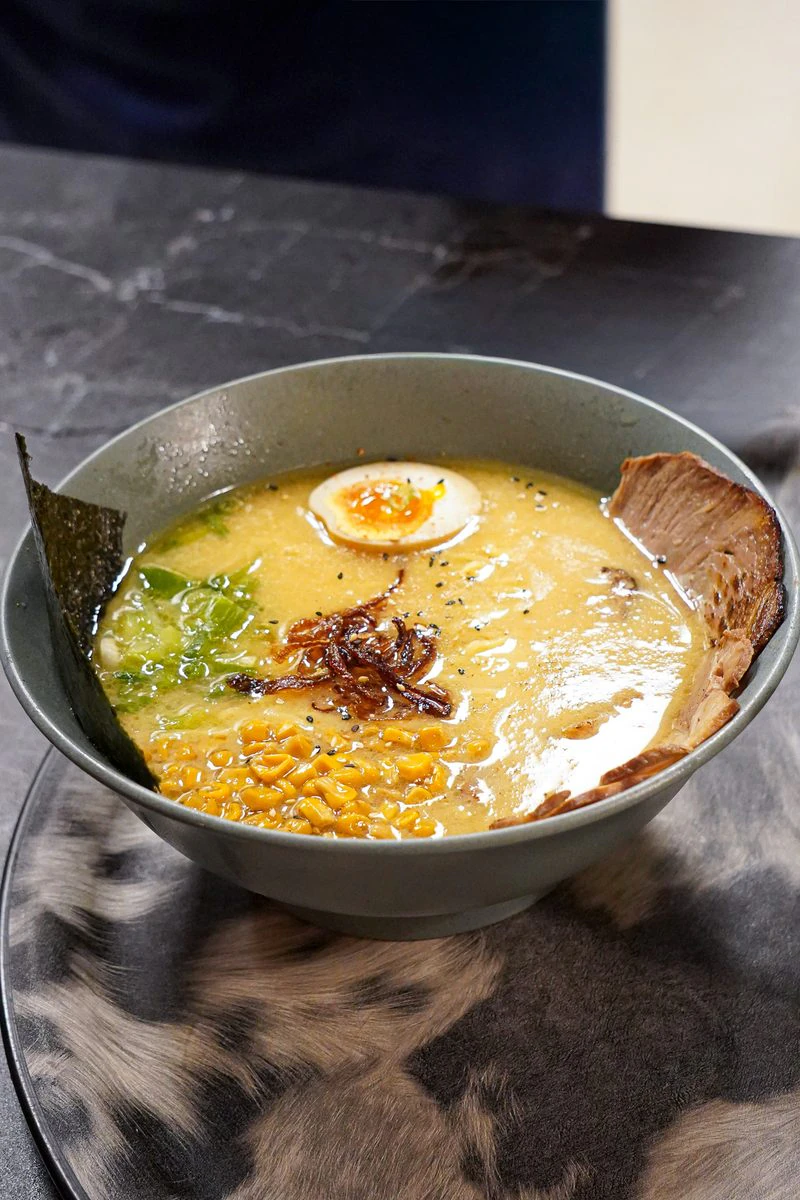
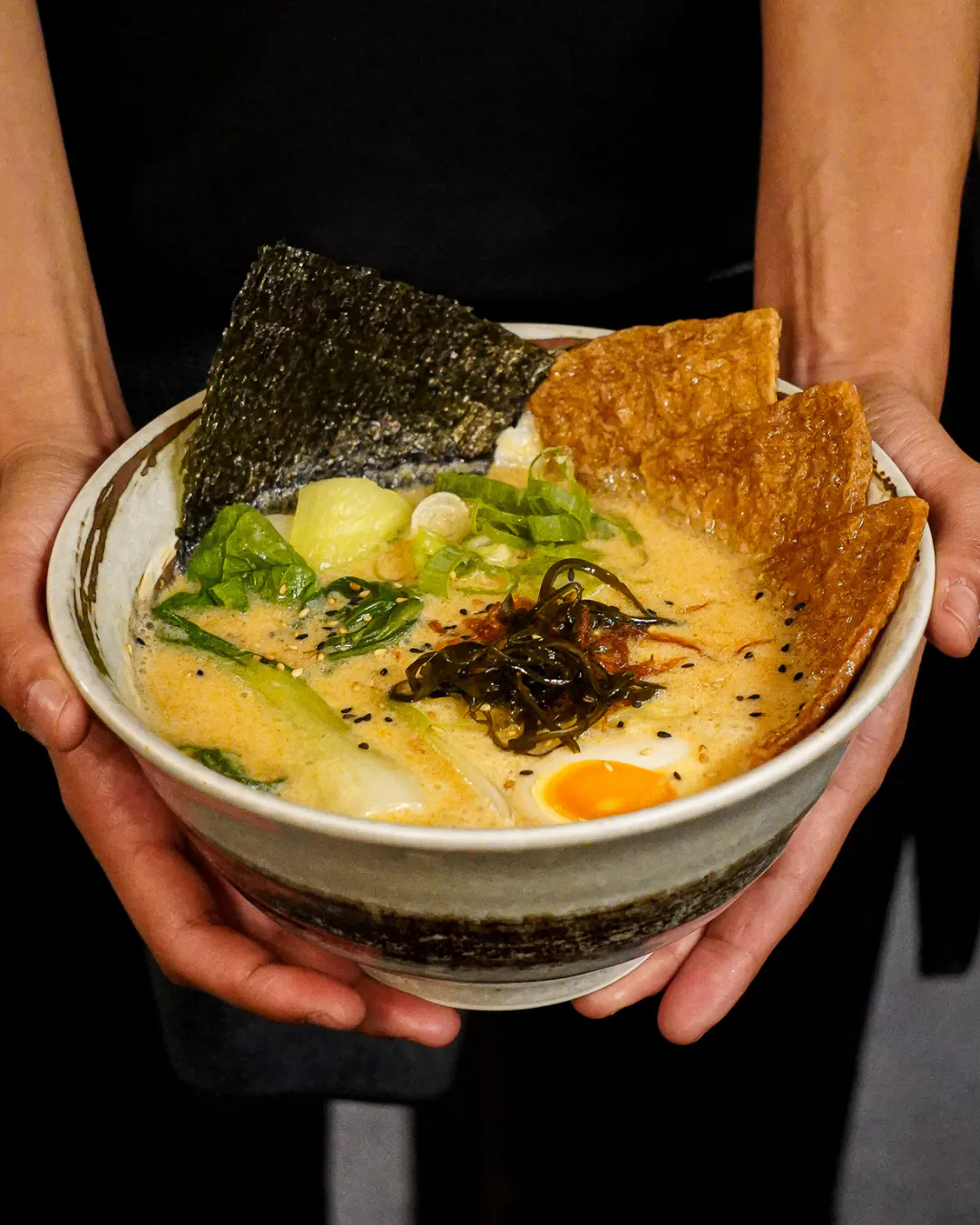
The tare is the quietest yet most decisive element: a concentrated seasoning placed at the bottom before the broth. It brings salt, depth, umami — and above all its name. Soy tare makes a shoyu ramen; salt tare, a shio; miso tare, a miso. The same broth can become three dishes.
You never see the tare, but you taste it in every sip. It is each house’s secret signature, guarded closely. To understand the tare is to understand why two identical-looking bowls never taste the same.
The texture
What sets a ramen noodle apart is one ingredient: kansui, an alkaline water. It makes the noodle springy, yellow and firm to the bite. Without kansui, it is another soup. Formats vary — thin and straight for rich southern broths, thicker and wavy for northern miso.
Another myth to clear up: home ramen has nothing to do with instant noodles of the same name. Fresh noodles are served al dente and keep cooking in the broth, hence the hurry to eat. Their thickness and cut are part of the flavour.
Wheat, water, salt and kansui. Thin or thick, straight or wavy, chosen to catch the broth that carries it.
The alkaline water that makes a ramen noodle: spring, colour, bite. The line between ramen and plain soup.
The plating
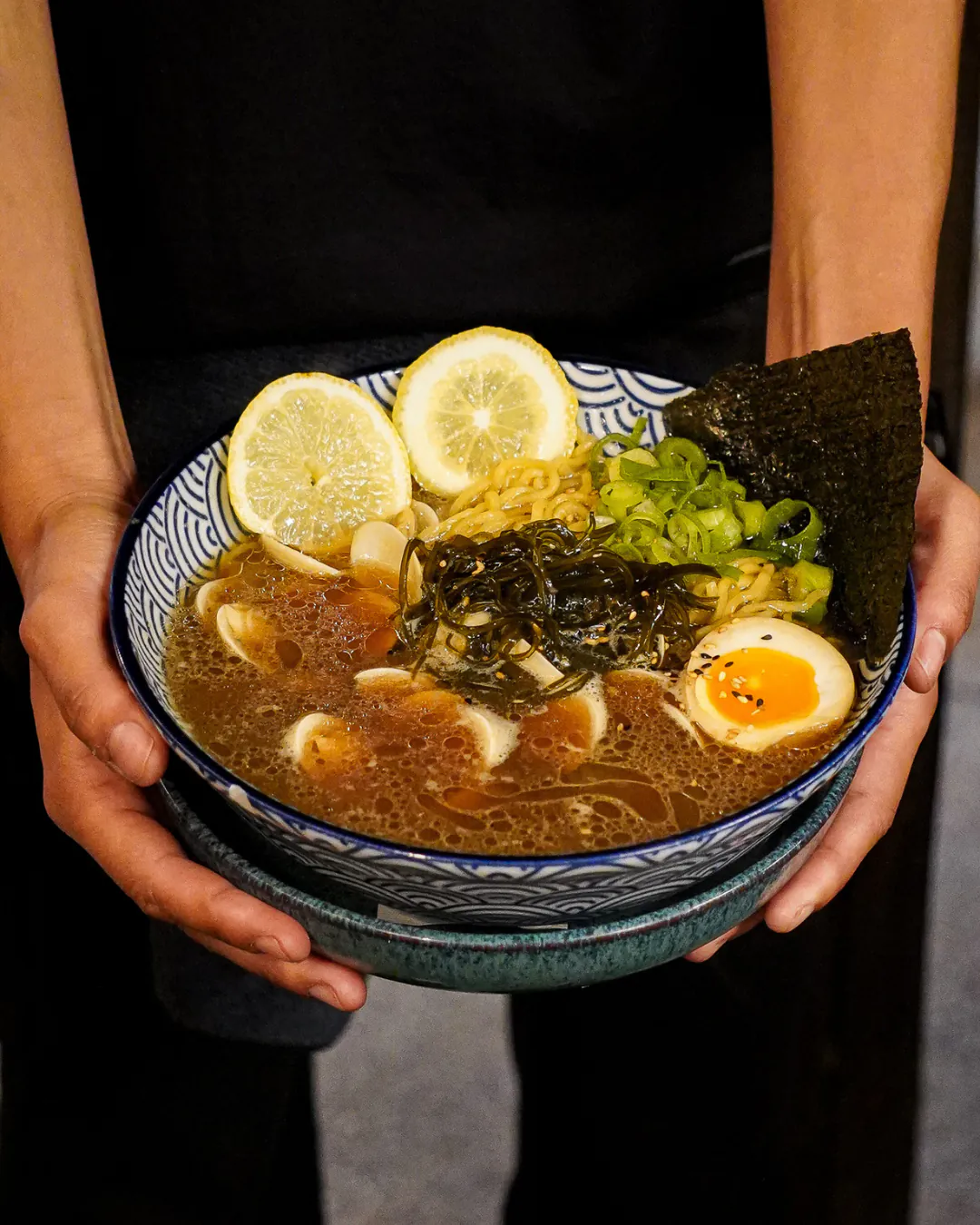
The toppings close the composition and give it a face. The classics: chashu (braised pork), ajitama (marinated egg), menma (fermented bamboo shoots), nori, spring onion, sometimes corn, butter or narutomaki. Each is a precise contrast against the broth, never filler.
Toppings also map the bowl’s geography: corn and butter in Sapporo, clams in marine ramen. They are chosen with the broth and tare, never at random. A well-built bowl is a dialogue between the liquid base and what floats on it.
The history
In Tokyo, a Chinese-style noodle soup adapted to Japanese taste: the first great popularisation.
Momofuku Ando invents instant ramen and spreads the name "ramen" across the planet.
The ramen-ya becomes an urban institution, from Japan to the world’s cities, Marseille included.
Ramen is a recent dish for Japan. It was born of the late-19th-century meeting between Chinese cooks in ports like Yokohama and Japanese taste. The Rairaiken restaurant, opened in Tokyo in 1910, is often credited with the first great popularisation. The dish was then called shina soba, "Chinese noodles".
The post-war years made it a national phenomenon. American wheat flour was plentiful, street stalls multiplied, and in 1958 Momofuku Ando’s instant noodle carried the name "ramen" around the world. A true cult followed — famous shops, queues, regional schools and, in the 2000s, a global spread that reached Marseille.
The geography
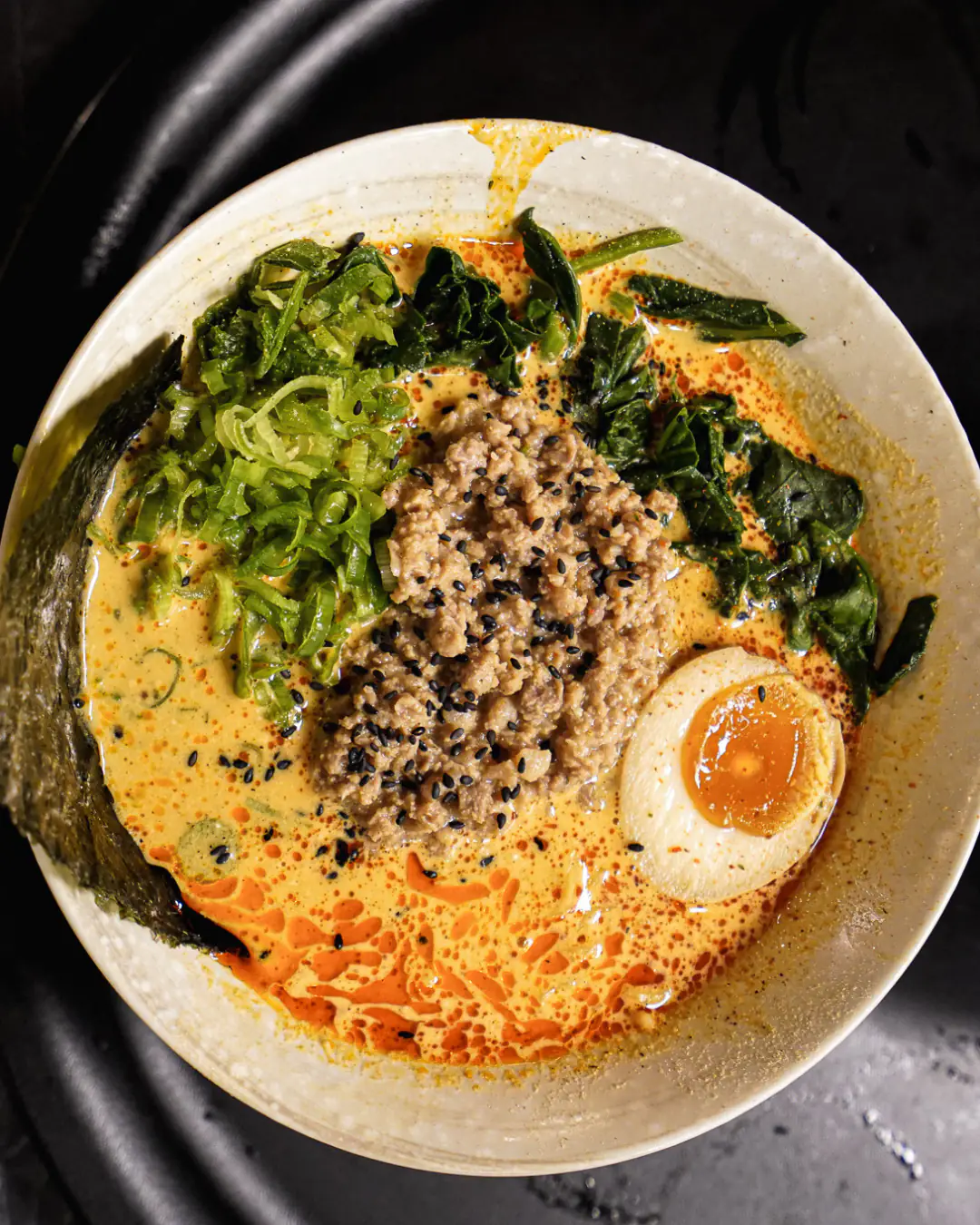
There is not one Japanese ramen but dozens of regional traditions. Cold Sapporo invented miso ramen, dense and warming, often topped with corn and butter. Southern Fukuoka is the capital of tonkotsu, the milky pork-bone broth with thin noodles and the kaedama refill. Tokyo keeps to a clear, balanced shoyu.
Other cities have their signature: the delicate shio of Hakodate, the flat noodles of Kitakata, the little-fish broth of Onomichi, or spicy tantanmen-inspired bowls. Travelling Japan means tasting a different bowl at every station — and that diversity is at the heart of what ramen is.
The culture
Ramen spills well beyond the bowl. It is a character in Japanese pop culture: manga and anime heroes devour steaming bowls, the film Tampopo (1985) turned it into a quest, and the ramen-ya — narrow counter, ticket machine, rows of bowls — is a set in itself. Eating ramen is a social ritual as much as a meal.
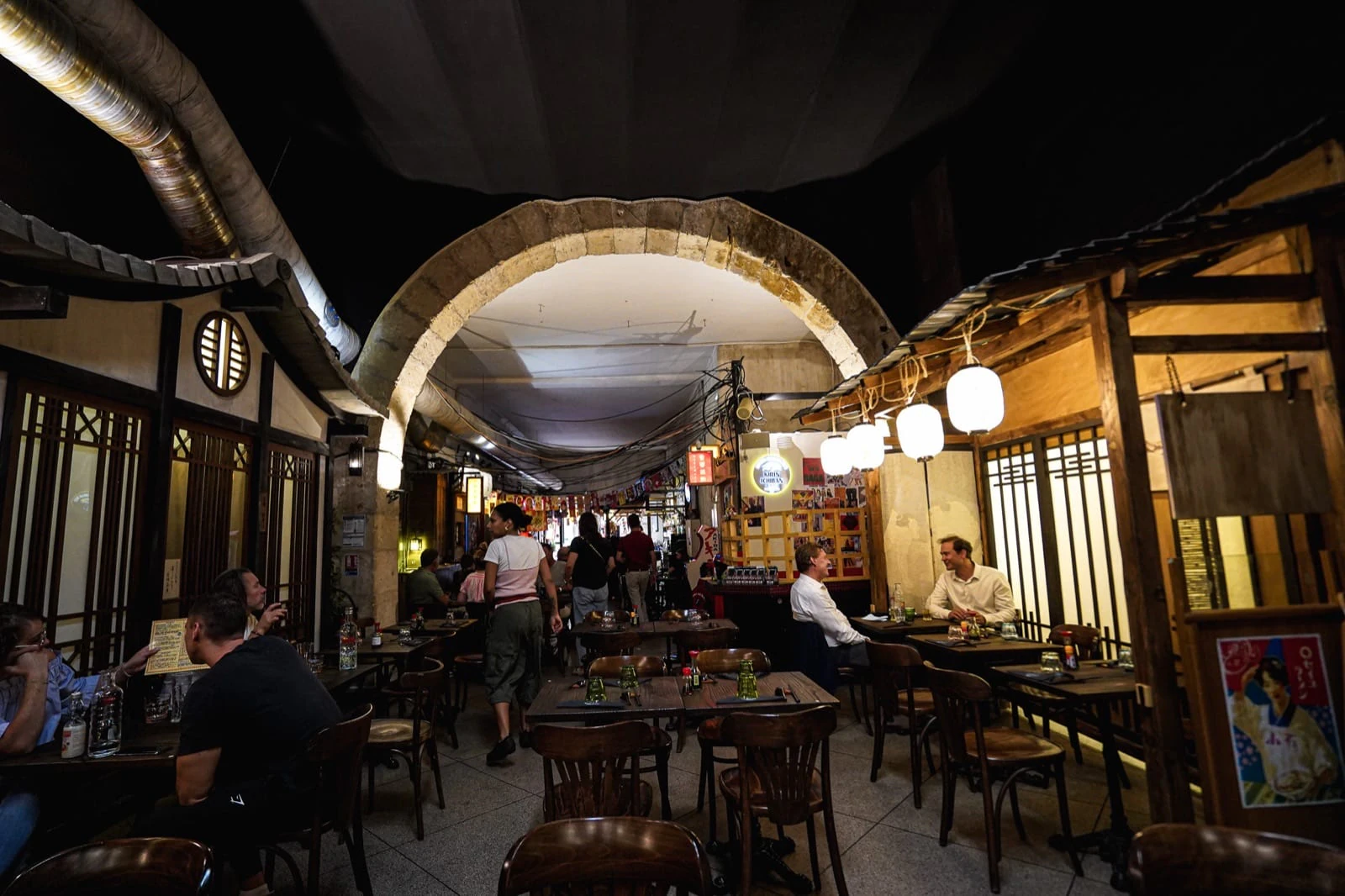
That imagination is what you find at Iwao: the Tokyo-alley décor, the lanterns, the mangas within reach, the nods to arcade cabinets. Ramen there is not just a dish but a doorway into a whole culture — the bustling alleys and nights of Tokyo, transposed to rue Sainte.
The confusions
Ramen is often confused with other Japanese noodle dishes, yet everything sets them apart — the noodle, the broth, the way the bowl is composed. Ramen is not udon, not soba, and certainly not Italian pasta: it has its own grammar.
Keeping these distinctions in mind helps grasp what ramen really is — a category of its own, defined by kansui noodles, a tare-seasoned broth and layered plating. Here are the three most common confusions.
Udon is a thick white wheat noodle, no kansui, in a clear dashi broth. Softer, thicker, without ramen’s bite.
Soba is a grey buckwheat noodle, often served cold. Nothing like ramen’s yellow, alkaline wheat noodle.
Despite the noodles, ramen is not pasta: it is a composed soup where the broth matters as much as what it carries.
The great families
The simplest way to navigate ramen is to classify it by tare and broth. Four great families recur everywhere, in Japan and in Marseille. They overlap — a tonkotsu broth can carry a shoyu tare — but they give a first compass for choosing a bowl.
For a first ramen, a clear shoyu or a round miso tells the story well. Thrill-seekers head for the rich, fatty tonkotsu or the spicy versions. Here are the four families to know.
Soy-sauce tare: clear, saline, precise. The classic Tokyo ramen, balanced and legible.
Salt tare: the most delicate and transparent. It leaves all the room to the broth and toppings.
Miso tare: round, dense, warming. Born in Sapporo, often with corn, butter and vegetables.
Milky pork-bone broth, long-simmered. Rich and fatty, the emblem of Fukuoka and its thin noodles.
At our place
At Iwao, 27 rue Sainte in Marseille, ramen is taken seriously: house broths, worked tare, noodles chosen for each bowl, toppings plated to order. The kitchen is open, so you watch the bowl leave for your table the second it is ready — theory turned concrete.
If it is your first ramen, say so: the team will point you to a suitable broth and explain what is in the bowl. Understanding ramen is one thing; tasting one, plated before you, in a Tokyo-alley décor, is another.
FAQ
Explore
Iwao's ramen from other angles, and the rest of the house.
This article is part of the house notebook, where we write about ramen, sake, table etiquette and Japanese pop culture, one topic at a time. Find every article in our Japanese food blog, and read them between two bowls.

Stage clear — table booked
The best way to understand a ramen is still to taste one, piping hot, plated in front of you. Book your table at Iwao and watch these four elements come to life.
Or by phone: +33 4 91 54 08 27
