Shoyu
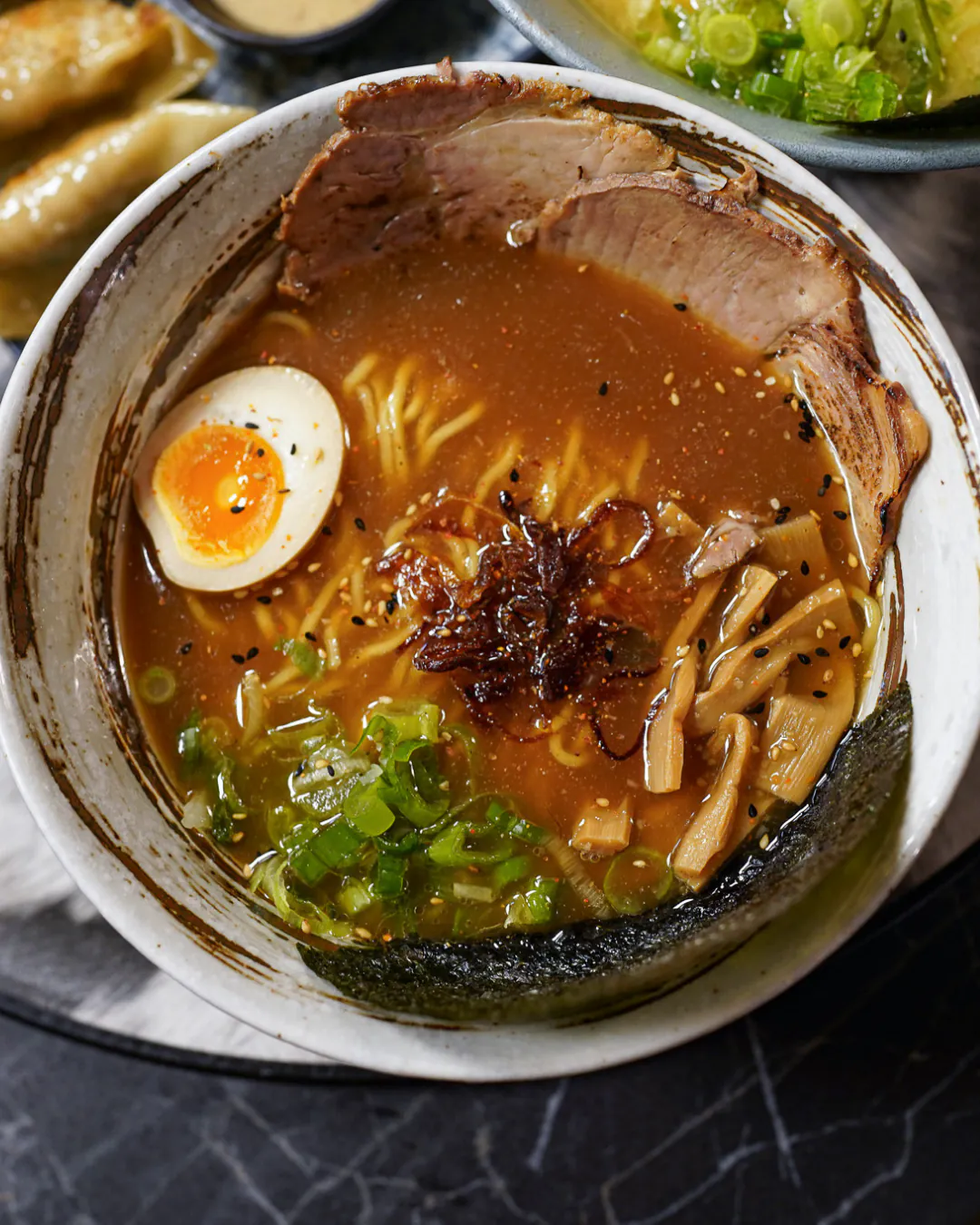
A soy-sauce base, clear and saline. The most precise broth: plenty of spoon, few condiments. Ideal for a first ramen.

Contents
Craft · Ramen-ya
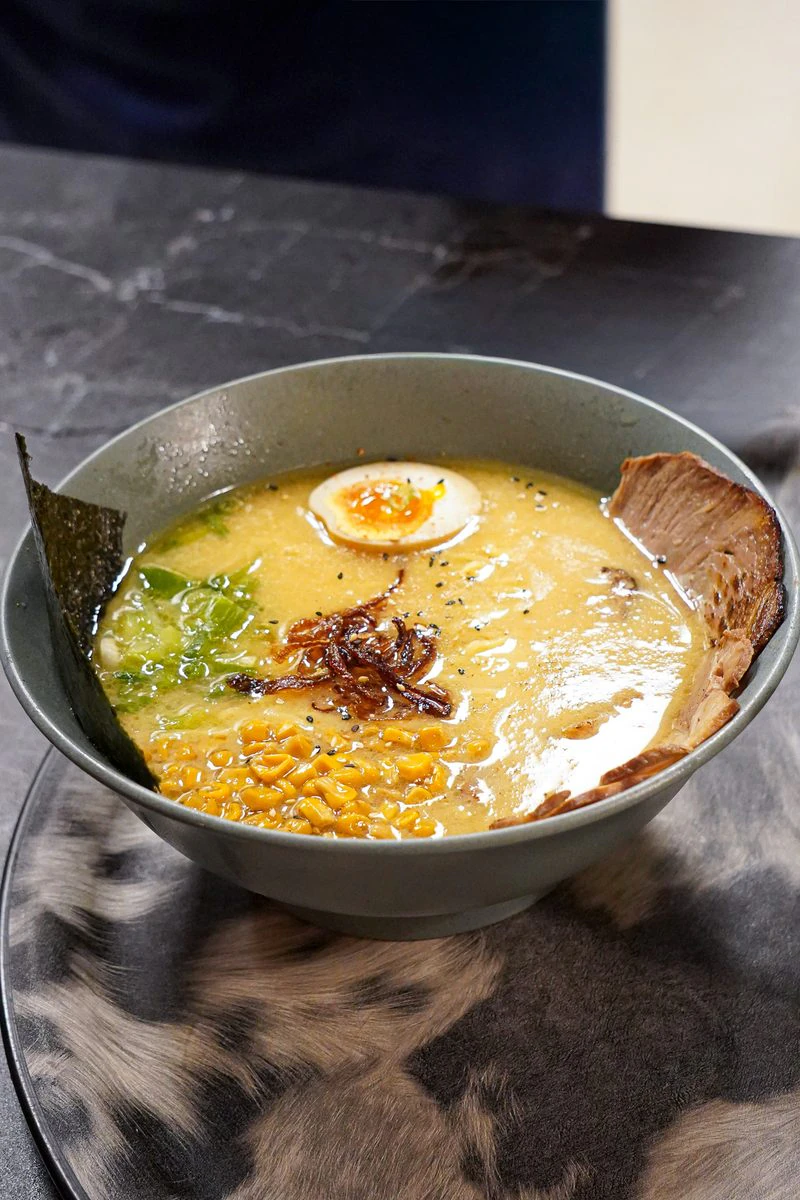
A ramen always begins with its broth. At Iwao, we draw it ourselves, every day, on rue Sainte in Marseille: hours of slow simmering before it reaches the bowl, piping hot, beneath the noodles. Here is how this heart of the dish is made, and what sets it apart.
The heart of the bowl
In a ramen-ya, the broth is not a side: it is the dish. Everything else — noodles, toppings, seasoning — falls into place around it. A failed broth cannot be fixed at the table, and a good one needs almost nothing. That is why we draw it in-house at Iwao, from bones, poultry or vegetables depending on the recipe, and let it simmer as long as it takes to stand on its own.
At the bottom of the bowl, before the broth, sits the tare: a concentrated seasoning base — soy, miso or salt — that signs the flavour without ever showing. The broth wakes it up, the noodles rest on top, the toppings close the composition. Each layer has its place and its role. To understand the broth is to understand why you taste the soup first, with the spoon, before touching the noodles.
The bases
One craft, different temperaments. Each base is a way of approaching the bowl — from the clearest to the most enveloping.
A soy-sauce base, clear and saline. The most precise broth: plenty of spoon, few condiments. Ideal for a first ramen.
Round, dense, gently sweet. A broth that wraps around you — alternate often with vegetables and spring onion to keep the palate awake.
Pork bones simmered long into a milky, rich broth. The most generous: powerful and comforting, it looks for breathing space in fresh toppings.
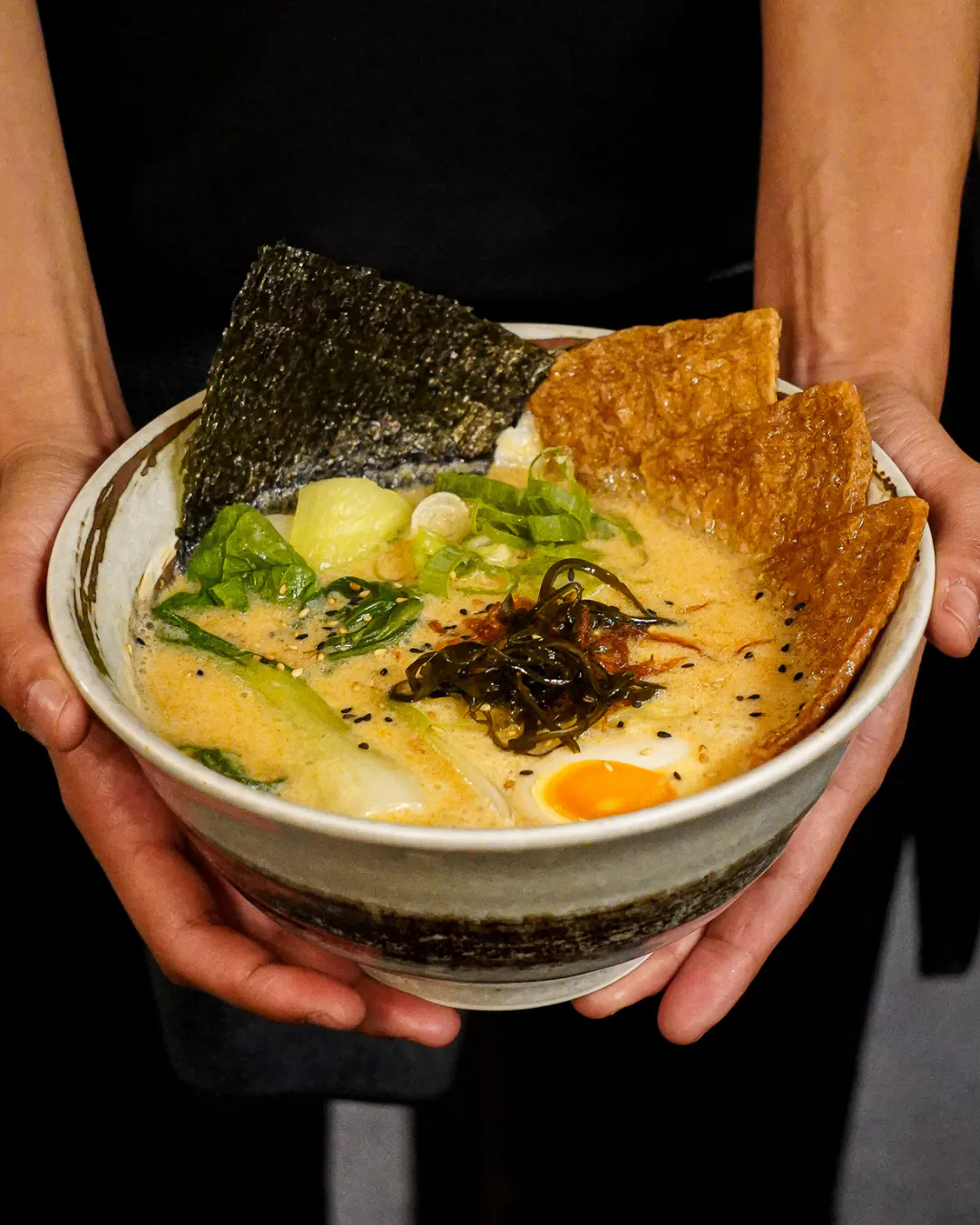
Drawn from vegetables and mushrooms, delicate and clean. Treat it almost like a consommé: little to add, plenty of spoon, everything to listen to.
The long game
What gives a broth its depth is time. You do not rush it: bones, aromatics and vegetables give up slowly what they have to give, over a low flame, for hours. That patient simmer turns a handful of simple ingredients into a dense, aromatic soup that can carry the whole bowl. Nothing replaces those hours — no shop-bought stock, no shortcut.
This slowness in the kitchen explains the speed at the table. A broth worked so long is served piping hot, because heat keeps the noodles firm and lifts the aroma. It is also why the bowl reaches you the second it is plated, without waiting for the rest of the order: the best moment for a ramen is now.
The plating
Once the broth is ready, the bowl is built in a precise order. The tare at the bottom, the piping-hot broth on top, the alkaline noodles laid taut, then the toppings placed one by one — chashu, marinated egg, nori, spring onion, bamboo shoots. That plating is not decorative: it decides what you taste first, and the contrasts that will pace the bowl.
The noodles, served firm, keep cooking in the broth from the moment they go in: that is what gives ramen its short life and its joyful urgency. Taste the soup on its own first, with the spoon, then move into the alternation — a few noodles, a sip of broth, a topping. The broth stays the through-line, the one you meet with every mouthful.
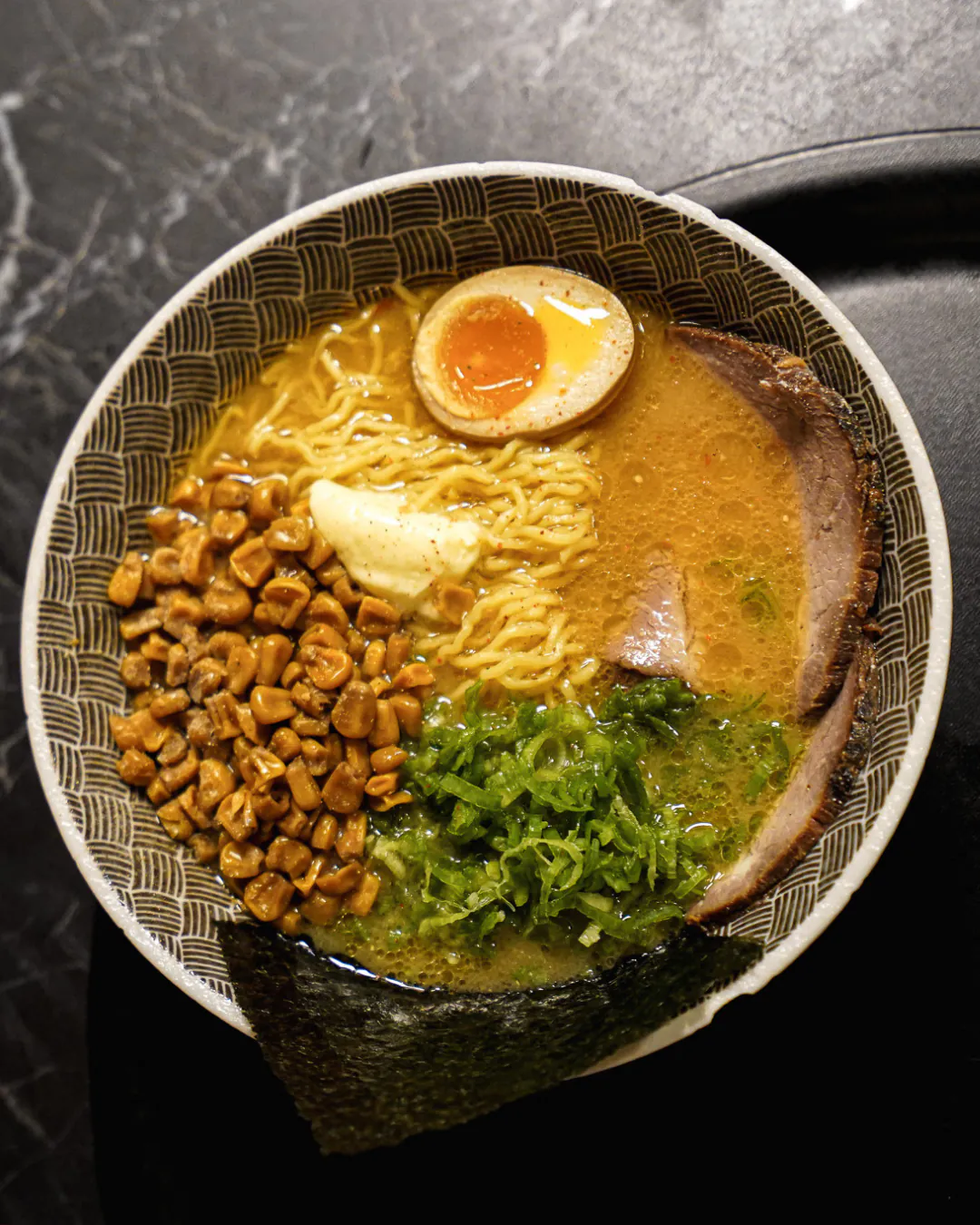
The seasoning base at the bottom of the bowl. Invisible, but it signs the flavour.
Drawn in-house, poured piping hot. The heart of the dish, the part that took the most work.
Al dente noodles, chashu, egg, nori, spring onion. Each topping is a contrast, not a filler.

At Iwao
At 27 rue Sainte in Marseille, the kitchen is open: you watch the broths finish simmering and the bowl leave for your table the instant it is plated. The Tokyo-alley décor, the lanterns and the manga are there for before and after; during those few minutes, there is only the bowl, hot, exactly as it was served.
If it is your first ramen, say so: the team will point you to a suitable broth and show you how to eat it. The whole Iwao menu revolves around these house-drawn bases — it is the best place to start.
FAQ
Explore
Iwao's ramen from other angles, and the rest of the house.

Stage clear — table booked
The best way to understand a broth is to sip a spoonful of it, piping hot, plated in front of you. Book your table at Iwao.
Or by phone: +33 4 91 54 08 27
