With soup
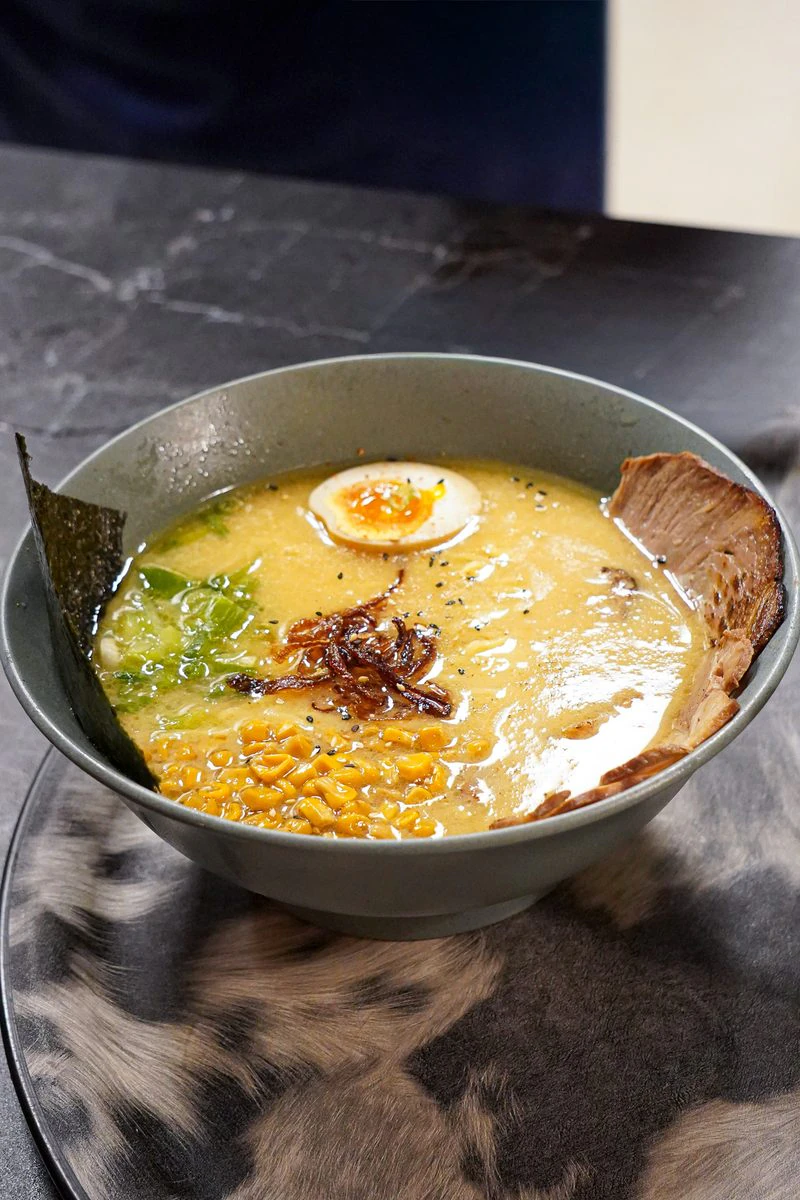
The best-known form abroad: a creamy sesame broth with noodles, meat and rāyu. Chen Kenmin’s reinvention — comforting and coating, eaten with spoon and chopsticks.

Contents
Guide · Japanese food
A bowl that warms without ever burning: tantanmen is the Japanese ramen where toasted sesame meets chilli oil. A distant heir of Chinese dan dan mian, it became fully Japanese to grow into one of the country’s best-loved ramen. Here is what tantanmen really is — where it comes from, what it is made of, and why it is like no other bowl.
11 min read
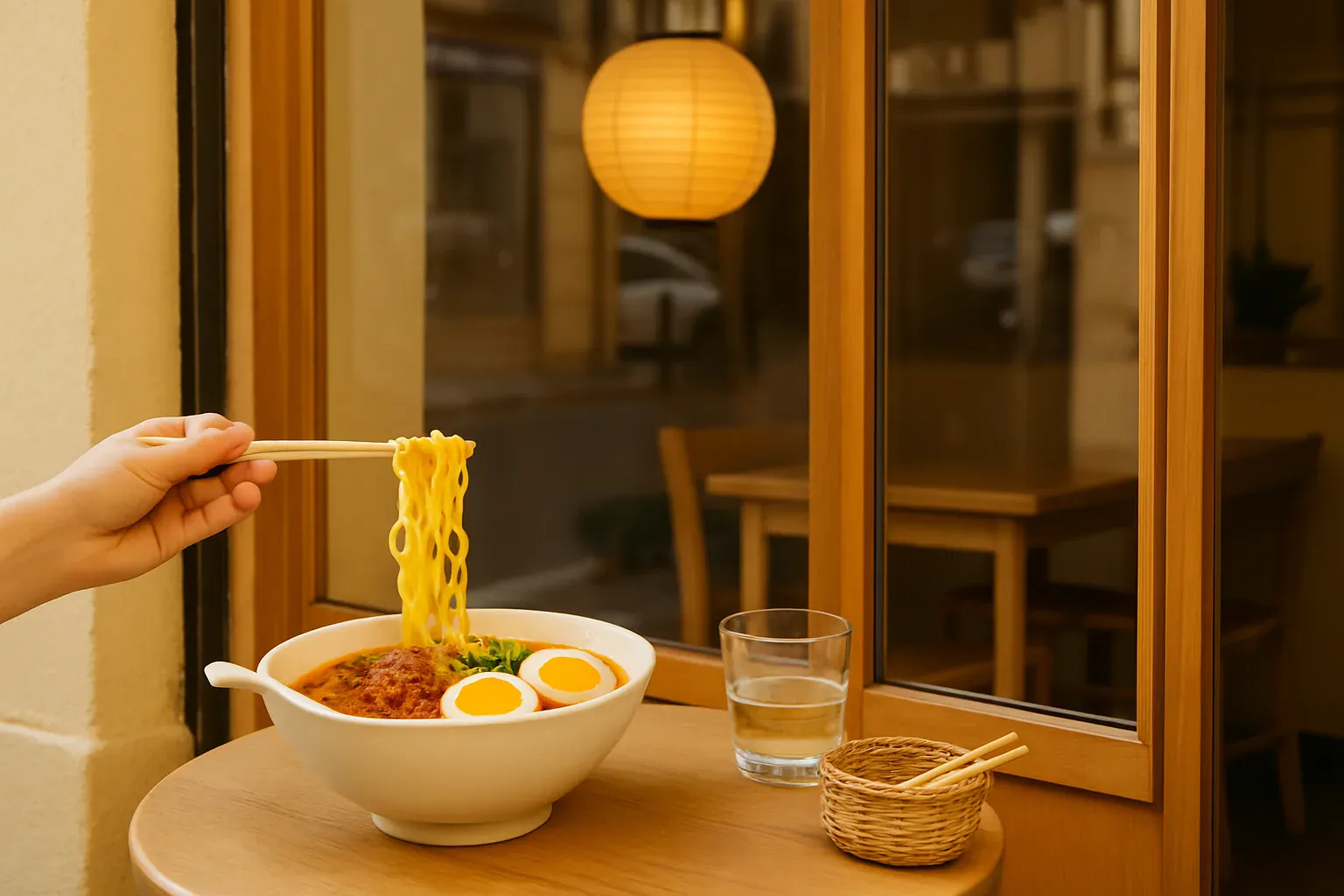
Tantanmen (担々麺) is a Japanese sesame-and-chilli ramen adapted from Sichuan dan dan mian. Its creamy broth is built with sesame paste, lifted by a chilli oil called rāyu and topped with simmered minced meat over firm wheat noodles. Unlike the near-saucy Chinese original, the Japanese version gained a real broth — a reinvention credited to chef Chen Kenmin in 1950s Tokyo. It is served piping hot, and its heat builds sip by sip without ever crushing the sesame. It comes in two forms: with soup, or soupless (jiru-nashi), closer to the original.
The origin
Tantanmen was born in China, in the streets of Chengdu in Sichuan. Its name says it: 担 (dan) is the carrying pole street vendors balanced on their shoulders — stove and broth on one side, noodles and condiments on the other. Dan dan mian, "pole noodles", was sold in the alleys: noodles under a hot sauce of chilli, sesame paste and pickled greens.
The Chinese original has almost no broth — a thick, fiery sauce with Sichuan pepper and its numbing tingle, minced pork and pickled mustard (zha cai), mixed at the bottom before eating.
Japan changed everything. Chef Chen Kenmin, a Sichuan cook in 1950s Tokyo, is credited with adapting it: he added a real broth and rounded the chilli with sesame. Dan dan mian became tantanmen, a proper noodle soup and a member of the ramen family.
The definition
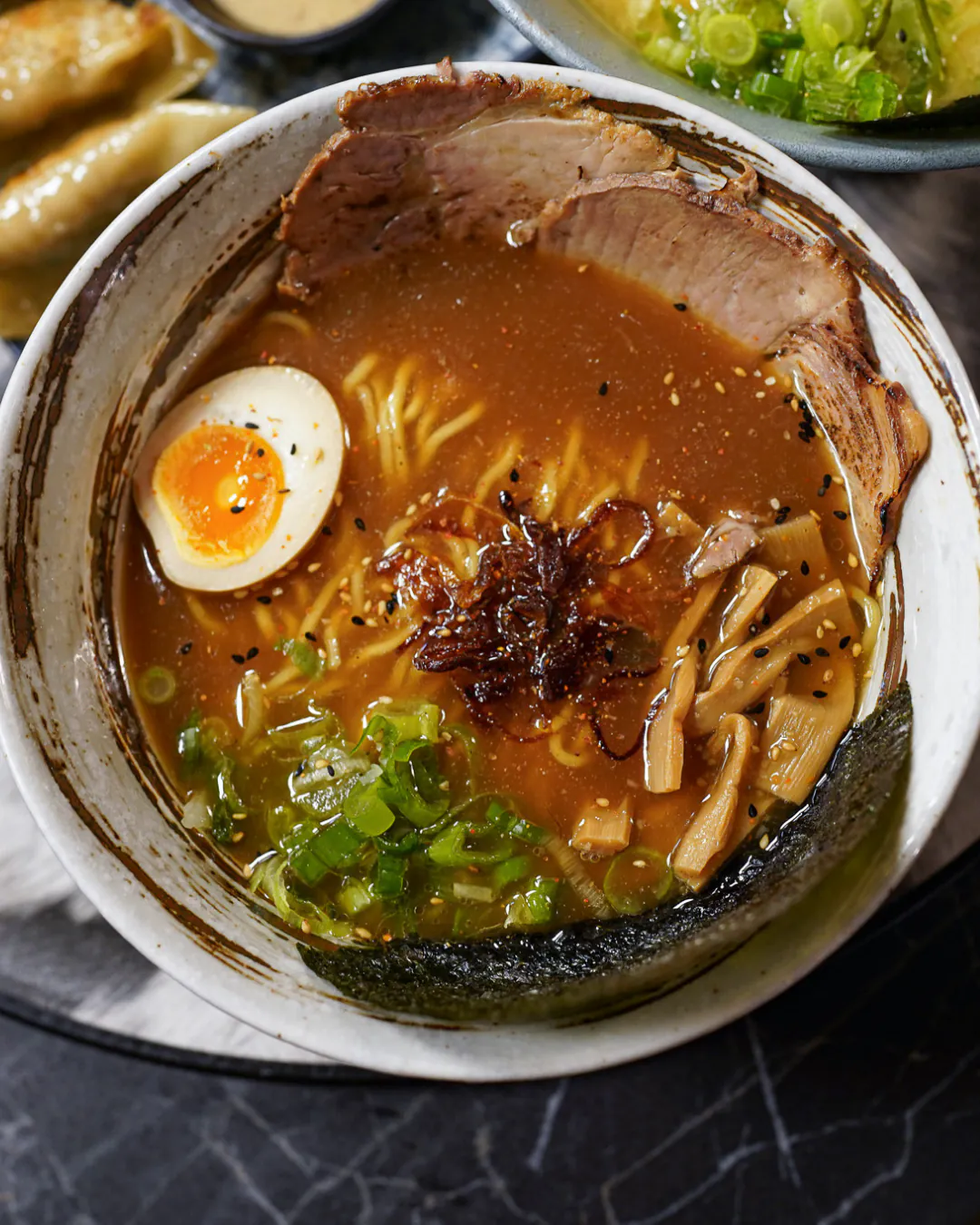
Before being "spicy" or "sesame", tantanmen is first a ramen: kansui wheat noodles, hot broth, a concentrated seasoning and toppings. What sets it apart is its signature — the sesame-and-chilli duo that colours the whole bowl.
Simply put: a tantanmen is a ramen whose broth is enriched with sesame paste and lifted by chilli oil, served with simmered minced meat. Sesame brings creamy roundness; chilli brings rising heat; the meat lays down savour. Their balance makes the dish.
Like all ramen, it varies endlessly by broth, heat, noodle and toppings — yet every bowl is recognisable at the first sip.
The texture
If one ingredient defines tantanmen, it is sesame. It gives the broth its beige colour, silky texture and deeply toasted taste, used as sesame paste (neri goma) — ground roasted seeds, like a more toasted tahini — diluted into the hot broth to coat every noodle.
Sesame also tempers the heat: its fatty roundness wraps the chilli and keeps it from taking over. A good tantanmen balances the two, one creamy, one sharp. Too much sesame is heavy; too little lets the chilli win.
Sesame runs through the whole bowl: as paste in the broth, as fragrant oil, and as whole seeds scattered on top.
The heat
The heat comes from rāyu (辣油), an oil infused with dried chilli and aromatics — garlic, ginger, shallot, sometimes Sichuan pepper. Poured on top, it draws red beads on the broth and releases its heat gradually, sip by sip. It warms rather than attacks.
Some houses add fermented chilli-bean paste (doubanjiang) for depth, or a touch of Sichuan pepper for the numbing "má" tingle, distinct from plain "là" heat. Most Japanese tantanmen stay milder than the Chinese original: here chilli serves the sesame.
That adjustable intensity is the charm — you can often ask for it milder or bolder, tuned bowl by bowl.
The base
Under the sesame and chilli, two elements carry tantanmen: the minced meat and the broth. The meat — usually pork, sometimes chicken — is simmered and seasoned apart, often with soy, miso or doubanjiang, so it arrives already full of flavour, piled at the centre.
The broth plays its usual ramen role: it fills the bowl, carries heat and aroma. Drawn from pork or poultry bones, long-simmered and seasoned, then built with sesame. Too thin and it cannot hold the sesame; too heavy and it crushes the chilli.
Classic toppings round it out: a marinated soft egg, bamboo shoots, pak-choi or spinach, spring onion, sometimes crushed peanuts or pickled greens echoing zha cai — each a contrast against the rich broth.
The base
Like any ramen, tantanmen sits on alkaline wheat noodles, yellow and springy from kansui. For such a rich broth, medium-gauge noodles are usual — firm enough to hold in a thick liquid, rough enough to catch sesame and chilli. Served al dente, they keep cooking in the hot broth, so eat without waiting.
The choice matters. In the soup version the noodle stays distinct without drowning; in the soupless version a thicker noodle carries the dense sauce. The noodle is never just a base — its texture is part of the balance.
The alkaline water that makes the noodle yellow, springy and firm. Without it, this would be another noodle soup.
Medium to thick, straight or wavy — chosen to catch a sesame-rich broth and hold a rising heat without softening too fast.
Two schools
Tantanmen comes in two widespread forms — two chapters of its story: the Japanised soup, and the return to the dry original.
The best-known form abroad: a creamy sesame broth with noodles, meat and rāyu. Chen Kenmin’s reinvention — comforting and coating, eaten with spoon and chopsticks.
Jiru-nashi tantanmen has almost no liquid: a concentrated sesame-chilli sauce sits at the bottom, mixed vigorously into the noodles. Closer to the original dan dan mian, it is booming in Japan.
Dry version: it is all in the mixing — lift the sauce from the bottom to coat each noodle. Soup version: alternate noodles and sips of broth.
The cousins
Tantanmen and dan dan mian are two versions of the same dish, split by a border and a few decades. One is Japanese, the other Chinese; one is often a soup, the other a sauce; one rounds the chilli with sesame, the other keeps it raw.
Keeping the differences in mind shows what tantanmen really is: not a copy but an adaptation, made for another palate and folded into ramen culture. Here are the three that count.
Chinese dan dan mian is nearly dry — a thick sauce at the bottom. Japanese tantanmen is usually a soup, with a creamy broth.
The original leans on numbing Sichuan pepper (má là). The Japanese version softens it and wraps the chilli in sesame, aiming for balance.
Zha cai and peanuts on the Chinese side; soft egg, pak-choi, spring onion and bamboo shoots on the Japanese side, in ramen style.
The ritual
Before the first bite, lift the sesame and rāyu from the bottom to spread the flavour through the bowl.
Firmly, Japanese style: the air cools them and lifts the toasted sesame aroma.
Return often to the noodles to temper the heat, alternate with sips of broth. Finish it hot, in minutes.
Tantanmen is eaten like ramen: fast and hot. The coating broth and firm noodles are best in the first minutes, before the heat fades and the noodles swell. Do not keep it waiting — start as soon as it lands.
The gesture matters as much as the tempo. Slurp the noodles firmly — it is good manners in Japan: the air cools them just right and spreads the sesame aroma. Return to the broth with the spoon, mix the bottom to spread sesame and chilli, and tune the heat by pacing your sips. A few minutes finish the bowl.

The culture
Tantanmen holds a special place among ramen: the bowl you pick for comfort and a bit of heat, the one that warms winter evenings. In Japan it is on almost every ramen-ya menu beside shoyu, miso and tonkotsu, and its soupless version has become an urban trend of its own.
That imagination is what you find at Iwao in Marseille: the Tokyo-alley décor, the red lanterns, the open kitchen, the buzz of the counter. Tantanmen there is not just a spicy dish — it is an invitation to a noodle stall, transposed to rue Sainte.
At our place
At Iwao, 27 rue Sainte in Marseille, tantanmen is built to order, facing the open kitchen: house broth, sesame and rāyu dosed at plating, seasoned minced meat, noodles chosen to carry it all. You can ask for it milder or bolder — the heat is set bowl by bowl.
If it is your first tantanmen, say so: the team will explain what is in the bowl and adjust the intensity. Understanding tantanmen is one thing; tasting one, built before you, in a Tokyo-alley décor, is another.
FAQ
Explore
Tantanmen from other angles, and the rest of the house.
This article is part of the house notebook, where we write about ramen, sake, table etiquette and Japanese pop culture, one topic at a time. Find every article in our Japanese food blog, and read them between two bowls.

Stage clear — table booked
The best way to understand tantanmen is still to taste one, piping hot, built in front of you. Book your table at Iwao and watch the sesame and chilli come to life.
Or by phone: +33 4 91 54 08 27
