Never upright in rice
Chopsticks planted upright in rice recall funeral incense — the number-one taboo. At rest, lay them on the hashioki or across the bowl.

Contents
Guide · Manners at the table
Slurping noodles, never planting chopsticks in the rice, pouring for your neighbour rather than yourself: the Japanese restaurant has its codes, and they are simpler than they look. This guide gathers the gestures that truly matter — from the oshibori at the door to the closing “gochisōsama” — so you can eat at ease, without fear of a misstep.
10 min read
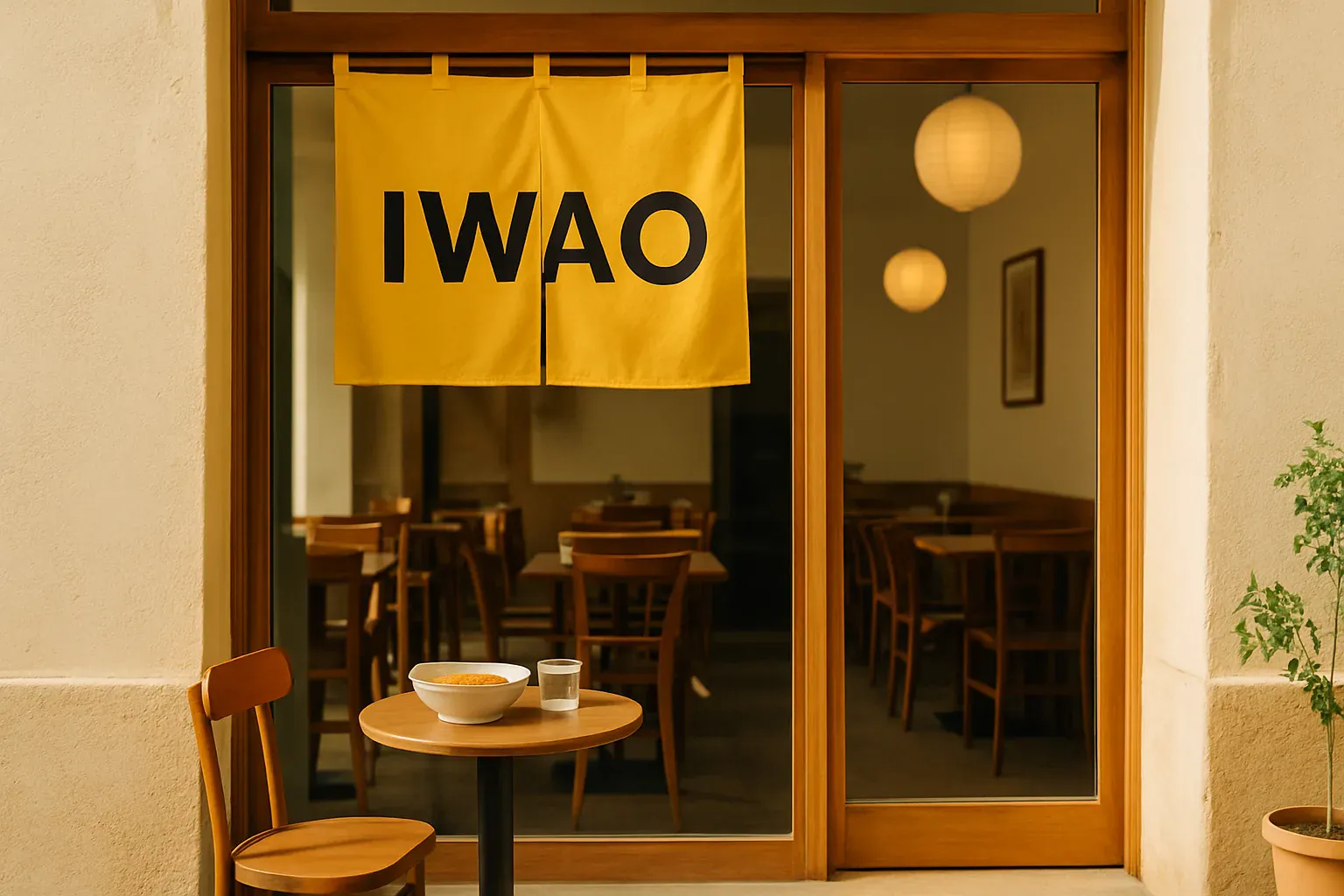
At a Japanese restaurant, etiquette comes down to a few reflexes: clean your hands with the warm oshibori, say “itadakimasu” before eating and “gochisōsama” after. Chopsticks are never stuck upright in rice nor used to pass food hand to hand — both echo funeral rites. Slurping noodles loudly is not rude but polite: it says you are enjoying the meal and lifts the broth’s aroma. Lift the rice or soup bowl near your mouth, pour drinks for others (never yourself) and toast with “kanpai”. Finally, there is no tipping: flawless service is simply the norm, and thanks are enough.
The why
Japanese table etiquette is not a rigid code meant to intimidate, but a set of gestures born of a long culture of respect — for the food, the person who made it, and those sharing the table. No one, in Japan or at Iwao, expects a foreign guest to master it perfectly: the rules that follow are guides, not traps. A couple matter more (they touch strong symbols); the rest are about ease and elegance. This guide follows the meal in order, from the welcome to the puzzling question of the tip.
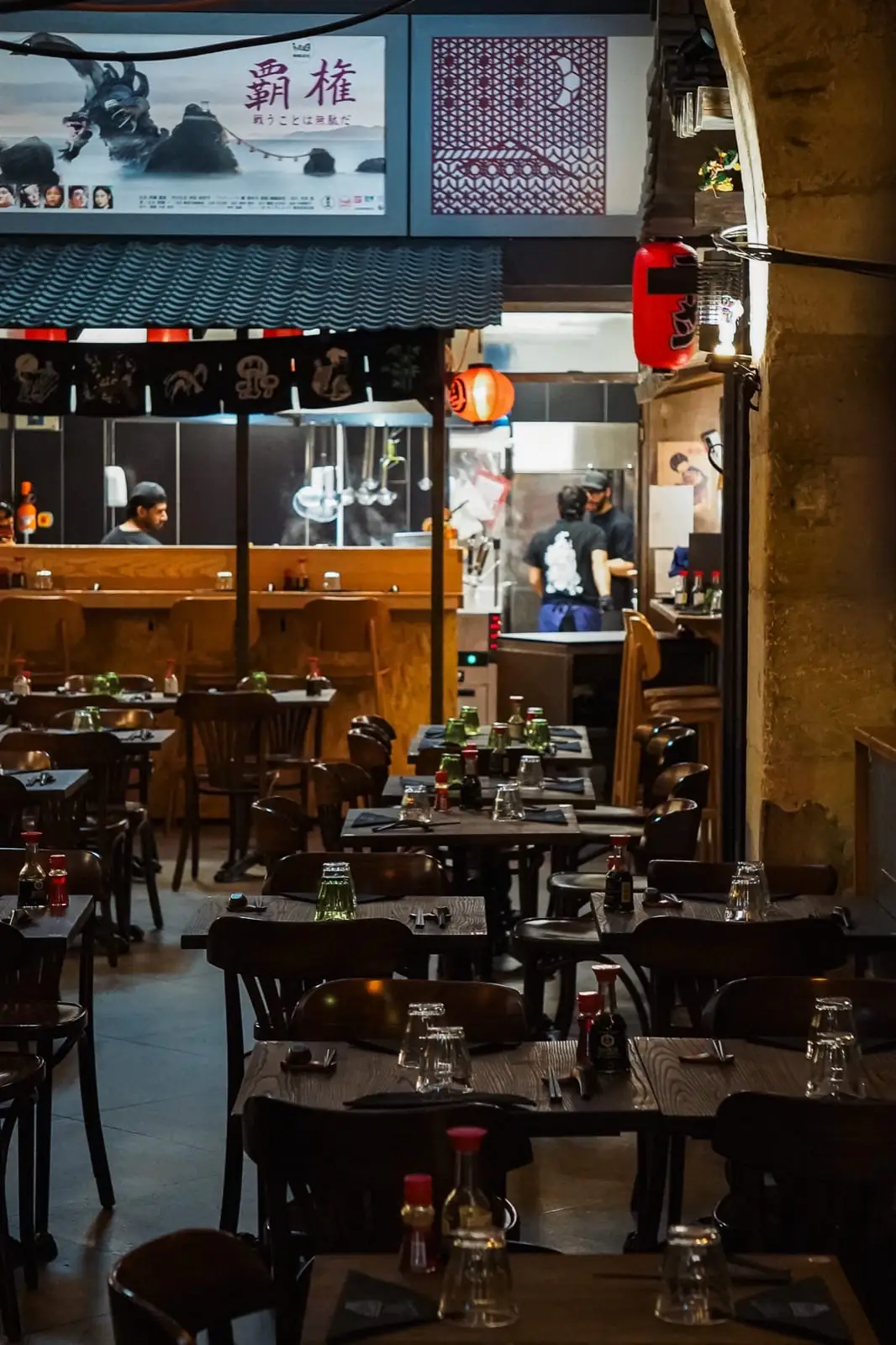
At the door
It begins with a call from the room: “irasshaimase!” — welcome. You don’t reply; a nod is enough, and you often wait to be seated. The oshibori arrives next: a small towel, warm or cool, to clean your hands only — not the face, and not kept as a napkin. Then comes the gesture that truly opens the meal: “itadakimasu”, hands joined, a gratitude for all that made the meal possible.
The core gesture
If you keep one chapter, keep this one. Chopsticks (hashi) hold most of the etiquette, because some gestures harmless to us echo funeral rites in Japan. Just know the two or three major taboos; the rest follows. At rest, lay them on the hashioki or across the bowl, never planted in the food, and use the clean ends to serve from a shared dish.
Chopsticks planted upright in rice recall funeral incense — the number-one taboo. At rest, lay them on the hashioki or across the bowl.
Passing food chopstick to chopstick mirrors a funeral rite. To share, place the piece on the other’s plate instead.
Don’t point at people or dishes with your chopsticks, and don’t spear food like a fork. You grasp and lift — that’s the art.
The reversal
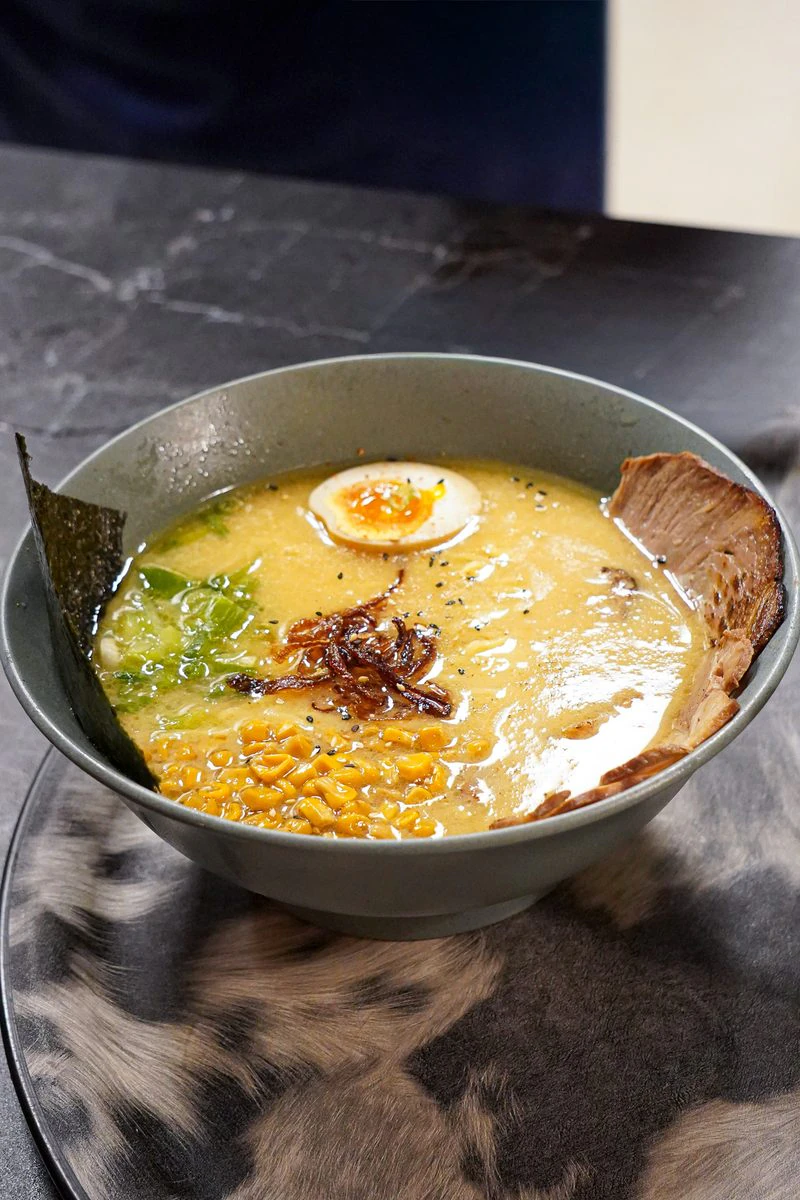
The rule that surprises most: in Japan, slurping noodles loudly is not rude — it is welcome. With ramen, soba or udon, the slurp signals appetite and pleasure. It also cools the noodles slightly and lifts the broth’s aroma toward the nose. Grab a small portion, slurp in one go with the bowl close, and use a spoon in the other hand for the broth. No one will judge a first try — but do try: that’s when ramen is best.
In hand
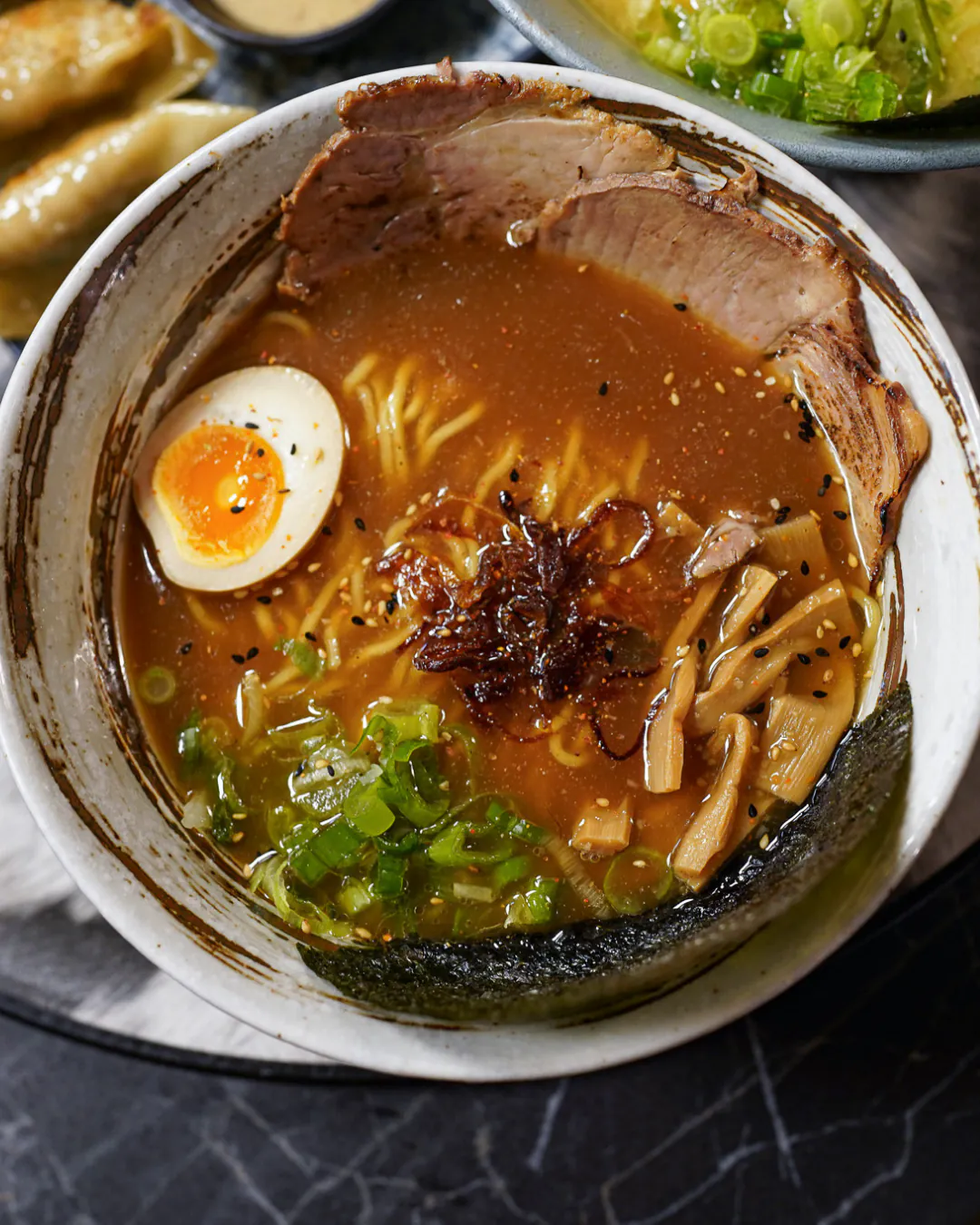
Rice or soup bowl, raise it near your chest, one hand beneath. Bending over the table to eat is frowned upon.
Ramen or miso broth is drunk straight from the bowl in small sips. No need to finish it — tasting the bottom honours the cook.
The renge spoon is for broth and toppings; chopsticks for noodles and solids. Alternate hands without fuss.
Unlike our habits, Japanese tableware is held. Lift the small rice bowl or ramen bowl toward you — more elegant, and handier for slurping. The broth is drunk from the bowl; raising it to finish a few sips is a silent compliment to the kitchen. You needn’t finish everything, but a clean plate is, everywhere in Japan, the finest thanks to the cook.
To drink
One golden rule: you never pour for yourself. You fill your neighbour’s glass and wait for yours to be filled in return — a small ballet that ties the table together. Sake follows the same principle: pour holding the tokkuri with both hands, receive your o-choko slightly raised. Before the first sip, toast with “kanpai!” and wait for that shared signal to drink.
To dose
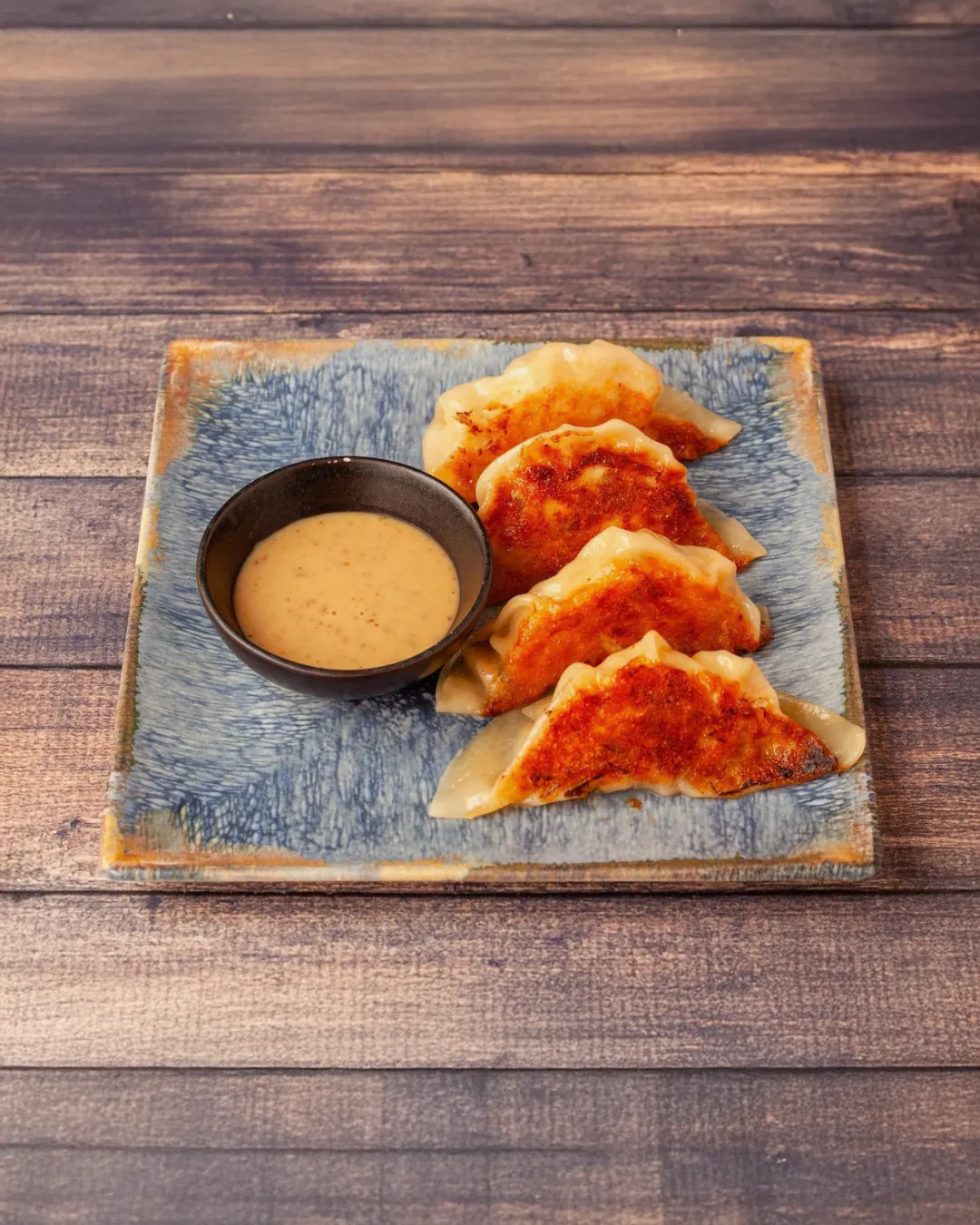
Soy sauce is treated with measure: pour a little, add more if needed, and for sushi dip the fish side, never the rice. Wasabi isn’t stirred into the soy to make a cloudy paste — place a dab on the fish, then dip; the chef has often added the right amount already. The same restraint suits dipping sauces, like the gyoza’s: light touches, to lift without masking. The point is balance, not excess — taste first, adjust after.
The puzzling question
In Japan you don’t tip — and trying to can cause awkwardness. Flawless service isn’t a performance to reward; it’s the norm, included in the bill and in professional pride. You usually pay at the register on the way out, placing card or change on the small tray rather than by hand. The real gratitude is a sincere “gochisōsama deshita”.
No tip, at the counter or the table. Service is included and seen as a given — insisting embarrasses the staff.
You most often pay when leaving, at the register by the door, setting card or change on the small tray.
True gratitude is in the words: a sincere “gochisōsama deshita” on the way out is worth any tip.
The mood
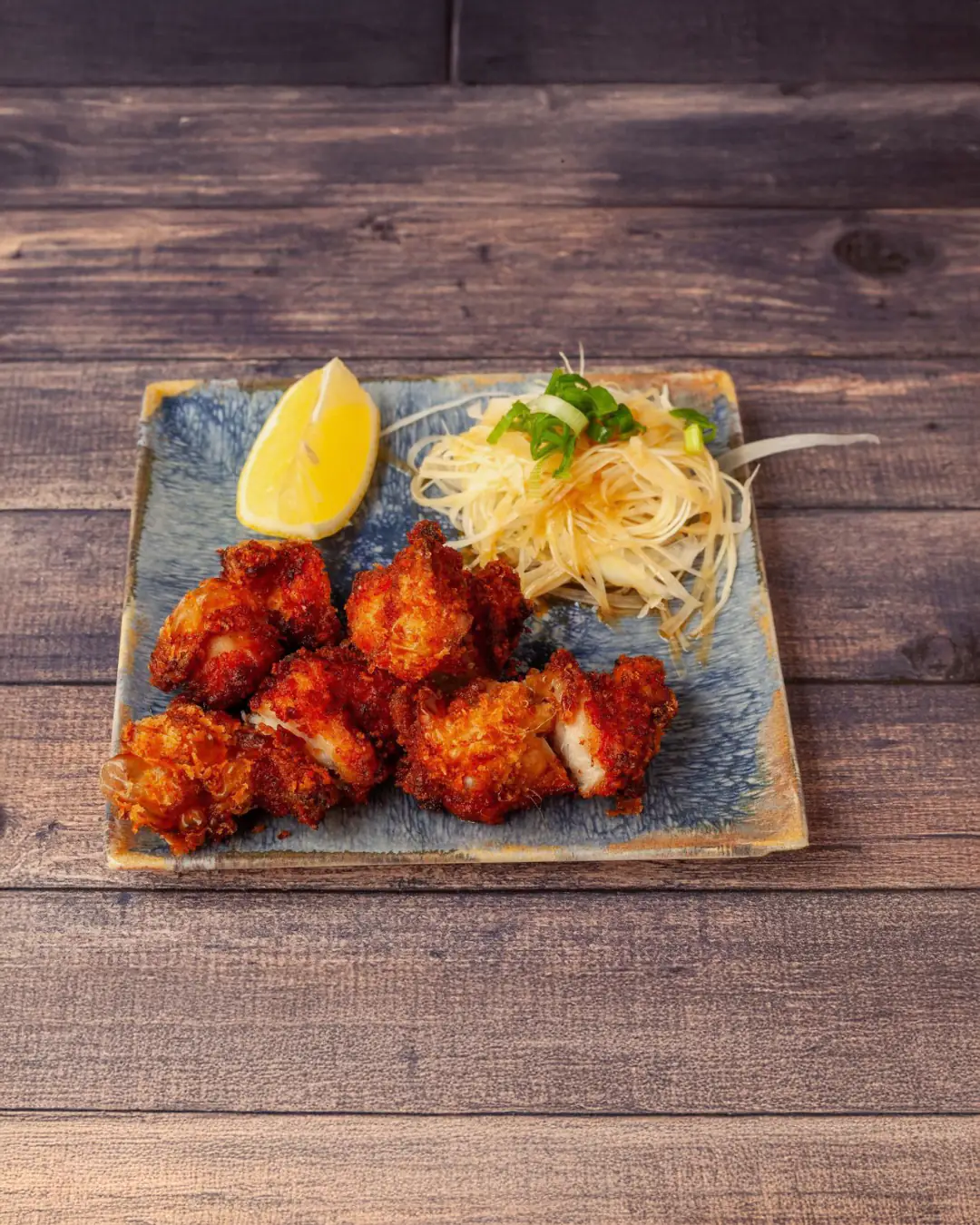
A ramen-ya counter and an izakaya table live a little differently from our brasseries. At the counter, facing the open kitchen, you order in a word, eat at your pace and don’t linger when others wait. The izakaya is made for sharing: small plates to the centre, picked with clean chopstick ends, drinks poured for one another. In both, simple reflexes suffice — speak without shouting, keep the phone discreet, leave the counter as tidy as you found it.
At our place
At Iwao, 27 rue Sainte in Marseille, we recreated the spirit of a Tokyo ramen-ya — the alley under lanterns, the counter facing the open kitchen. Etiquette here is an invitation, never a constraint: no one will correct your chopstick grip. But should you try — lifting the bowl, pouring a neighbour a glass, an “itadakimasu” before the first bite — you’ll find these gestures add something. Come try them over a bowl: still the best way to learn.
FAQ
Explore
The Iwao experience from other angles, and the rest of the house.
This guide is part of the house notebook, where we write about ramen, sake, Japanese pop culture and, as here, the art of the table, one topic at a time. Find every article in our Japanese food blog, and read them bowl in hand.

Stage clear — table booked
The best way to learn Japanese etiquette is still to sit down before a steaming bowl. Book your table at Iwao and come put these gestures into practice.
Or by phone: +33 4 91 54 08 27
