Kombu
The founding seaweed. Steeped low, it releases a clean marine umami — the base of almost every plant dashi.

Contents
Guide · Japanese food
A broth with no bones or meat, yet as deep as a tonkotsu. Toppings that replace the chashu without imitating it. Vegetarian ramen is not a stripped-down ramen: it is a cuisine of its own, born in Buddhist temples. Here is what really sits at the bottom of the bowl.
10 min read
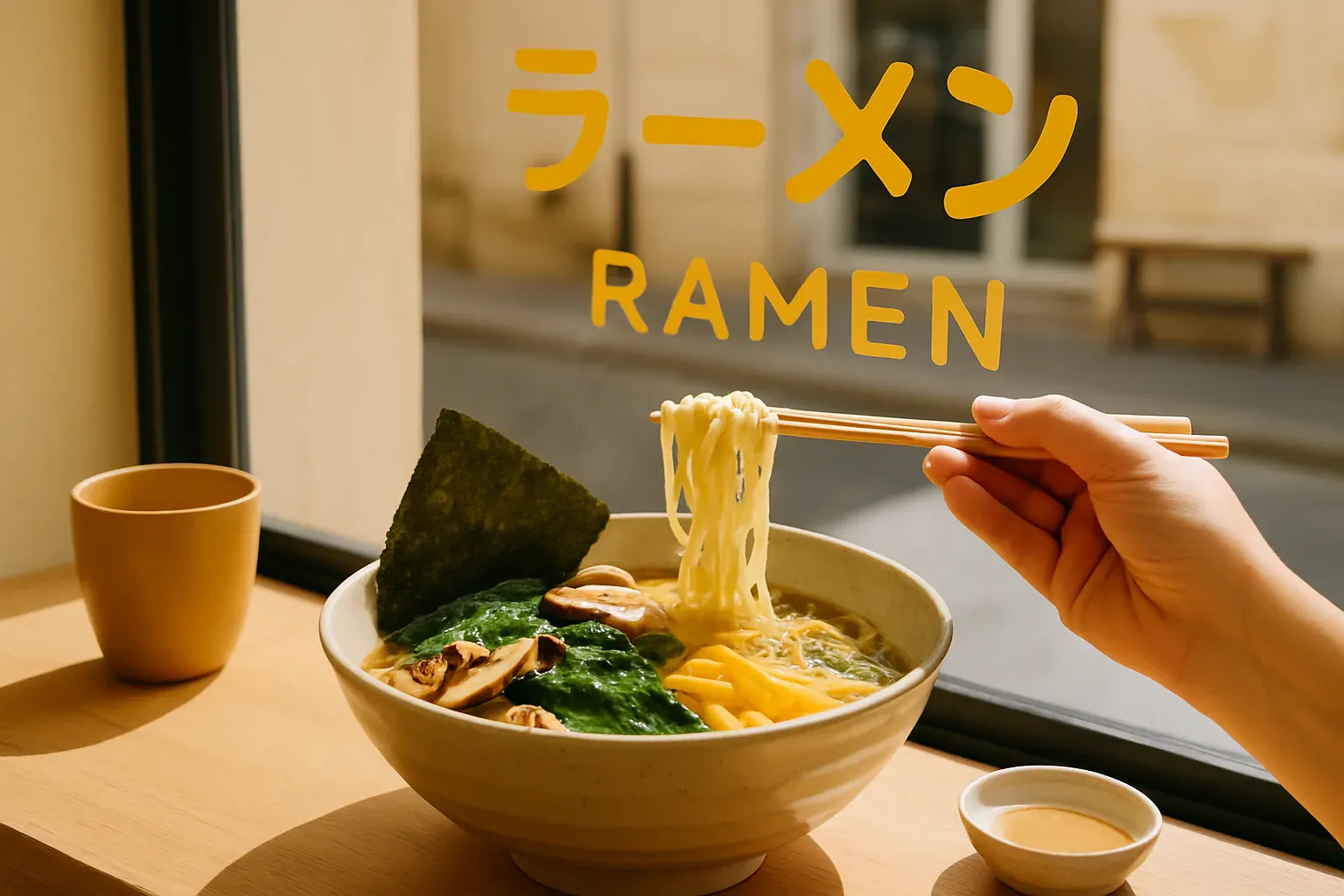
Vegetarian ramen is a bowl of Japanese noodles in an entirely plant-based broth — usually drawn from kombu seaweed, dried shiitake, soy and roasted vegetables — with no meat, bones or fish. The umami normally supplied by pork or bonito is rebuilt with miso, soy sauce, mushrooms and seaweed. Note the nuance: vegetarian allows the marinated egg (ajitama), while vegan excludes it; and a bowl labelled 'with vegetables' isn't vegetarian if its broth hides bonito dashi. Typical toppings are tofu, aubergine, corn, bean sprouts, mushrooms, nori and menma. It is a complete, protein-rich meal — as long as you check the broth before ordering.
The definition
A classic ramen rests on four layers — tare, broth, noodles, toppings — and three of them traditionally rely on the animal. Vegetarian ramen keeps the exact same architecture but rebuilds every layer from the plant world: not a vegetable soup with noodles, but a full ramen with the same depth and length of flavour.
The idea is old: long before ramen-ya, Buddhist temple cooking (shōjin ryōri) had already codified a meat- and fish-free cuisine built on seaweed, soy, mushrooms and vegetables. Modern vegetarian ramen inherits those umami-extraction techniques directly.
The heart of the bowl
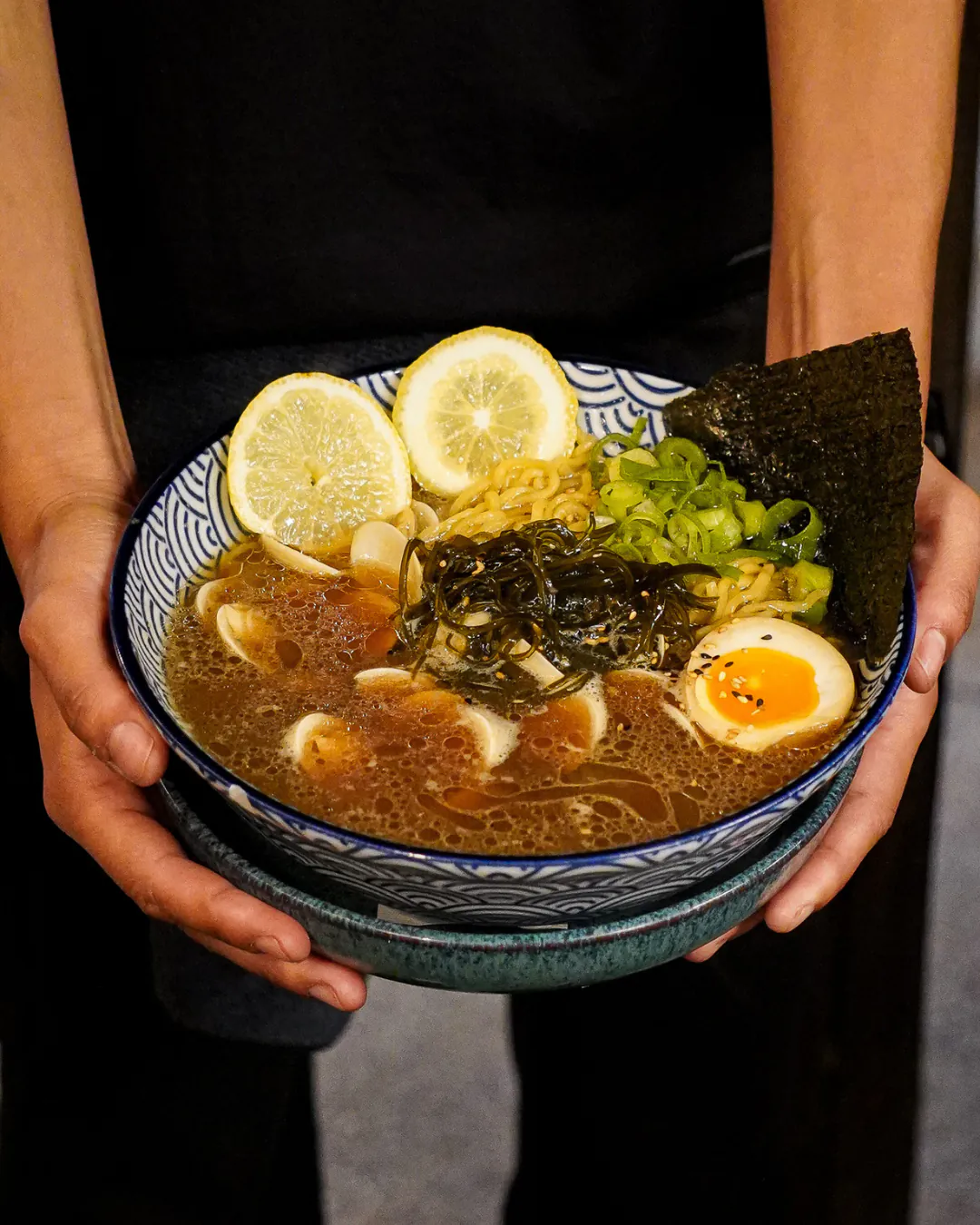
The broth is where everything is decided. Instead of pork bones, a plant broth finds depth in ingredients rich in vegetable glutamates: a kombu dashi as its base, almost always with dried shiitake for a woody, surprisingly intense result.
Each house adds its signature — caramelised onion, leek, ginger and garlic for body, or soy and dried tomato for roundness. It can be clear like a consommé or dense and milky, a plant tonkotsu. A good plant broth does not imitate meat: it plays its own palette.
The founding seaweed. Steeped low, it releases a clean marine umami — the base of almost every plant dashi.
Soaked and simmered, they give a woody, deep broth rich in guanylate, a powerful natural flavour enhancer.
Caramelised onion, leek, ginger and garlic bring the body, colour and toasted sweetness that replace animal fat.
Soy sauce, miso, dried tomato, grilled corn: the glutamate reserves that give roundness and length.
The nuance
Vegetarian excludes meat and fish but tolerates the animal without killing it — chiefly the marinated egg (ajitama), sometimes butter. Vegan shuts that door too: no egg, no butter, no honey, no bonito anywhere.
The trickiest line isn't the visible egg but the dashi: many 'vegetable' broths are built on katsuobushi (bonito) or niboshi (sardine). Invisible yet animal — which is why a true vegetarian ramen always announces itself as such.
No meat or fish, but the marinated egg (ajitama) and sometimes butter are allowed. The dashi must be 100% plant-based — never bonito.
Every animal product excluded: no egg, butter, honey or fish dashi. Umami drawn only from seaweed, mushrooms and soy.
The trap
A dish can look vegetarian without being it at all. The traps hide where you do not look: in the liquid, the seasoning base, the aromatic oils.
The golden rule: what counts is not the top but what built the bottom. Judge a vegetarian ramen by its broth, tare and oils — never by its photo.
Trap number one. Katsuobushi or niboshi flavour "vegetable" broths invisibly. Always check the dashi base.
The seasoning base can hold oyster sauce, rendered pork or fermented fish. A plant shoyu or miso tare is essential.
Mayu made with lard, rendered fat, egg for vegans, menma seasoned with fish dashi: the details matter.
The flavour
Seaweed glutamate and mushroom guanylate: the founding synergy that multiplies umami.
Fermented soy brings salt, depth and an almost meaty roundness. The pillar of the plant tare.
Grilled onion, tomato, corn: caramelised sugars and concentrated umami, for body and colour.
Where does the flavour come from without meat? From umami — a matter of molecules (glutamates, guanylates) the plant world is full of: miso, soy sauce, kombu, dried mushrooms, ripe tomato, grilled corn.
The secret is not stacking but combining. Pairing a glutamate source (kombu, miso) with a guanylate source (shiitake) multiplies perceived flavour far beyond simple addition — a depth the tongue reads as "rich".
The top of the bowl
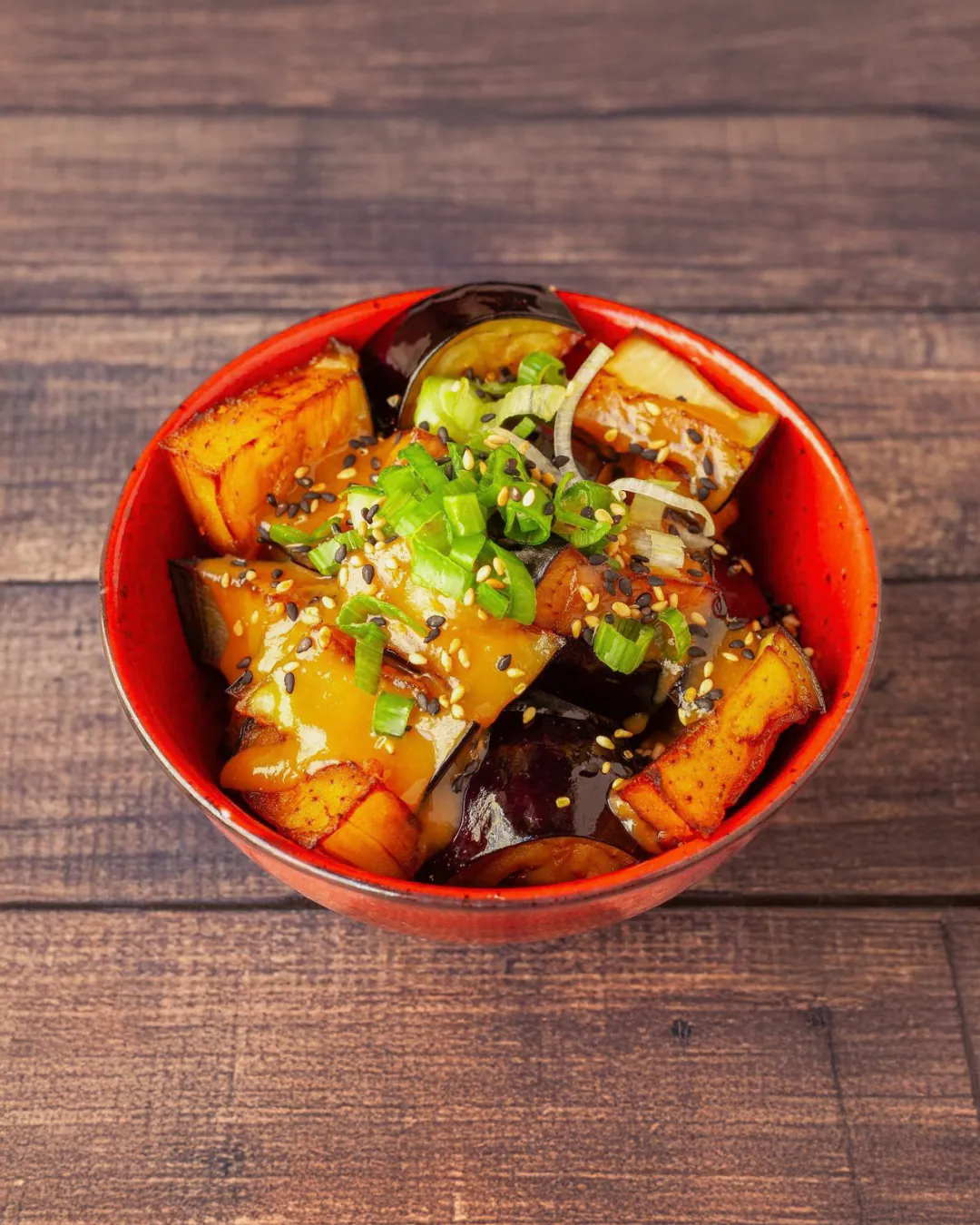
Tofu leads: firm and grilled, fried and crisp (agedashi), or silky tofu skin (yuba). Then aubergine, often miso-glazed until meltingly tender, adds an almost meaty texture and a sweet-savoury umami.
Around it: buttered corn, crunchy bean sprouts, young spinach wilted in the hot broth, enoki and shiitake, a corner of nori, menma and a shower of spring onion. Each topping plays a precise role — crunch, melt, freshness — with the vegetables in full light.
The variants
There is a whole family. The most common is plant miso ramen, often called yasai (vegetables): a round broth loaded with wok-fried vegetables. Plant shoyu, clearer, leans on soy sauce and a delicate kombu dashi.
Bolder palates go for plant tantanmen, where sesame paste and chilli oil replace minced pork with mushrooms or textured soy. Some houses offer a clear consommé or a vegan tsukemen (dipping noodles). Same story, different angles: depth without the animal.
The most popular. Round miso broth, wok-fried vegetables, corn: warming and filling.
Clear and precise. Soy sauce and kombu dashi, sober toppings. The bowl of finesse.
Bold and spicy. Sesame paste, chilli oil, textured soy in place of minced pork.
An almost translucent broth, or noodles to dip in an ultra-concentrated plant dashi.
The noodle
The classic ramen noodle is wheat flour, water, salt and kansui — an alkaline water giving it colour, spring and aroma. That base recipe is perfectly plant-based: no egg, no animal product.
Two caveats: some noodles (often industrial or Chinese-style) add egg — still vegetarian, not vegan. And a plant noodle in a pork broth is not a vegetarian ramen. The broth, again, decides everything.
Wheat, water, salt, kansui. No animal trace: the standard ramen noodle is naturally plant-based, often vegan.
Some noodles contain egg — vegetarian, not vegan. When in doubt, ask as you would about the broth.
The balance
Well built, a vegetarian ramen is complete and balanced. Tofu, textured soy, edamame and miso supply plant protein; vegetables and seaweed bring fibre and minerals; noodles bring energy. It fills you as much as a meat ramen.
Two things to watch, as with any ramen: salt (you need not finish the broth) and, for strict vegans, vitamin B12, absent from the plant world and found elsewhere in the diet.
Tofu, edamame, textured soy, miso: enough for a complete, filling meal without meat.
Fibre, minerals, vitamins and umami. The topping is not decoration — it feeds you.
Salt (do not always finish the broth) and, for strict vegans, vitamin B12 to find elsewhere.

At the counter
One reflex: ask what the broth is made of. A serious ramen-ya answers without hesitating — "kombu and shiitake dashi", "miso tare", "no bonito". A vague answer, or "there is no meat on top", signals a vegetable ramen, not a vegetarian one.
Three questions: is the dashi 100% plant-based? does the tare hold fish or pork? do the noodles and egg suit your diet? State your requirement when ordering, never when the bowl arrives — the broth has simmered for hours and cannot be fixed.
At our place
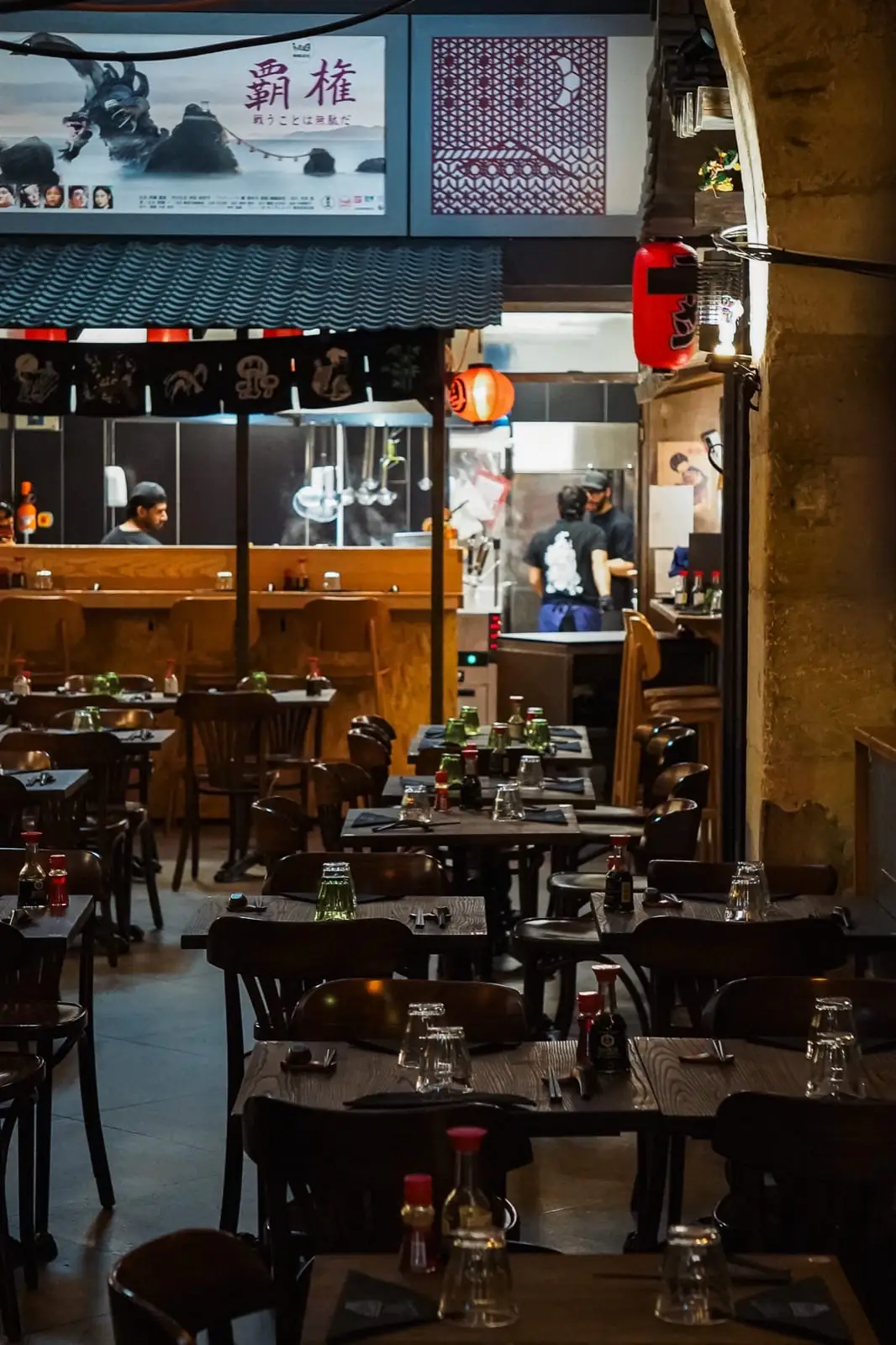
At Iwao, 27 rue Sainte in Marseille, the plant-based bowl has its own recipe — never a subtraction. Our yasai miso ramen rests on a house broth, a miso tare and a wealth of vegetables: the umami is built, not borrowed.
If you eat vegetarian or vegan, say so: the team will steer you to the right bowl, adjust the egg or toppings and confirm the broth base. For those few minutes, there is only the bowl — plant-based and piping hot.
FAQ
Explore
The plant-based bowl from another angle, and the rest of the house.
This article is part of the house notebook, where we write about ramen, sake and Japanese cooking one topic at a time. Find every article in our Japanese food blog, to read between two bowls.

Stage clear — table booked
The best way to understand a vegetarian ramen is still to taste one. Book your table at Iwao and come discover our plant-based bowl, piping hot, plated in front of you.
Or by phone: +33 4 91 54 08 27
