Sapporo · Miso
The north and its rich, buttery miso broth, born in the 1960s against the winter.

Contents
Culture · Japanese food
Ramen did not fall from a Japanese sky. Behind today's steaming bowl lies a century of travel: Chinese noodles, an opened port, a war, an instant packet and a hundred cities that made the recipe their own. Let us follow the thread.
11 min read
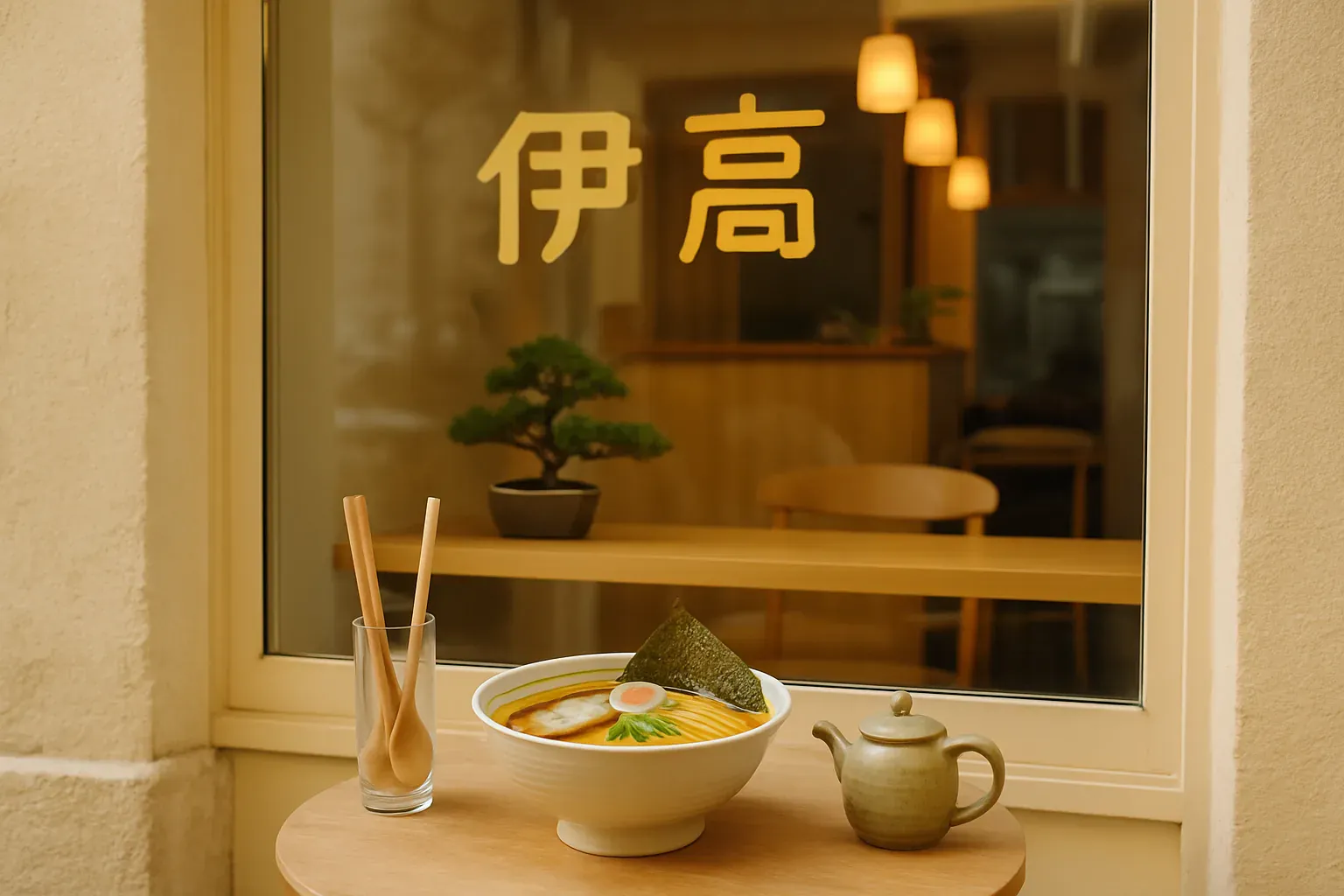
Ramen was not born in Japan: it descends from China's wheat noodle soups, which reached Yokohama in the late 19th century as 'Chinese soba'. Japanese cooks reinvented it with dashi broth and soy seasoning, street stalls made it the dish of postwar reconstruction, and 1958 brought the instant noodle. Regional styles multiplied — Sapporo miso, Hakata tonkotsu, Tokyo shoyu — and the bowl became a cult dish exported worldwide, all the way to the counters of Marseille.
The origins
To understand ramen you must first leave Japan: the dish descends from China's wheat noodle soups, whose hand-pulled lamian noodles are its true ancestor.
Its secret is kansui, the alkaline water that gives the wheat its spring and golden colour — the technical detail that let the dish take root abroad.
The turning point
Ramen's Japanese story starts in the ports. From the 1880s, Chinese communities in Yokohama served a noodle soup the Japanese called shina soba, 'Chinese soba'.
The turning point came in Tokyo: around 1910 the Rairaiken in Asakusa blended Chinese broth with Japanese dashi and soy — the true birth of ramen as we know it.
A question of name
For a long time the dish was not called ramen but shina soba, then chūka soba. The word 'ramen' probably comes from the Chinese lāmiàn, 'pulled noodles'.
Industry made the name stick: when instant ramen launched in 1958, the term entered every Japanese home within a few years.
The first name, 'Chinese soba', from the Meiji-era port stalls.
The postwar era neutralised it to 'Chinese soba', still common today.
The 1958 instant packet made this name cover them all.
The take-off
Ramen's real rise came from disaster. After WWII Japan was starving, and the American occupation flooded the market with cheap wheat.
Around stations and black markets, yatai stalls served hot noodles to hungry workers: ramen became the dish of reconstruction, and never lost that popular status.
The accelerator
In 1958 Momofuku Ando of Nissin invented the pre-cooked, flash-fried noodle you revive with boiling water: the Chikin Ramen, the first instant ramen.
The 1971 Cup Noodle made it portable and global — over 100 billion instant servings are now eaten worldwide each year, spreading the name across the planet.
Momofuku Ando invents the instant noodle: just add boiling water.
The disposable cup makes ramen portable and takes it worldwide.
Instant servings eaten around the world every year.
A mosaic
Japan has not one ramen but dozens. Each region shaped it to its produce and climate — a true geography of broths.
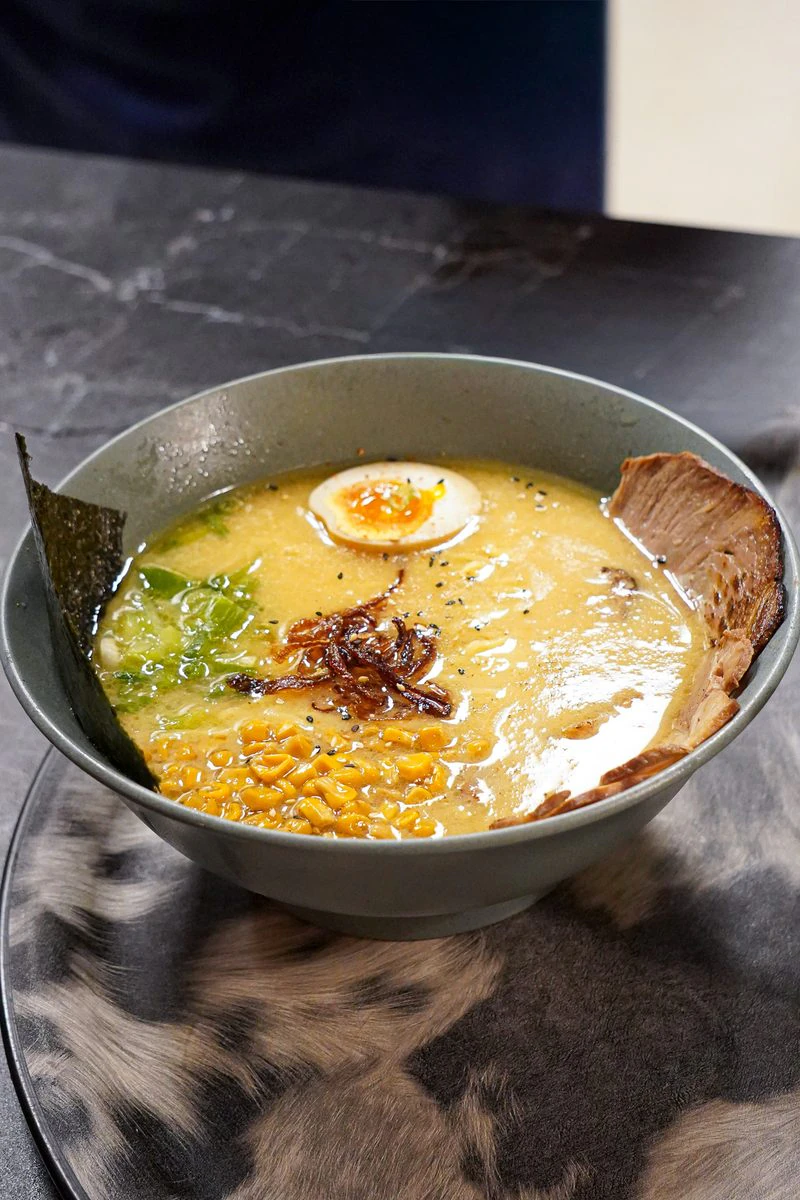
Sapporo invented miso ramen in the 1960s; Hakata imposed milky tonkotsu with thin noodles; Tokyo kept the clear shoyu of the Rairaiken.
The north and its rich, buttery miso broth, born in the 1960s against the winter.
Fukuoka's milky pork-bone broth, thin straight noodles, endless noodle refills.
The founding bowl: clear poultry-and-dashi broth seasoned with soy.
Hakodate and Kitakata's clear, delicate salt broths — often the oldest.
Reading a bowl
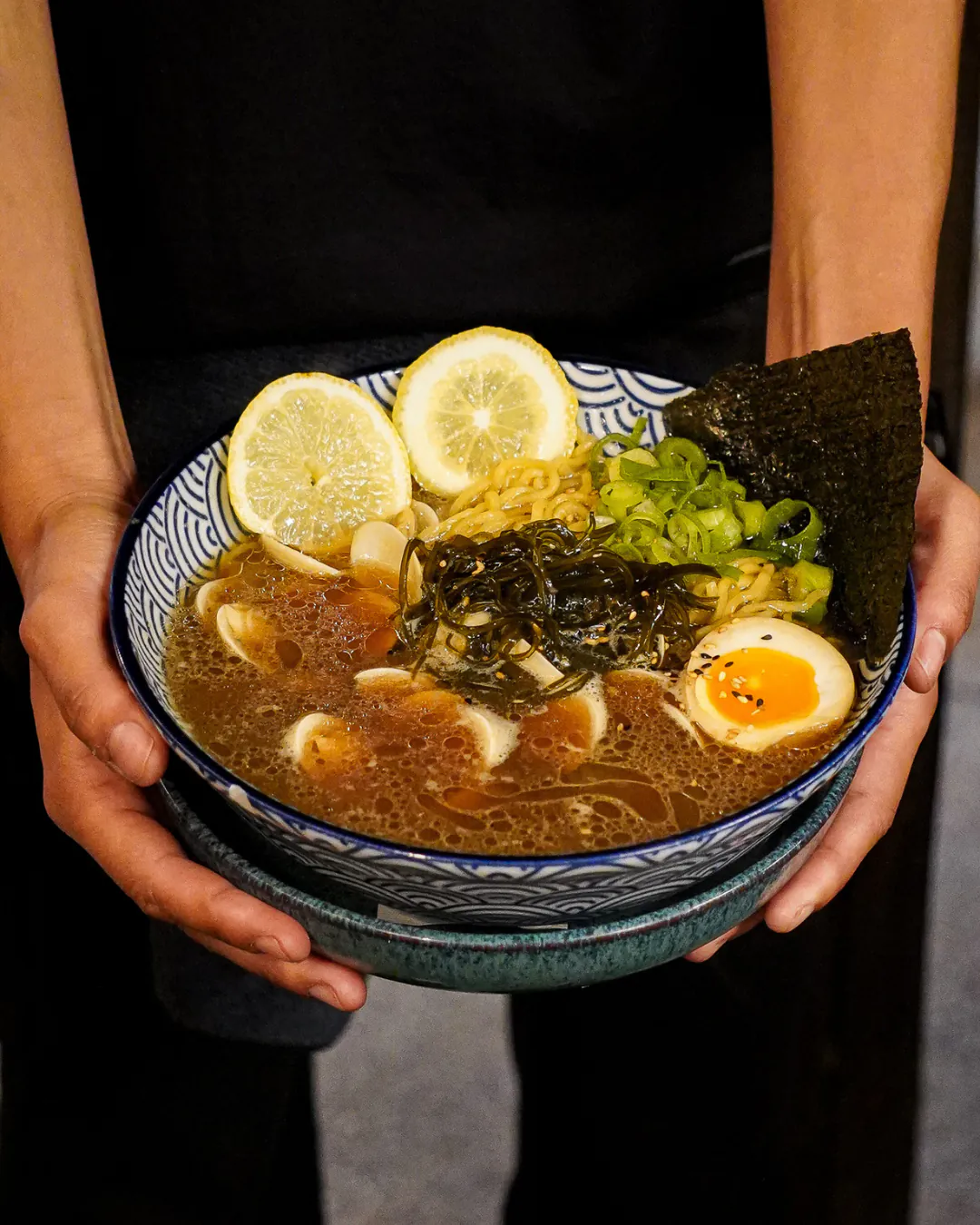
All this history fits in one bowl, read like an archaeology: each layer carries the trace of a borrowing.
A stable frame with free toppings is what let ramen travel without ever losing itself.
The concentrated base at the bottom — soy, miso or salt. It names the style.
The heart of the story: Japanese dashi and continental bones, simmered for hours.
The direct Chinese legacy: wheat and kansui, for that bite against the broth.
Chashu, egg, menma, nori, spring onion — added over decades, never fixed.
The consecration
Long a humble dish, ramen became a cult one in the late 20th century, as a prosperous Japan began to celebrate its street food.
Three milestones mark its rise: a museum, a film and a Michelin star.
Shin-Yokohama, 1994: the first museum devoted to ramen and its regional styles.
Jūzō Itami's 'Tampopo' (1985): a whole comedy about the quest for the perfect bowl.
2015: a Tokyo ramen-ya earned the dish its first-ever Michelin star.
Going global
From the 2000s ramen left the archipelago for good — Japanese chains and non-Japanese chefs alike reinventing it around the world.
This is no betrayal: ramen was always a dish of blending, replaying worldwide the very gesture that founded it in Yokohama. Which is exactly what happens today in Marseille.
Here and now
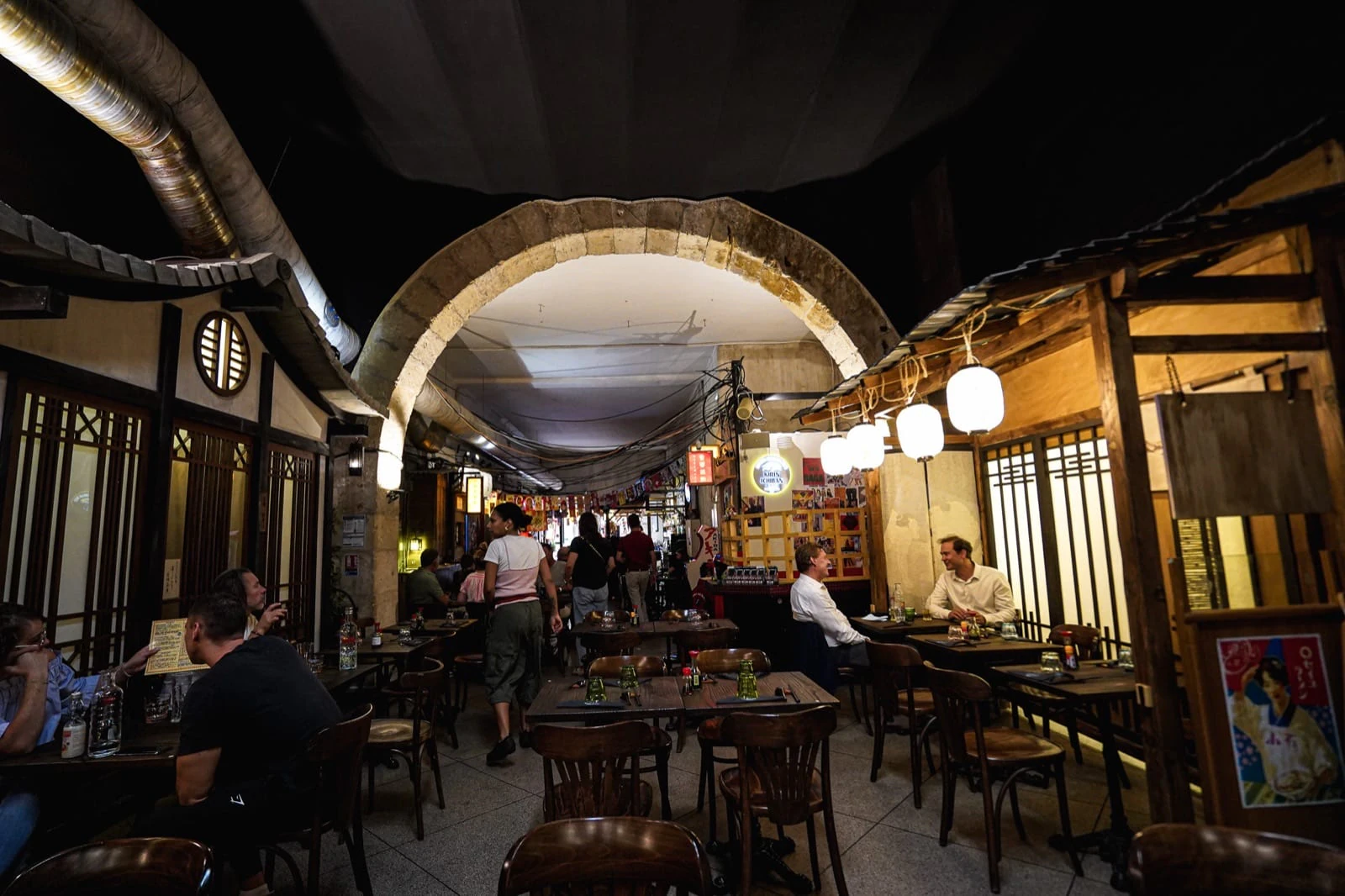
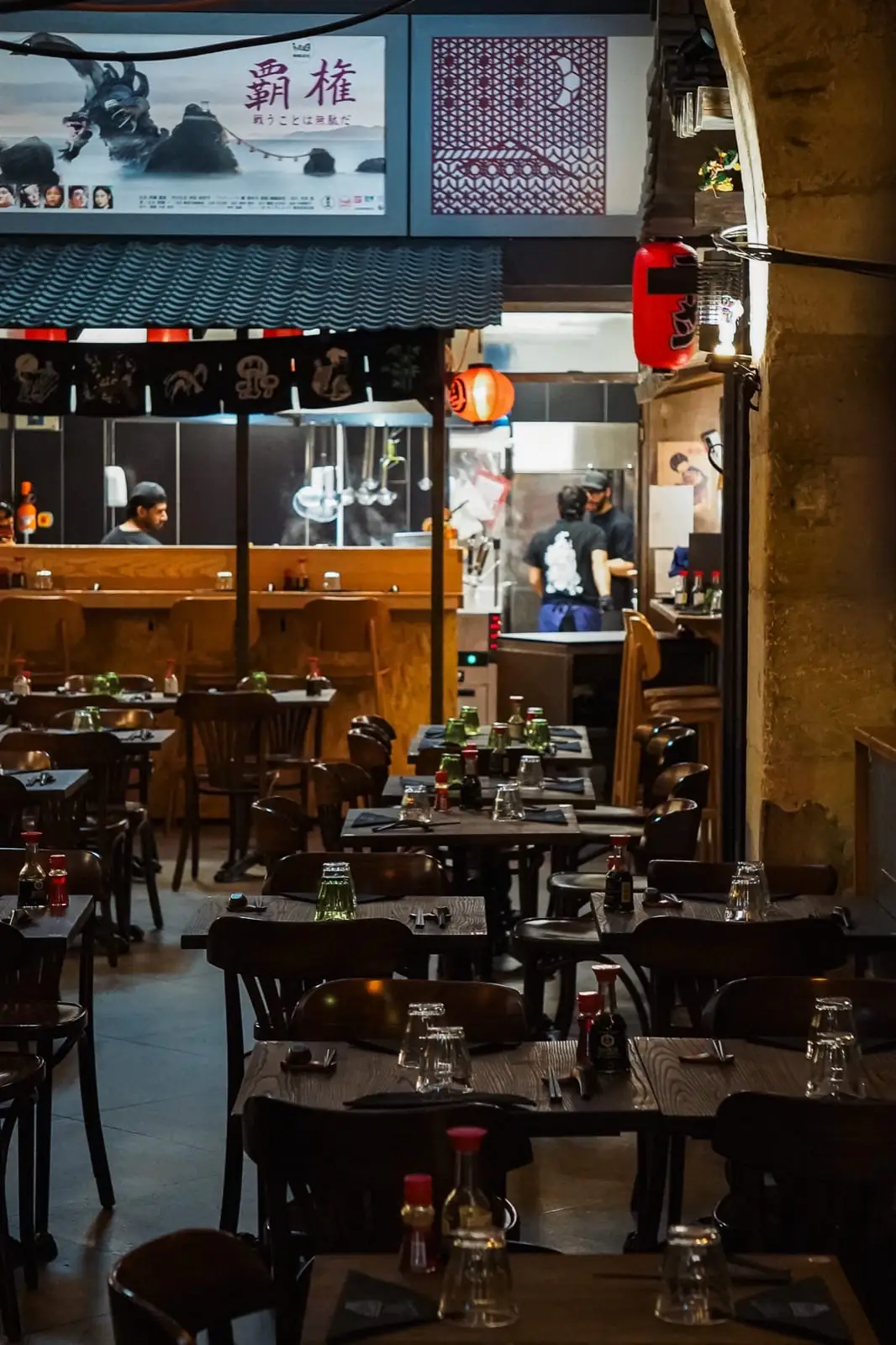
At Iwao, 27 rue Sainte in Marseille, this long history ends in a bowl served piping hot under the lanterns of a recreated Tokyo alley, its broths drawn in-house for hours.
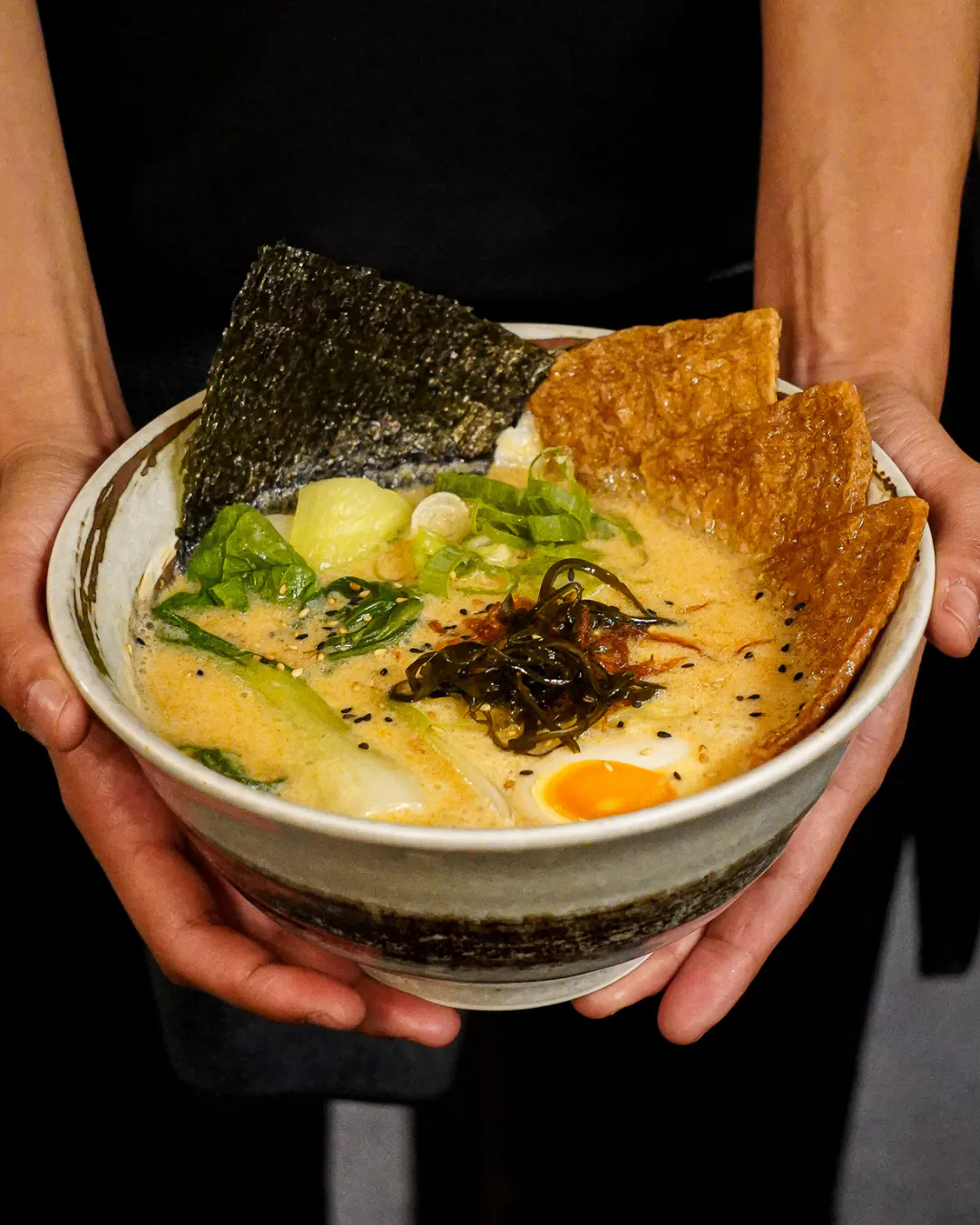
Tasting a ramen here retraces the whole journey — Chinese alkaline noodle, Japanese dashi, counter seasoning, hand-placed toppings. Every bowl carries a century of history.
FAQ
Explore
Iwao's ramen from other angles, and the rest of the house.
This article is part of the house notebook, where we write about ramen, sake and Japanese culture, one topic at a time. Find every article in our Japanese food blog, to read between two bowls.
And to move from theory to practice, discover how to eat ramen the right way.

Stage clear — table booked
The best way to understand a ramen is still to eat one, piping hot, plated in front of you. Book your table at Iwao and taste this century of history.
Or by phone: +33 4 91 54 08 27
