Ramen — wheat + kansui
Wheat flour and kansui (alkaline water). The kansui gives the yellow colour, the springy bite and the characteristic smell. Without it, it is no longer ramen.

Contents
Guide · Japanese food
Ramen, udon and soba look alike in the bowl and share almost nothing on the plate. Flour, thickness, colour, broth, hot or cold: here is what truly sets these three great Japanese noodles apart.
8 min read
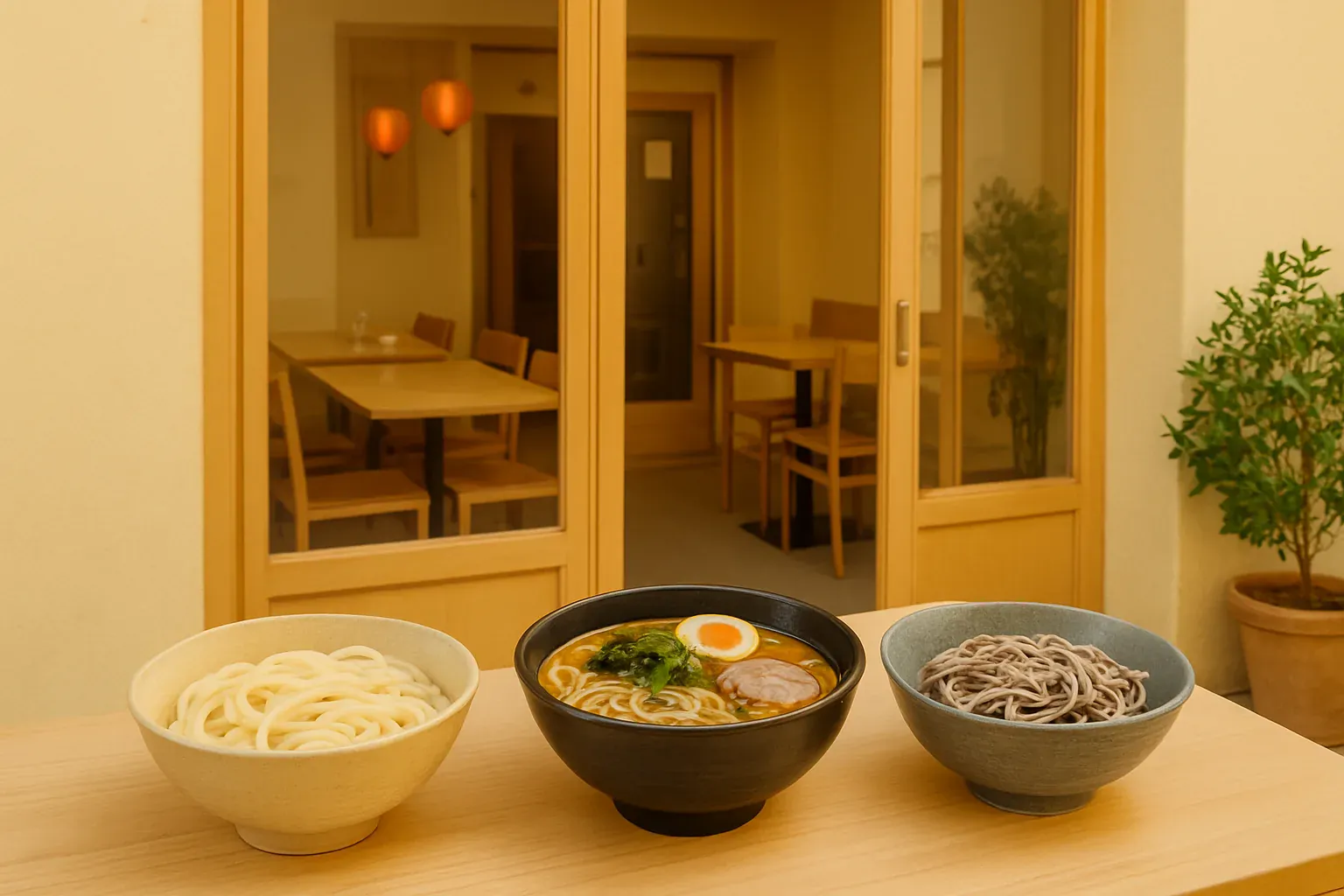
The difference comes down first to flour: ramen is wheat plus kansui (alkaline water, hence its yellow colour and springy bite), udon is pure wheat (thick, white, tender), soba is buckwheat (thin, grey, nutty). Ramen is served piping hot in a rich broth; udon hot or cold in a light dashi; soba mostly cold, dipped in a tsuyu sauce. In texture, ramen is firm and bouncy, udon soft and slippery, soba thin and brittle. Three flours, three textures, three ways to serve.
The overview
We tend to file them under one label — "Japanese noodles" — and that is already a mistake. Ramen, udon and soba are not three versions of one dish, but three distinct families, born in different eras, from different flours, for different uses.
The way to tell them apart is not to memorise recipes but to grasp three dividing lines: which flour the noodle is made of, how it is served (hot or cold, in broth or dipped), and what it tastes of. Keep those three markers in mind and you will recognise any bowl at a glance.
The dividing line
If there were only one difference to remember, this would be it. Not the shape, not the broth, not the colour: what defines a Japanese noodle first is the flour it is kneaded from. Everything else follows.
Ramen and udon both use wheat, but one ingredient parts them: kansui, an alkaline water present in ramen and absent from udon. Soba plays in another league entirely — it is made of buckwheat, which is not even a cereal.
Wheat flour and kansui (alkaline water). The kansui gives the yellow colour, the springy bite and the characteristic smell. Without it, it is no longer ramen.
Wheat flour, water and salt, nothing else. Hence its whiteness, thickness and soft, tender chew. The simplest of the three.
Buckwheat, sometimes cut with a little wheat for hold. Grey to brown, nutty, thin and brittle. A noodle apart.
The first
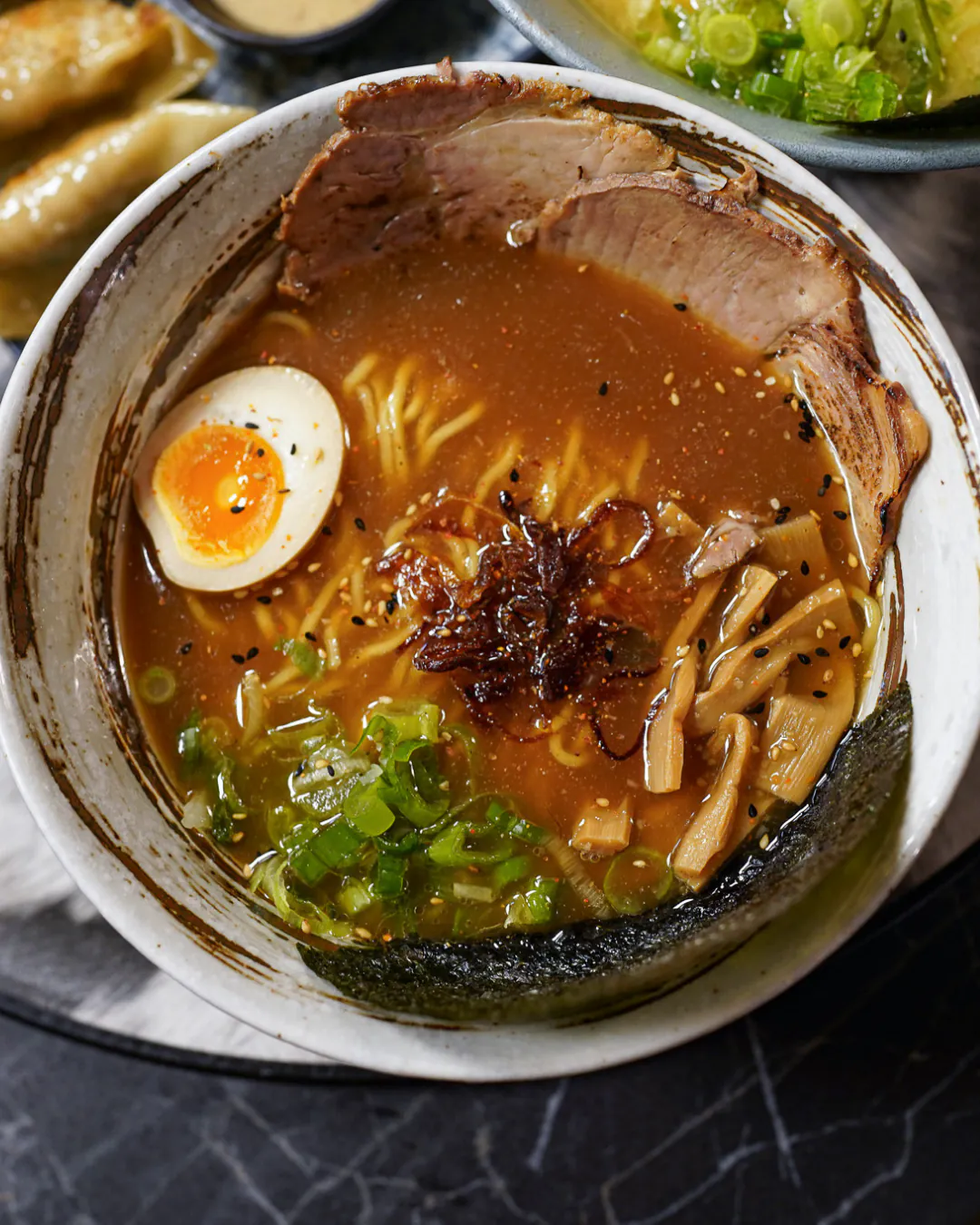
Ramen is the youngest of the three and, paradoxically, the best known abroad. Its noodle descends from Chinese lamian, and kansui gives it all its character: firmer, springier dough, a straw-yellow tint and an unmistakable aroma — calibrated to stand up to a powerful broth.
For ramen is nothing without its broth. Shoyu, miso, tonkotsu, shio: the noodle is just one layer of a dish conceived as a whole, served scalding and eaten fast. You do not dip it or rinse it — you slurp it straight from the soup, while it is hot.
The second
A complete change of register. Udon is a thick wheat noodle — often two to four millimetres — milky white, soft and slippery to chew. No kansui here, just wheat, water and salt, which explains its gentleness and neutrality. Udon carries the broth rather than defying it.
It is also the most versatile of the three: hot in a clear dashi (kake udon), cold with a dipping sauce in summer (zaru udon), stir-fried (yaki udon), or crowned with egg and tempura. Its home region, Sanuki, made it a national benchmark.
Two to four times wider than a ramen noodle, white and soft. It slides and fills you up — the "comfort" noodle of Japan.
In a light dashi in winter, dipped in cold sauce in summer, or stir-fried. The most chameleon of the three.
Soba is the only one of the three not made of wheat. Buckwheat — botanically a flowering plant, not a cereal — gives a thin noodle, greyish-brown, with a frank taste of hazelnut and earth. The best soba, called nihachi, blends 80% buckwheat and 20% wheat; purists go all the way to jūwari, 100% buckwheat.
Its texture is the opposite of udon: where udon is soft and supple, soba is thin, slightly brittle, almost dry under the tooth. It is often eaten cold on a bamboo tray (zaru soba), dipped strand by strand in a tsuyu sauce. Served hot in broth, it stays quieter than ramen — a noodle to be tasted for itself.
The third
The service
Same gesture, two temperatures — perhaps the most visible difference at the table. Ramen is served almost only scalding: heat carries the broth’s aroma and keeps the noodle firm. Soba, on the other hand, is happily eaten cold — its noblest form is summer zaru soba, rinsed in iced water to reveal its grain.
Udon plays both sides with equal joy: comforting in a steaming dashi in winter, refreshing dipped in cold sauce in summer. A simple rule: hot in a rich broth, think ramen; cold and dipped in a small sauce, think soba; works both ways, probably udon.
The accompaniment
Each noodle calls for its own liquid, and those liquids are nothing alike. Taste what surrounds the noodle and it will tell you which family it belongs to.
Rich, fatty, long-simmered from bones or vegetables, seasoned with a tare (shoyu, miso, salt). A dish in itself, not a mere soup.
Clear and light, from konbu and dried bonito (katsuobushi). It coats the noodle without crushing it — a backdrop, not a star.
A concentrated soy-mirin-dashi sauce, served cold and apart for dipping. You dip the tip of the noodle, never the whole strand.
In the mouth
Close your eyes and chew: each noodle gives itself away by its texture. Ramen is firm and bouncy, with a slight alkaline snap. Udon is the opposite: soft, supple, slippery. Soba is thin and slightly brittle, drier, with a short chew that releases its buckwheat scent at once.
Taste follows the same logic. Ramen noodles have a light flavour, soon covered by the broth. Udon is near-neutral, made to carry other flavours. Soba is the only one with an assertive, earthy, nutty taste — which is exactly why it is eaten cold and almost bare.
Beyond the bowl
The differences do not stop at the plate. Nutritionally and culturally, each noodle tells another story — and that can steer your choice as much as taste.
In tradition, soba stands apart: toshikoshi soba is eaten on New Year’s Eve, its long strands symbolising a long life. Udon stays regional and everyday; ramen has become a social phenomenon, almost a national sport with its rankings and its queues.
Buckwheat brings fibre, protein and rutin (an antioxidant). Jūwari soba (100% buckwheat) suits some gluten-free diets — but most soba contains wheat, so check.
Simple, gentle, nourishing: udon is the noodle of comfort and tired days, served to children and to the unwell. Light when its broth is.
A full, generous dish, ramen is the richest of the three because of its broth. A treat to enjoy hot and fast, not an everyday diet bowl.
In practice
So — ramen, udon or soba? It depends on the mood. Want a full, hot, comforting dish that stands on its own? Ramen. After something gentle and reassuring, or a noodle stir-fried with vegetables? Udon. Craving lightness and a frank taste, a fresh noodle to dip on a summer evening? Soba.
One last cue, valid everywhere: look at the colour. Straw-yellow in a rich broth is ramen. White and thick is udon. Grey or brown and thin is soba. Add the temperature and you will never mistake the family again, even with an unfamiliar menu.
At our place
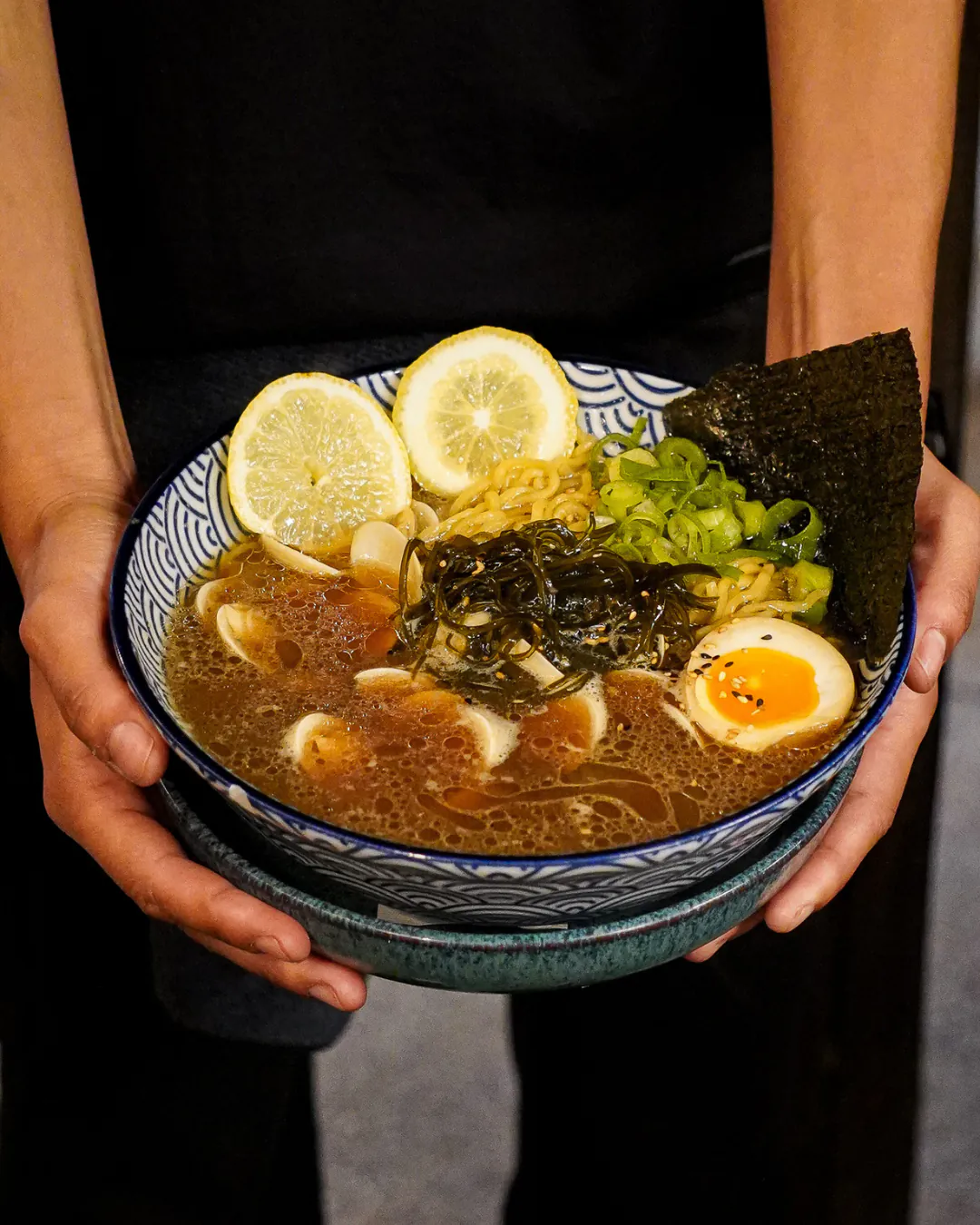
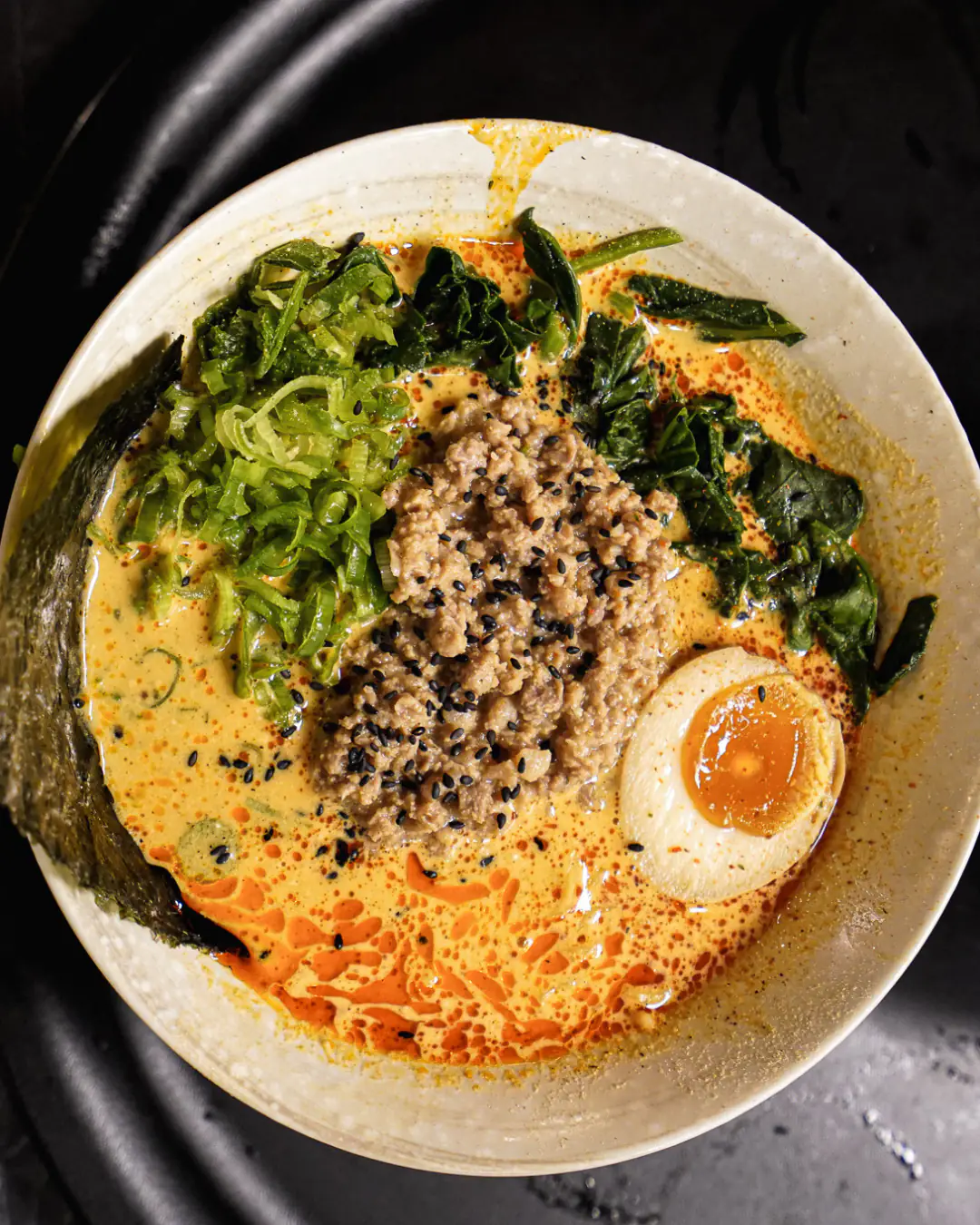
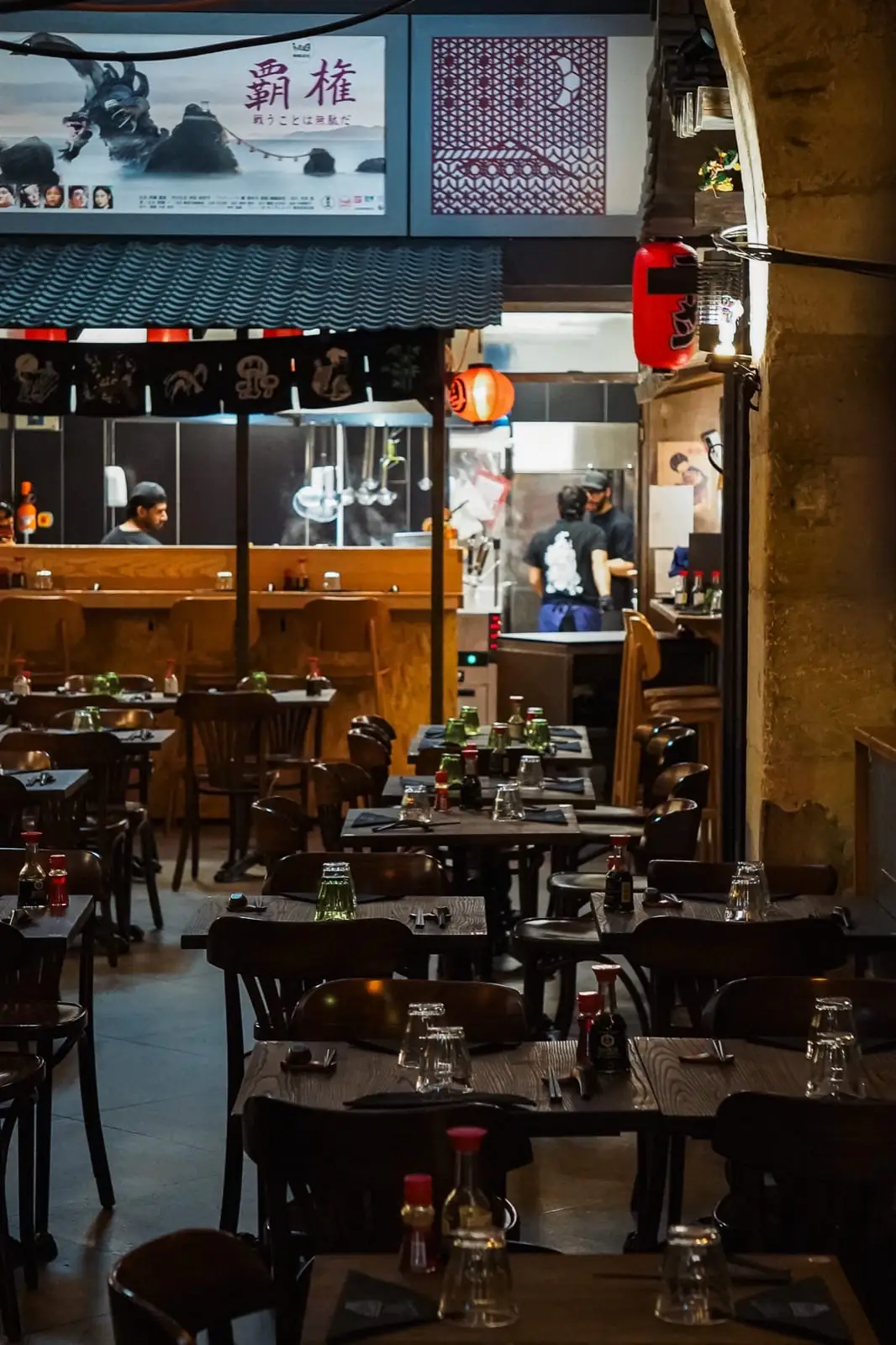
At Iwao, 27 rue Sainte in Marseille, we have chosen our side: ramen. Our broths are drawn in-house for hours, our alkaline noodles calibrated to stand up to the soup, and every bowl leaves for your table the second it is plated. If this guide made you hungry, start here.
Understanding the difference between ramen, udon and soba is good; tasting the noodle that made Iwao’s name is better. Push the door, choose your broth — clear shoyu, round miso, spicy tantanmen or a plant-based base — and let the yellow noodle do the rest.
FAQ
Explore
Iwao's ramen from other angles, and the rest of the house.
This guide is part of the house notebook, where we explore ramen, sake, table etiquette and Japanese culture, one topic at a time. Find every article in our Japanese food blog, to read between two bowls.

Stage clear — table booked
The best way to understand a noodle is still to taste it. Book your table at Iwao and come discover ramen, hot and plated in front of you.
Or by phone: +33 4 91 54 08 27
