Skip to content
Iwao

Guide · Japanese food

Ramen or sushi, which to choose for a real Japanese meal?

In France, “going for Japanese” almost always means sushi. In Japan, the sushi-ya and the ramen-ya are two separate worlds. This guide names no winner — it gives you a decision grid by season, company and mood.

10 min read

Dining room of a Japanese restaurant in Marseille, set tables and open kitchen under red lanterns
In short

The answer in five sentences

Ramen or sushi is not a contest but a choice of format. The sushi-ya is cold, raw and precise: bites of vinegared rice and fish, eaten piece by piece. The ramen-ya is hot and simmered: one complete bowl, served fast. Choose by situation, not hierarchy: no raw fish, a heatwave, kids, a ten-minute lunch → a hot dish fits better; cold finesse and the chef's craft → sushi. Iwao, on rue Sainte in Marseille, is a ramen-ya — house broths, no sushi.

The starting point

Two words, two worlds

In France, “Japanese” has almost become a synonym for sushi. It is an understandable shortcut, but a mistake. In Japan, the sushi-ya and the ramen-ya are entirely separate houses: different times, different food, different effort.

One works raw, cold fish in near silence; the other simmers a hot broth and serves a complete bowl in one gesture. They are not two versions of one cuisine — they are two cuisines. So “ramen or sushi, which to choose” only makes sense once you stop asking which is best.

A quick reminder first: ramen is noodles in broth, and “Japanese” is far more than sushi. To set the basics, see what a ramen really is. This article builds a method from there.

Two skills

Two crafts, two restaurants

A sushi-ya and a ramen-ya share almost nothing. Here is what each does, without hierarchy.

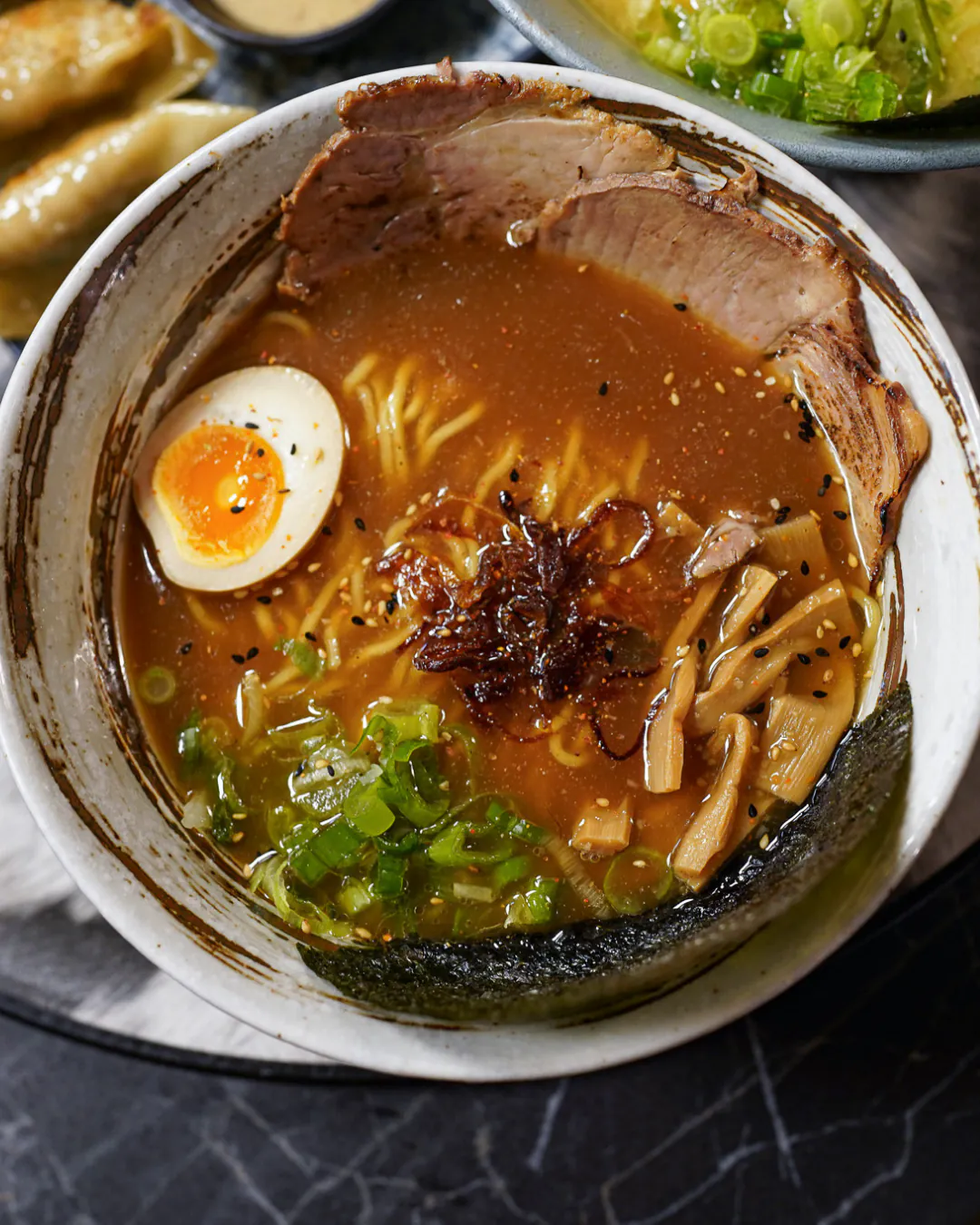
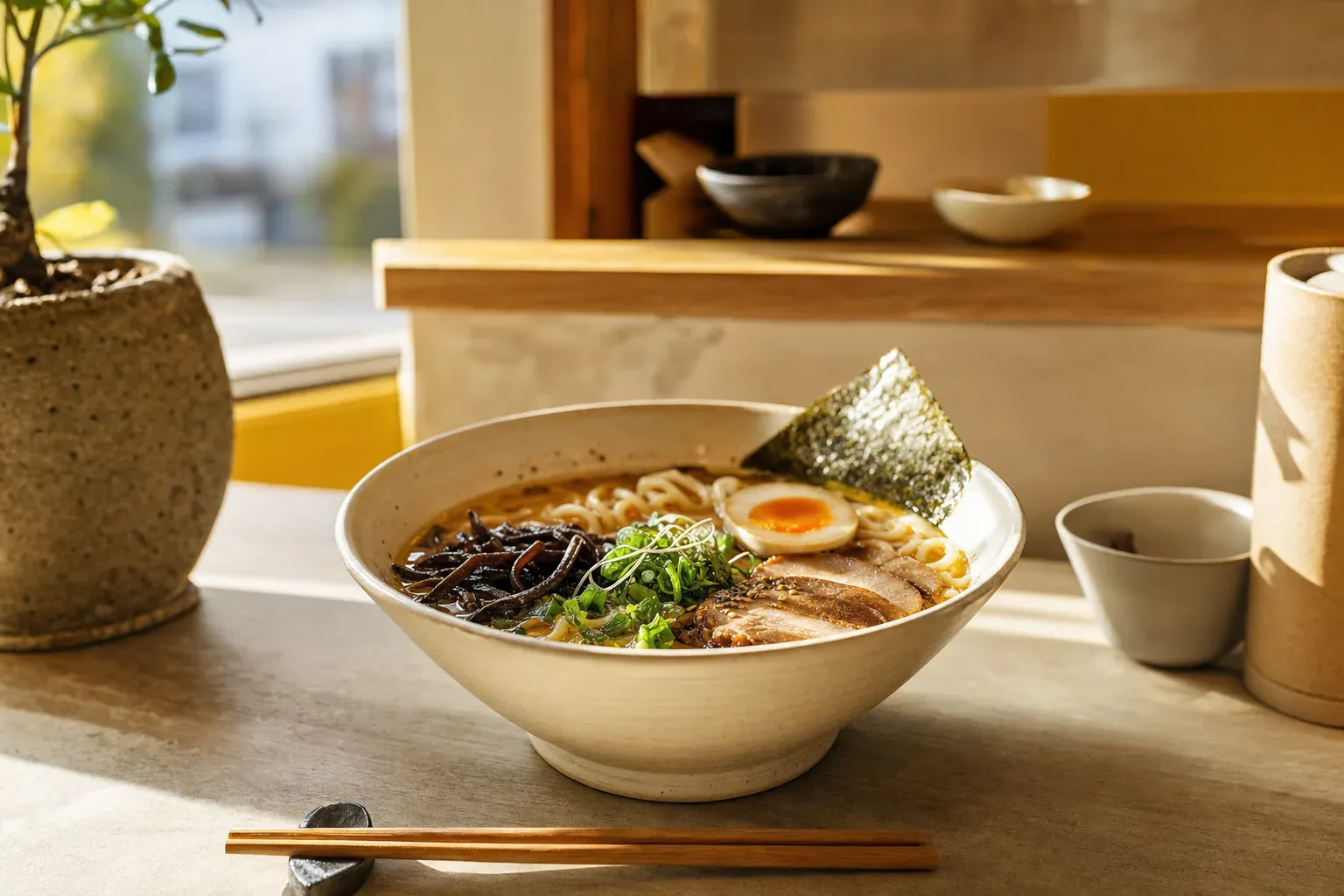
Japanese ramen bowl with chashu slices, soft egg and chives, served at Iwao in Marseille
寿司

The sushi-ya: cold, raw, precise

Everything turns on two masteries: vinegared rice at the right warmth, and fish chosen, trimmed and sliced with jeweller-like precision. The meal is eaten piece by piece, often at the counter. A cuisine of restraint and gesture — you go for finesse and for cold.

ラーメン

The ramen-ya: hot, simmered, one bowl

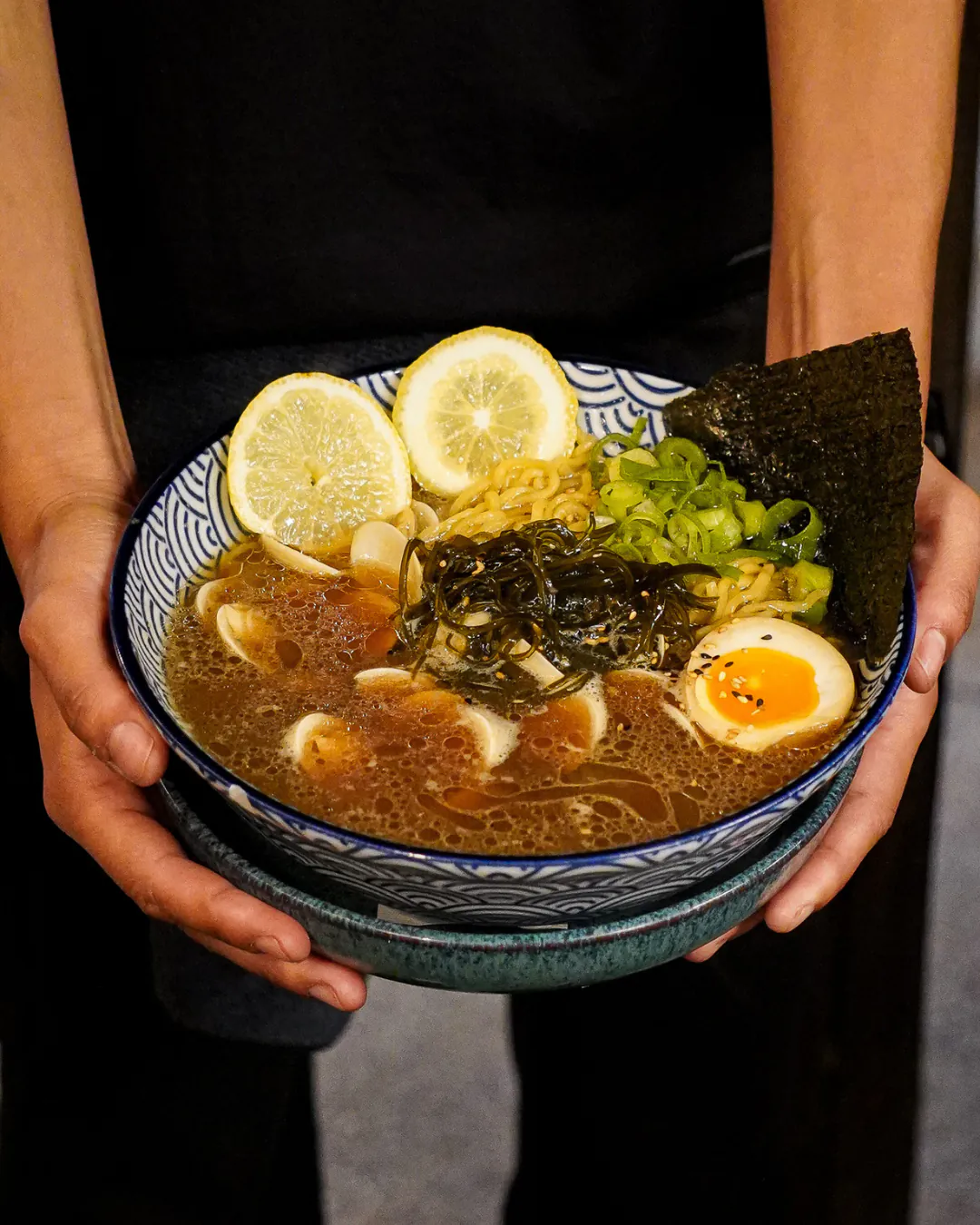
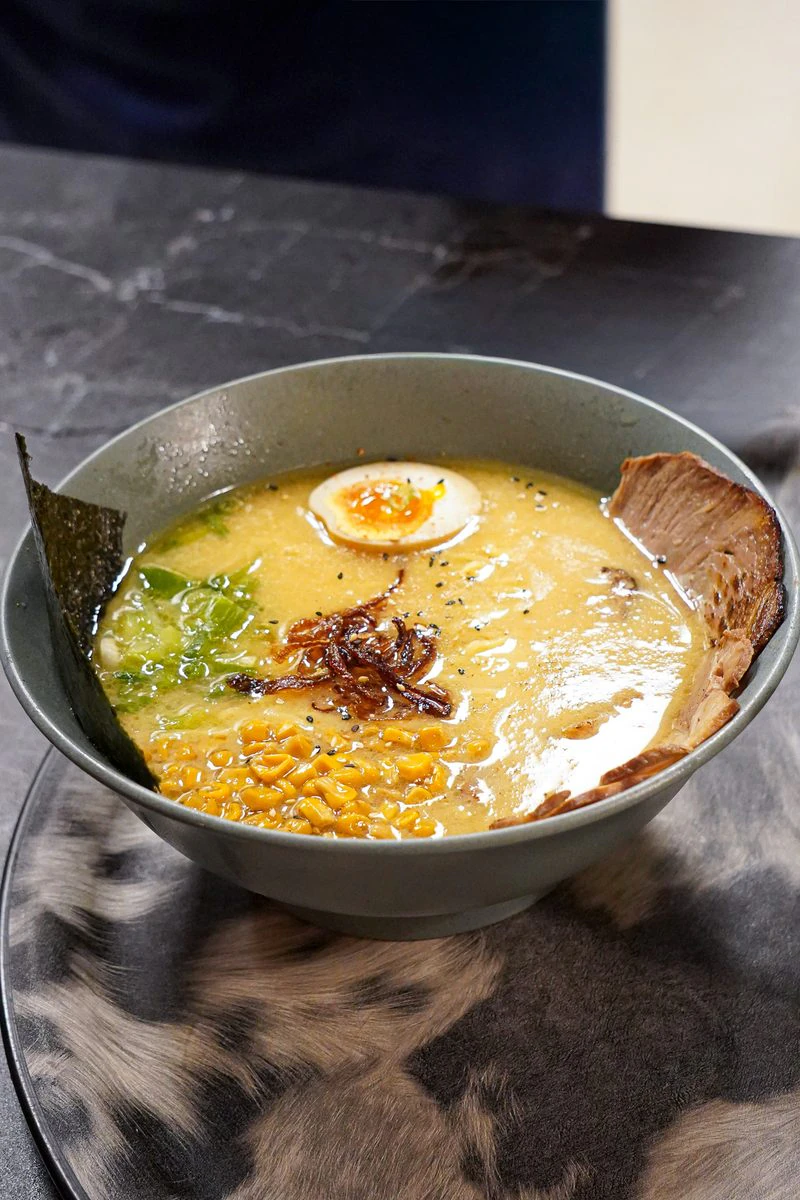
Here the pot rules. A broth drawn for hours, a tare at the bottom, alkaline noodles, a protein, vegetables: all in one piping-hot bowl, plated to order and served in minutes. Short, hot, complete. You do not count pieces — you dive into a bowl.

For what a ramen house really is, see the definition of a ramen-ya.

Japanese ramen bowl with lemon slices, soft egg, wakame and chives

Bowl or plate

What you really eat in each case

Beyond décor and price, the choice plays out in the bowl. Three concrete differences matter most, and none is about taste — they are about the shape of the meal.

01

Composition and balance

Ramen gathers noodles, protein, vegetables and hot liquid in one bowl — a structured whole. A sushi meal is a run of rice-and-fish bites, added one by one. One is composed for you, the other as you go.

02

Satiety

Noodles and broth fill you quickly and lastingly. A sushi plate satisfies in small touches, more gradually. Depending on your hunger, that is no detail.

03

Temperature

The most decisive and honest argument. A hot bowl is obvious in winter or the mistral; a cold, clean plate wins at 32 °C. The season often chooses for you.

The decision grid

Choosing by situation

The useful part: not a ranking, but a clear answer per case. Spot yours — several may stack — and the dial settles itself.

And on the meat-free question, we covered it separately in “what is vegetarian ramen”.

Dining room of a Japanese restaurant in Marseille, set tables and open kitchen under red lanterns
CAS 01

You dislike raw fish

The sushi reflex falls away — no problem. Japanese food is full of cooked options: noodle bowls, rice dishes, vegetarian versions. A ramen or a Japanese rice bowl settles it.

CAS 02

You come with children

Familiar noodle texture, a gentle broth and a fitting portion beat raw almost every time. A ramen made for children exists for exactly this.

CAS 03

You are vegetarian

A good plant-based ramen is no lesser version. The yasai miso ramen is a complete, filling choice.

CAS 04

You are on a quick lunch

Ramen is a single dish served in minutes. Ideal when time is short. That is the point of a Japanese lunch, fast without being rushed.

CAS 05

You go out at night, in a group or as a couple

Sharing, atmosphere and pace matter as much as the plate. A Japanese dinner in the evening suits that slower moment.

CAS 06

It is cold / it is hot

The season argument, the most reliable of all. Cold, rain, mistral: the hot bowl wins. Heat, terrace, lightness: cold wins. Listen to the thermometer.

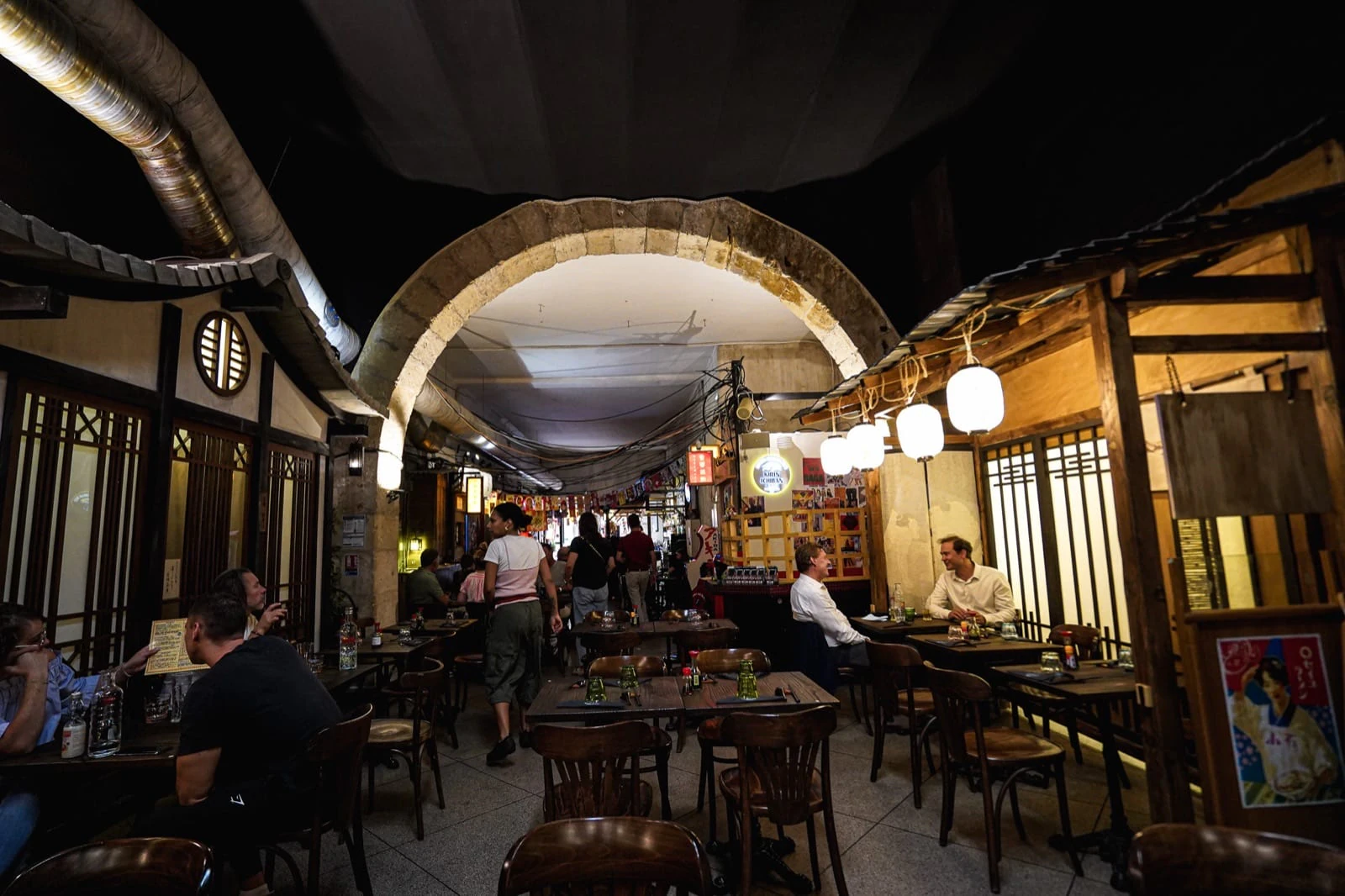
Immersive interior of the Iwao restaurant in Marseille, recreated Tokyo alley under paper lanterns

The local anchor

In Marseille, where the dial sits

The Marseille city centre has both families of restaurant, which is good news: some days you want one, some days the other. The choice is mood, not superiority — exactly this article’s logic.

Iwao is an avowed ramen-ya, on rue Sainte in the 1st (13001), steps from the Old Port. A Japanese restaurant in Marseille centred on ramen: a short, stable menu of five signature bowls — Shoyu, Miso, Yasai Miso, Asari, Tantanmen — plus a children’s ramen, house broths, Japanese rice bowls and a sake selection, among the house signature ramen, plated to order at the open kitchen.

The place extends the trip: a recreated Tokyo alley, a self-service manga library, arcade cabinets — all part of the Iwao experience, alongside tea, Japanese beer or a sake selection.

One honest point: Iwao serves no sushi. If tonight you want sashimi and maki, this is not the place — and saying so saves you time. If it is a hot bowl, a single dish, an immersive décor: the door is on rue Sainte.

In summary

No wrong choice, just a good moment

The grid in three lines: cold and raw, piece by piece, at the sushi-ya; hot and simmered, one bowl, at the ramen-ya. Bites you modulate versus a complete dish composed for you. Above all, season and company.

There is no wrong choice between ramen and sushi — only a format that fits the moment. Next time you hesitate, ask what you feel like, right now.

And if the answer that night is a hot bowl, there is a place for it: a ramen-ya on rue Sainte, in Marseille, drawing its broths daily.

FAQ

The practical questions people ask

What should you drink with ramen?
As you like: green tea to stay light, a cold Japanese beer against the hot broth, or a sake with the richness of the bowl. Nothing compulsory — just do not cover the broth.

Going deeper: how to taste sake, and our sake selection.

What time do you eat ramen?
Lunch or dinner, without hesitation. In Japan ramen is as much a quick lunch as a dinner. It is a single dish that fits your schedule.
Can you eat both ramen and sushi in the same restaurant?
In Japan it is rare: specialisation is the norm. Sushi needs impeccable fish and precise cutting; ramen needs pots simmering for hours. Two crafts, two cold chains, two kitchens.
Why did ramen become popular in France?
Largely through pop culture: manga and anime showed the steaming bowl as an everyday, desirable dish long before it could be tasted here. Independent ramen-ya did the rest.
Does ramen cost more than a plate of sushi?
In principle, ramen is a single dish while a sushi plate is many pieces. Price logics do not compare directly. We stick to the principle, with no figures.

Price is covered separately, on the ramen prices in Marseille page.

Does Iwao serve sushi?
No. Iwao is a ramen-ya: house broths, Japanese rice bowls and a sake selection — but no sushi. A choice of specialisation.

Iwao is a Japanese restaurant in Marseille devoted to ramen, on rue Sainte.

Going further

A bridge to the house

Decided on hot and simmered? The bowl waits on rue Sainte. Discover the restaurant japonais marseille and its five signature ramen, steps from the Old Port.

Lucky daruma having its second eye painted

Stage clear — table booked

In the mood for a hot bowl?

If your choice leans hot and simmered, book your table at Iwao and step into the Tokyo alley on rue Sainte.

Continue → book your table

Or by phone: +33 4 91 54 08 27