Fresh noodles
Most bounce and bite, quick to cook, short shelf life.

Contents
Guide · Japanese food
The noodle is half of a ramen, yet nobody talks about it. Here is what is at the end of your chopsticks, and how to recognise a good one.
10 min read
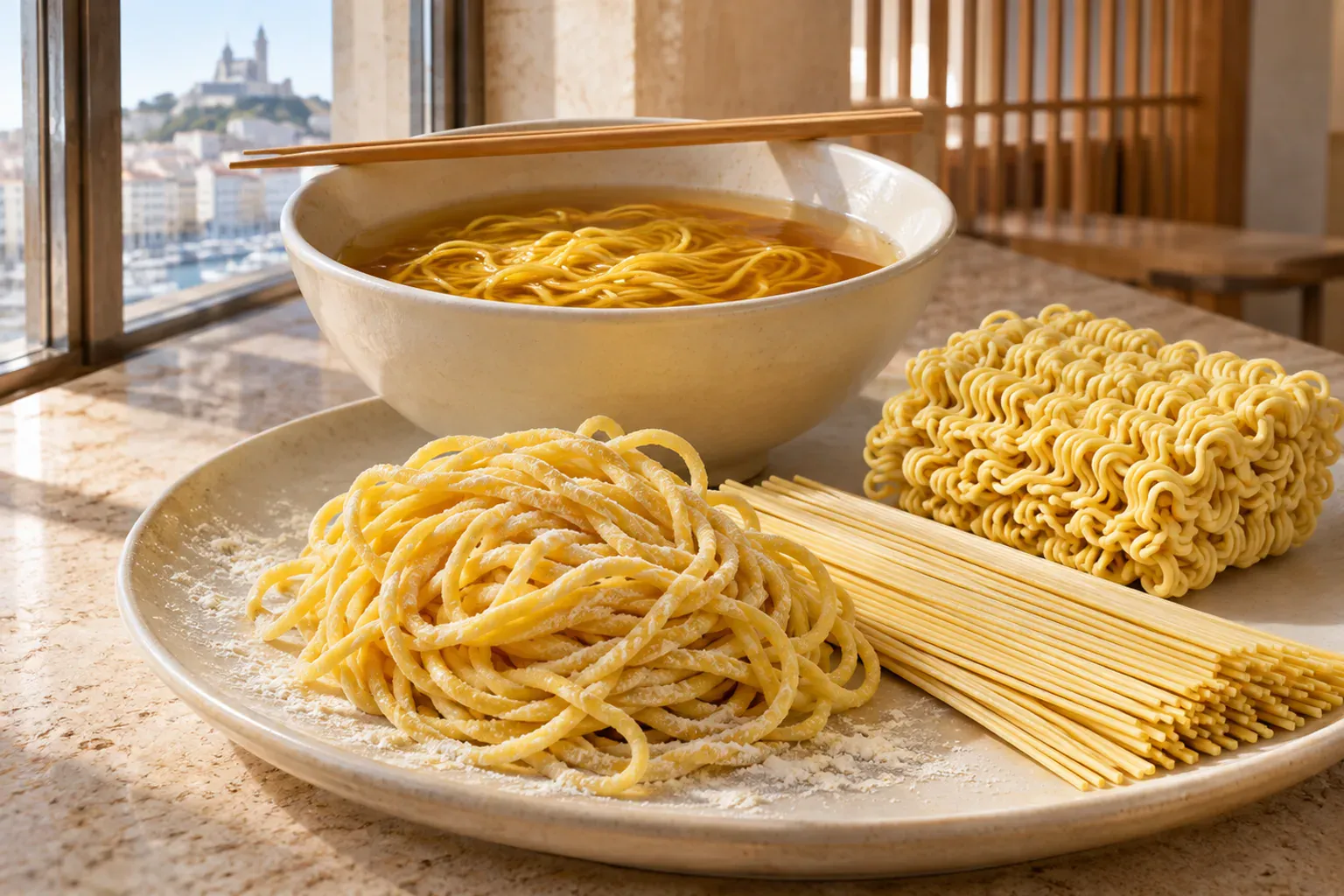
The answer in five sentences
Ramen noodles are wheat flour, water, salt and kansui, an alkaline water that makes them yellow and springy without egg. Fresh noodles have the most bounce but keep briefly; dried ones are firmer and keep for months; instant noodles, fried or air-dried, are a different product. None is better in absolute terms: the noodle must suit the broth. Cooking is a matter of seconds since the noodle keeps cooking in the bowl, hence firmness levels like katame, futsū and yawarakame.
The starting point
We always talk about the broth, yet the noodle is half the experience. Fresh or dried: does it really matter?
This article focuses on the third element of the bowl, after the broth and its seasoning.
The definition
Kansui, an alkaline water made from sodium and potassium carbonate, is what makes a ramen noodle.
Alkalinity turns flour flavonoids yellow and tightens the gluten, giving the firm "shiko-shiko" bite.
Udon has no kansui and soba uses buckwheat — see our guide on ramen, udon and soba, and on what a ramen is.
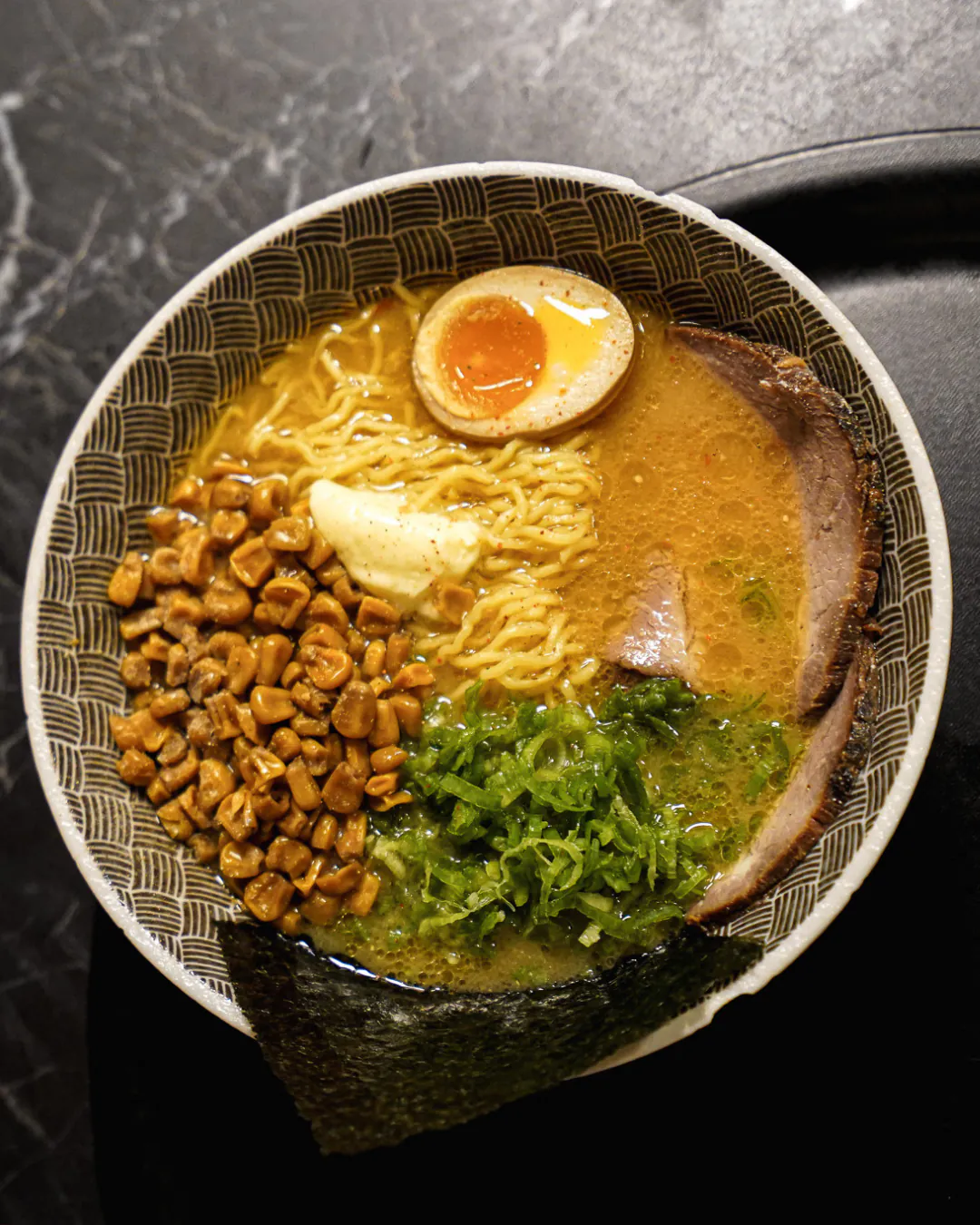
The comparison
Same flour and kansui, different processing — and a different texture.
Most bounce and bite, quick to cook, short shelf life.
Firmer and more even, keep for months, cook longer.
Steamed then fried or air-dried: a separate product.
| Criterion | Fresh | Dried | Instant |
|---|---|---|---|
| Texture | Springy | Firm, even | Soft, spongy |
| Storage | A few days, freezable | Months | Months |
It depends on the broth and on the cooking precision.
The vocabulary
Thickness, shape and water content decide how much broth each bite carries.
Low hydration gives a dense, snappy noodle; high hydration a softer, "mochi-mochi" one.
Discreet, for light broths.
Holds dense broths, like Sapporo miso.
As a general principle, a clear shoyu ramen suits a finer noodle, while a rich miso ramen calls for a thicker, wavier one.
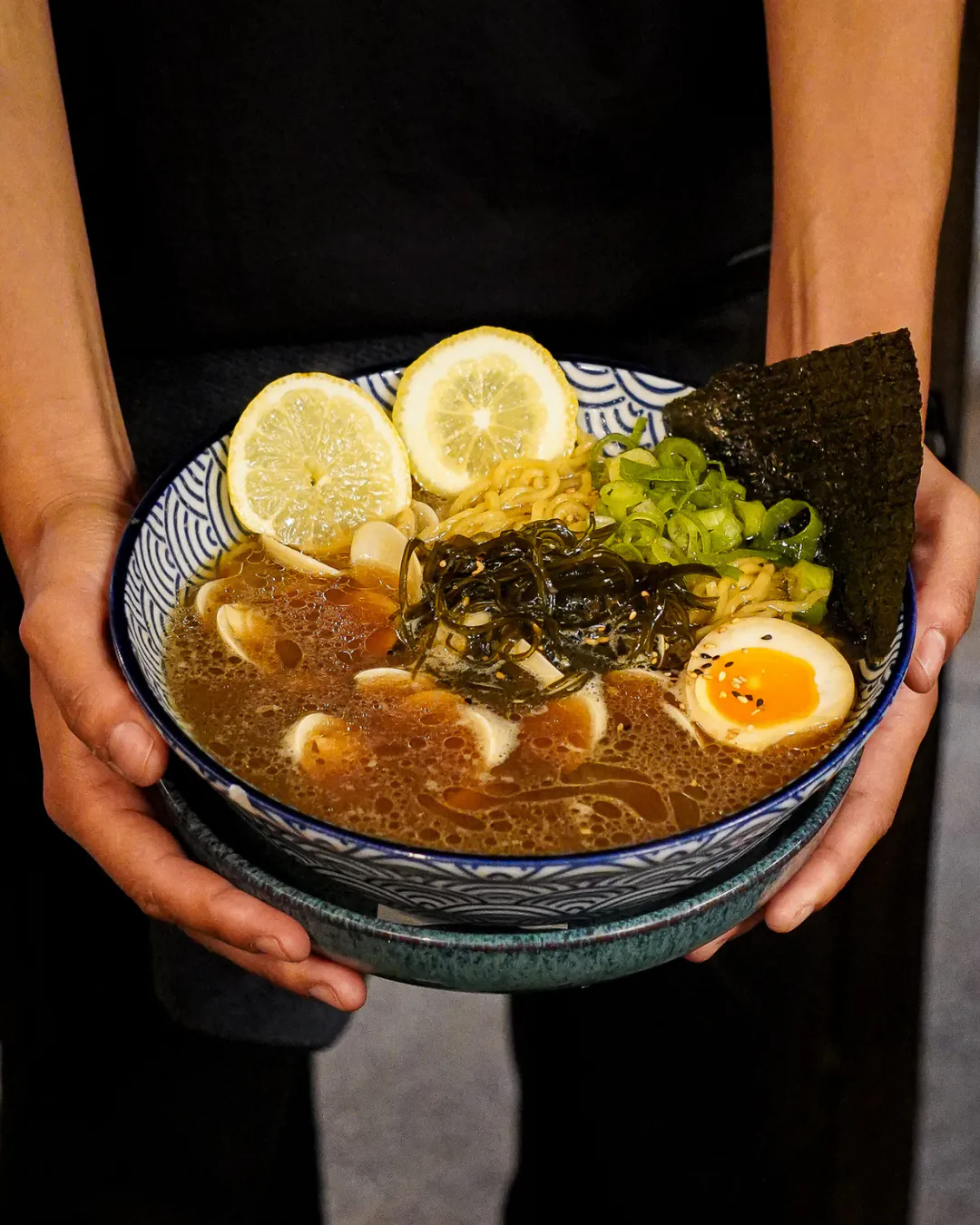
A thin to medium noodle.
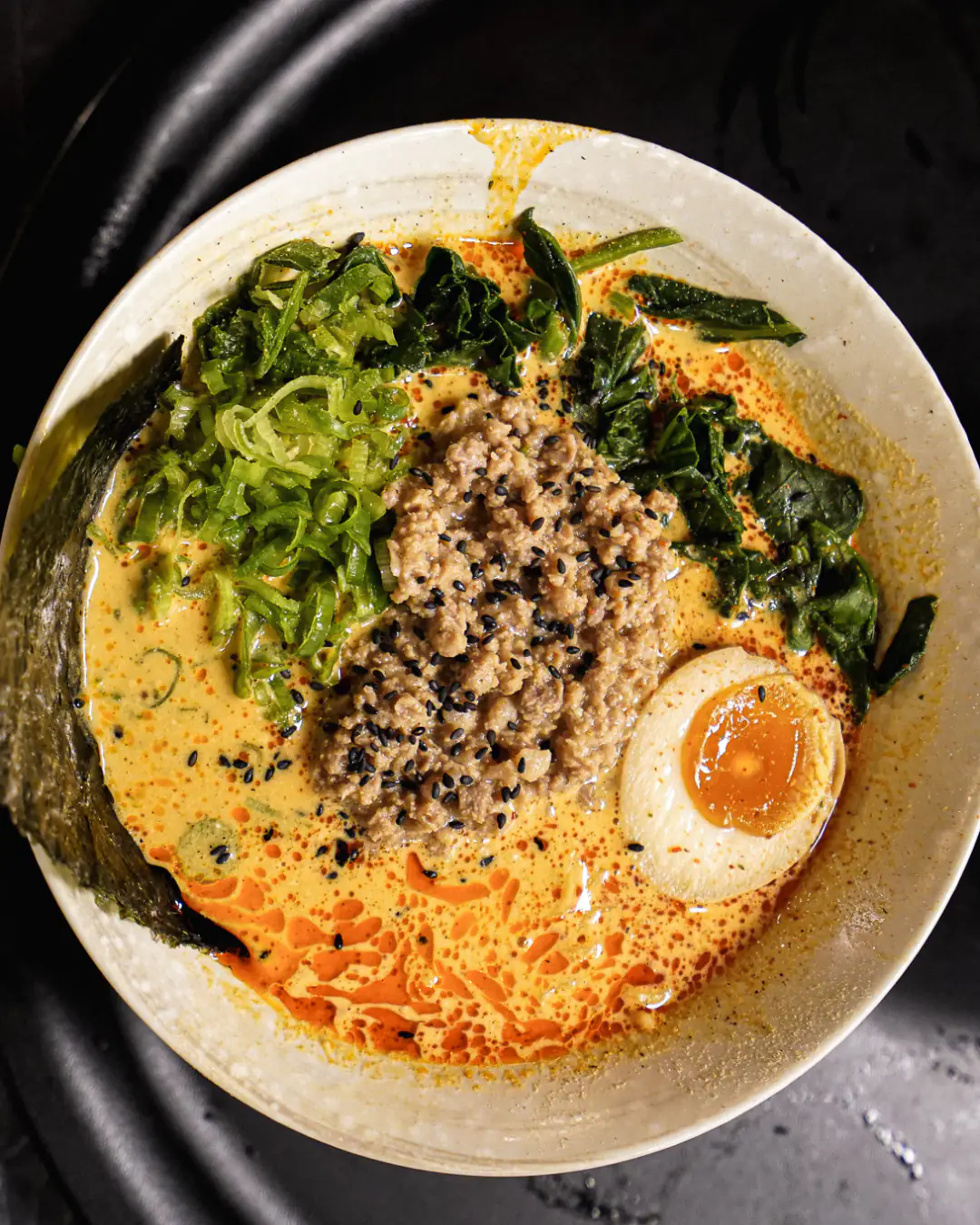
A thicker, wavy noodle.
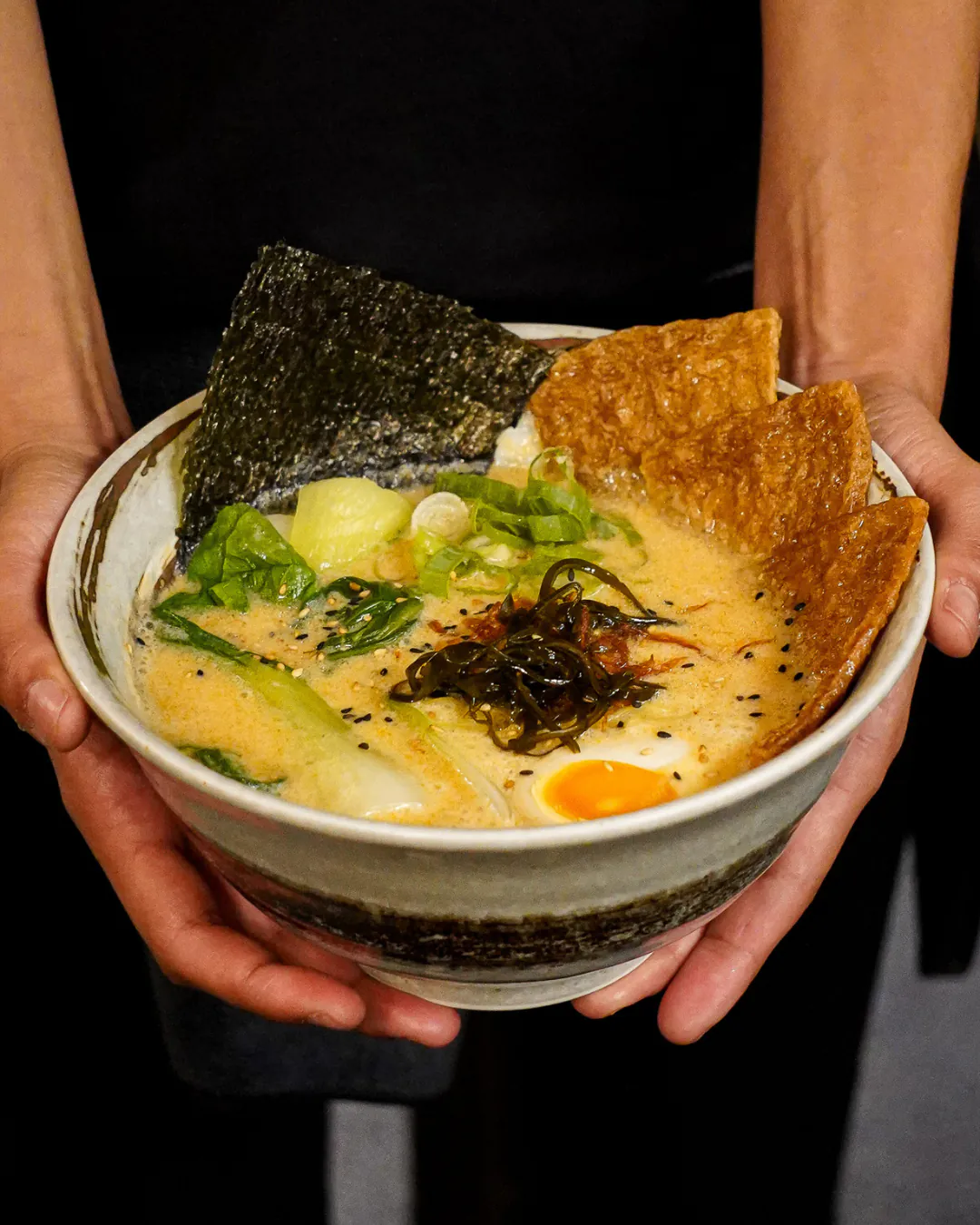
The clock
Hot broth keeps softening the noodle, so cooks drain it just before it is done.
Shorter cooking.
The house standard.
Longer cooking.
Some Hakata shops go even firmer.
Ramen does not wait — see how to eat ramen.
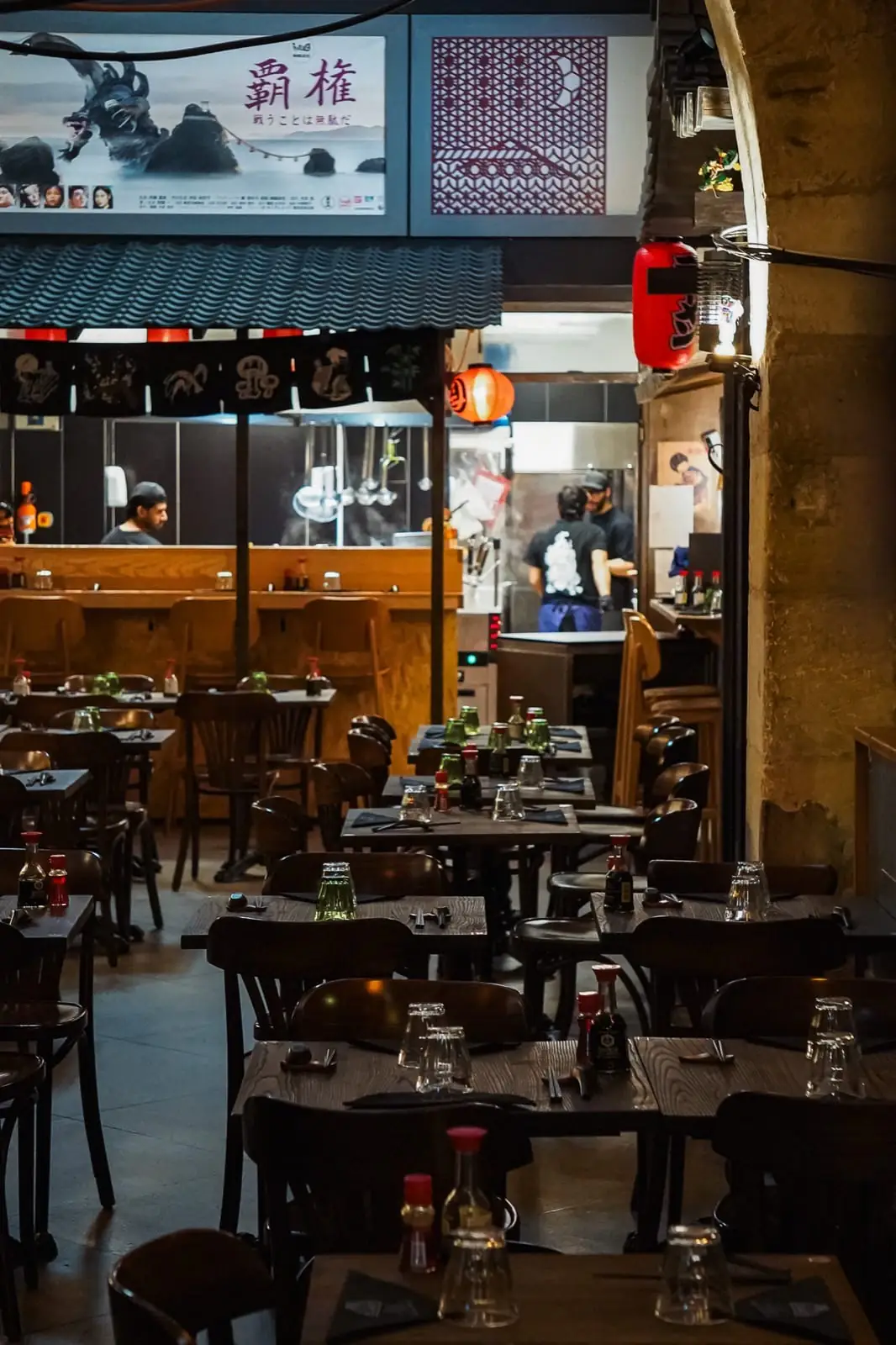
As a guest
Four clues are enough.
Resistance, then bounce.
The last bite like the first.
An open kitchen also tells you a lot — see our ramen-ya definition.
At home
A few reflexes in the Asian grocery aisle.
Look for kansui (sodium/potassium carbonate).
For hot ramen, drain and go straight into the broth.

The verdict
A noodle is only judged with its broth.
At Iwao, rue Sainte, we serve ramen with house-made broths: five signature ramen (Shoyu, Miso, Yasai Miso, Asari, Tantanmen) plus a kids’ ramen — see the ramen menu.
Iwao · 27 rue Sainte, Marseille (1st)
FAQ
Explore
Broth, noodle, tasting — and the rest of the house.
To taste a bowl built in front of you, discover our ramen authentique marseille on rue Sainte.

Stage clear — table booked
Book your table at Iwao, 27 rue Sainte, or drop by.
Or by phone: +33 4 91 54 08 27
