The tare
The seasoning base at the bottom — soy, miso or salt. Invisible, but it signs the flavour.

Contents
Guide · Japanese food
A bowl of ramen is eaten in an order, at a rhythm, with two tools. Nothing complicated, nothing sacred: just gestures that exist because they make the bowl better. Here is how it works, from the first sip to the last noodle.
9 min read
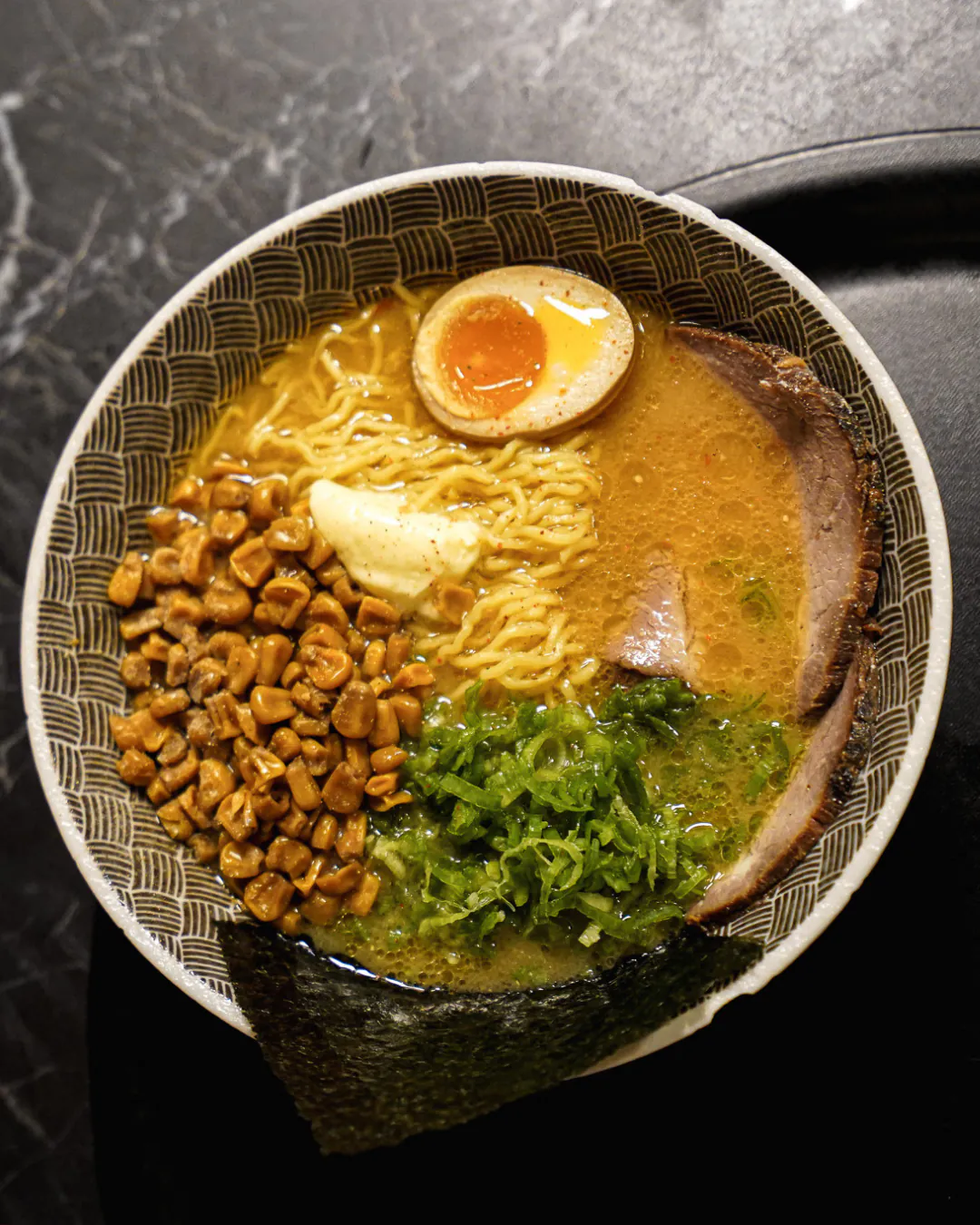
Start with two or three spoonfuls of broth, before mixing anything. Then lift a small bundle of noodles out of the bowl with your chopsticks and slurp them: the air cools them and carries the aroma. Alternate noodles, broth and toppings instead of eating each element on its own. Eat fast — seven to ten minutes, before the noodles swell and lose their bite. Season only after tasting, never plant your chopsticks in the bowl, and finishing the broth is the finest compliment you can pay the house.
Before the bowl
A ramen-ya is not a general Japanese restaurant: it is a house built entirely around its broths. In Japan you often order at a ticket machine and eat at a counter, and the bowl lands three minutes later. The meal is short, hot and focused.
So choose quickly and clearly: a broth first — shoyu, miso, tonkotsu or a plant-based base — then let the house recipe decide the toppings. Ask for your starters before the bowl, and mention allergies when ordering: a broth that has simmered for hours cannot be adjusted at the table.
What is inside
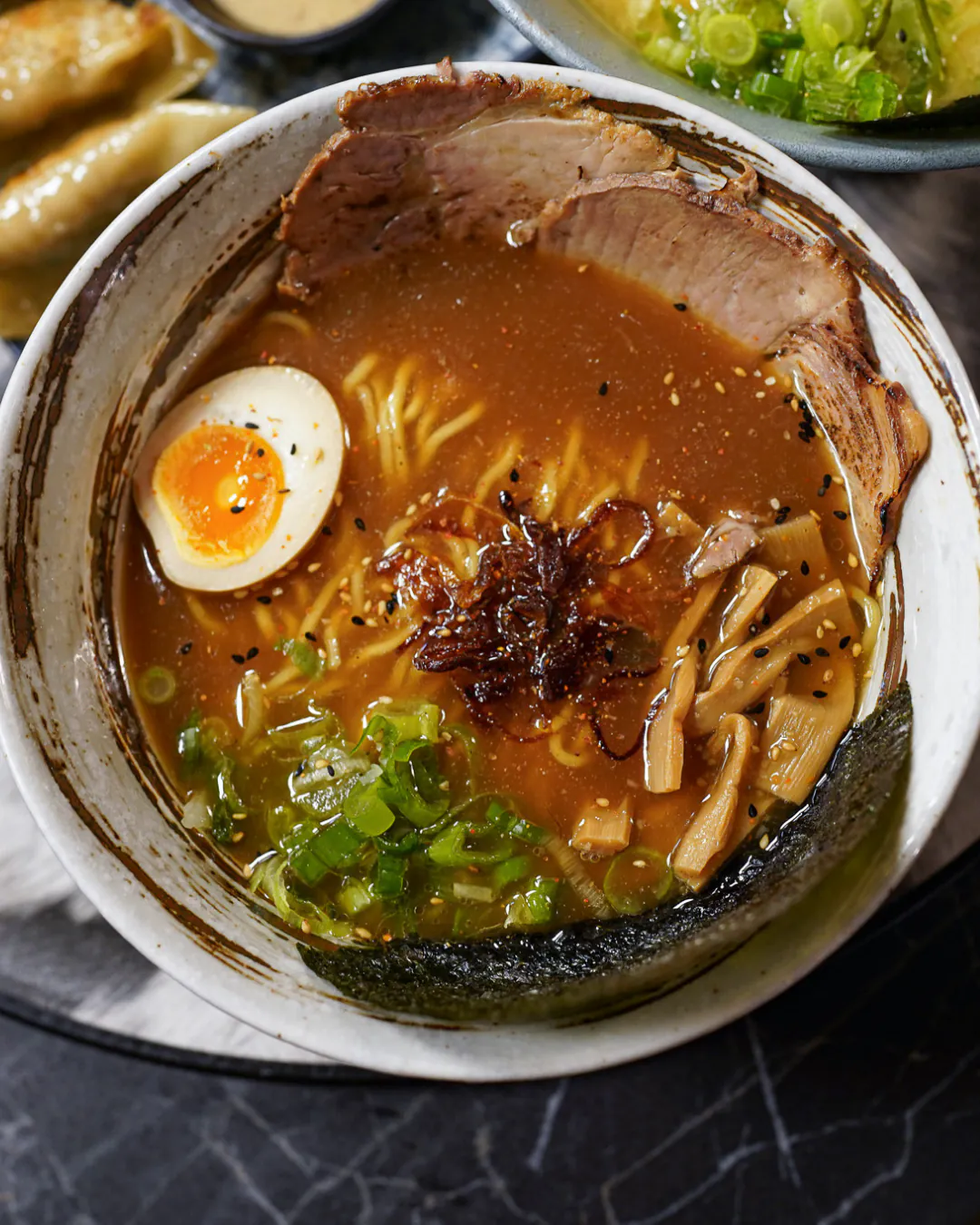
A bowl is built in four layers, in a precise order: the tare at the bottom, the broth that wakes it up, the noodles laid on top, and the toppings placed one by one. That plating is not decorative — it decides what you taste first.
This is why you do not stir everything on arrival. A bowl mixed in one sweep becomes a uniform soup and loses the contrasts the cook built: fat against acidity, sweetness against salt, iodine against roundness. Look at the bowl for five seconds first.
The seasoning base at the bottom — soy, miso or salt. Invisible, but it signs the flavour.
Drawn in-house for hours. It must stay piping hot: heat is what carries the aroma.
Alkaline, springy, served al dente. They keep cooking in the broth — hence the fast meal.
Chashu, marinated egg, nori, spring onion, bamboo shoots, corn. Each one is a contrast, not a filler.
The first move
The first gesture is not about noodles. Take the spoon, draw broth from the edge of the bowl and drink two or three sips before anything else. It is the broth that took the most work, and it will tell you whether the bowl needs anything. Nine times out of ten, it does not.
Those sips also set your temperature reference. Ramen broth is served very hot, because heat keeps the noodles firm and lifts the aroma. Do not blow across the bowl: lift the noodles instead and let the air do the work on the way up.
The signature move
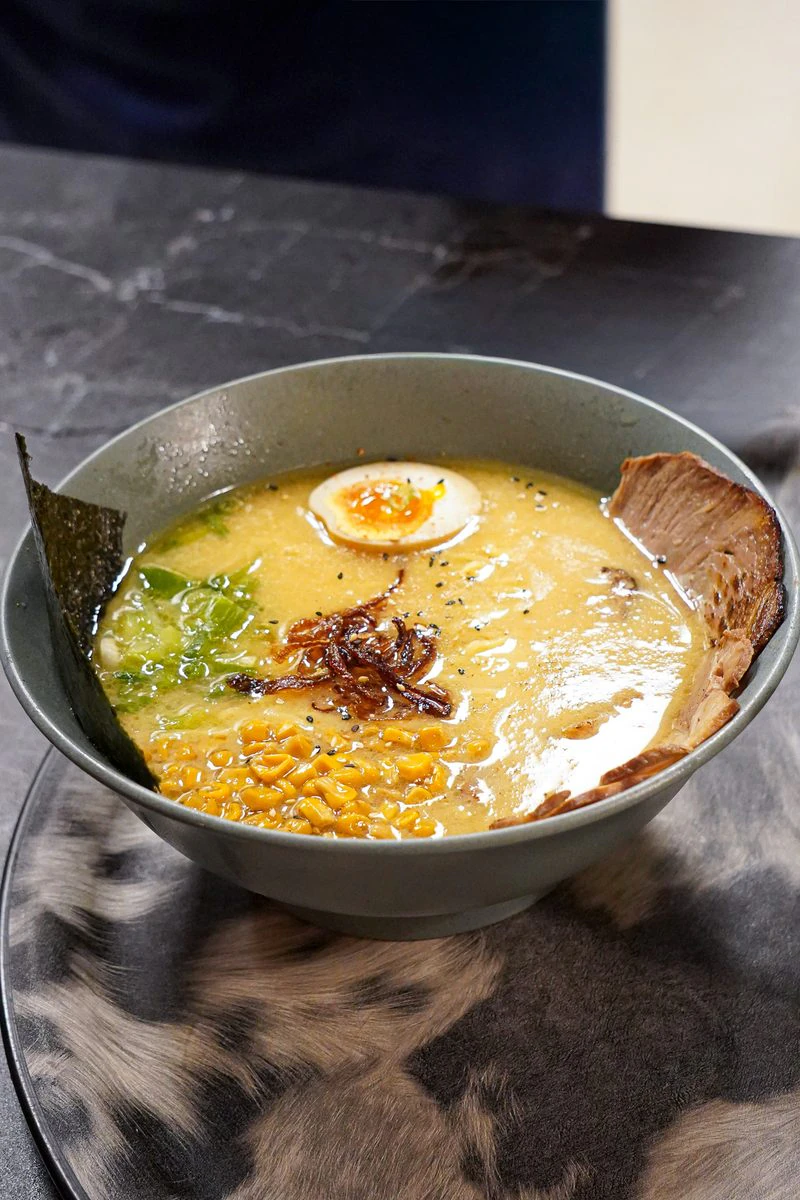
You slurp the noodles — susuru — and it makes noise. That noise is not rudeness: the air you draw in cools a noodle straight out of a very hot broth and pushes the aroma through the retro-nasal route, exactly like a sommelier aerating wine. Eating ramen in silence means eating it lukewarm and half-tasted.
The gesture is simple. Isolate six or seven strands with your chopsticks, lift them clear of the broth, let the excess fall for a second, bring the bowl closer with your other hand, then slurp in one go without cutting the noodles. Two or three tries are enough to find the right bundle size.
The tools
Ramen is eaten with two hands. The chopsticks handle solids: noodles, chashu, nori. The renge — the deep spoon — handles liquid and doubles as a tray: the egg, a topping, a few short noodles rest there before the mouthful.
Keep the spoon in your non-dominant hand, half submerged, ready to catch what falls. And when you put your chopsticks down, lay them flat on the rest or across the rim — never planted upright in the noodles, a gesture reserved for funeral offerings in Japan.
They isolate, lift and dip. A small bundle at a time, and never cut the noodles.
The deep spoon drinks the broth and acts as a tray. It stays in your hand, not on the table.
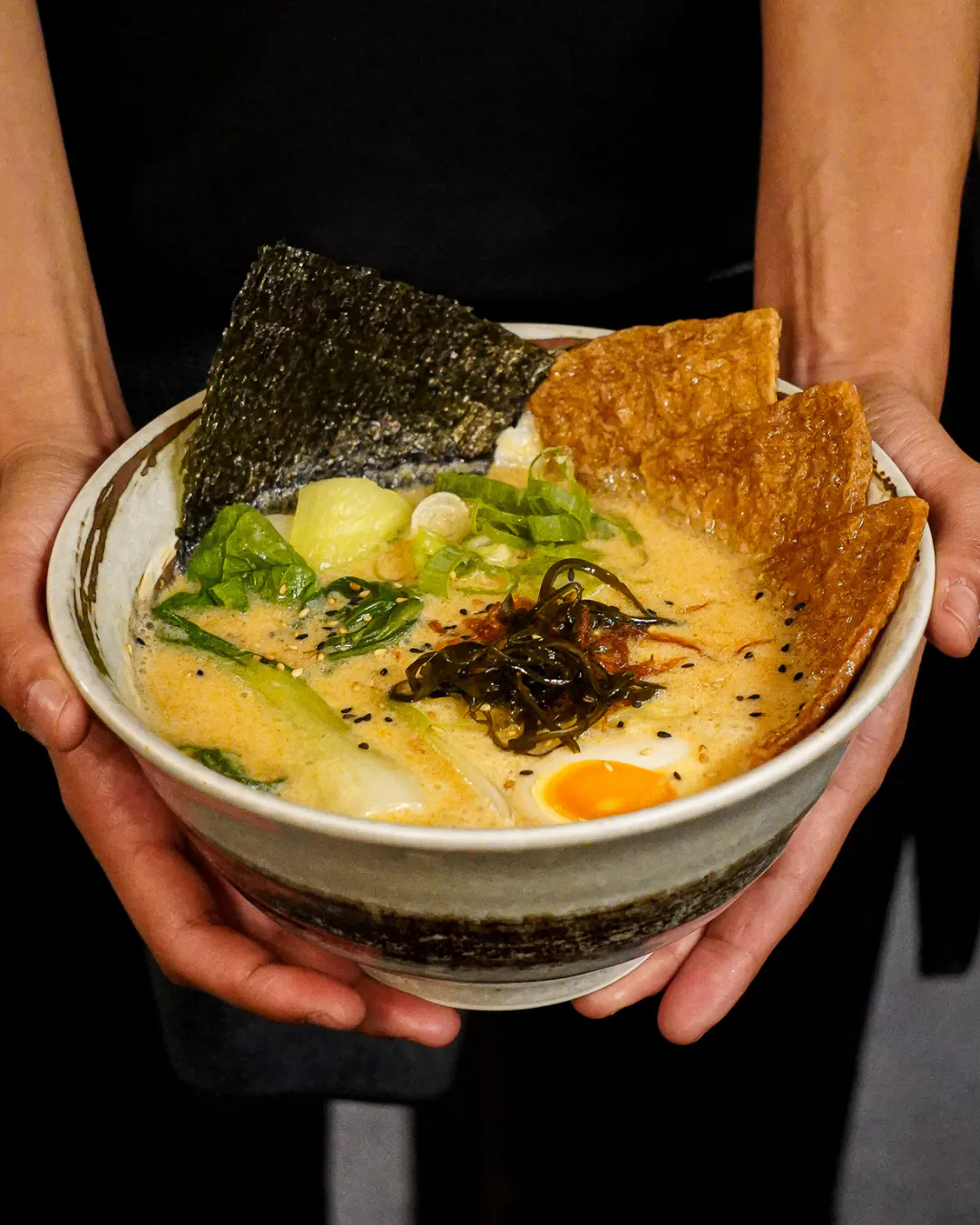
The progression
After the first sips you alternate: a few noodles, a sip of broth, a topping, repeat. A bowl eaten in blocks always ends on its least interesting part; a bowl eaten in alternation stays interesting to the last spoonful.
Some toppings need timing. Nori goes early: dip it a few seconds, then wrap it around some noodles. The marinated egg belongs in the middle or the end — split it with the spoon so the running yolk seasons the remaining broth. Chashu is alternated with noodles, never eaten in one block. Spring onion and bamboo shoots are your breathing space.
The rhythm
Two or three spoonfuls, before any mixing.
First bundle lifted and slurped while they are still taut.
Alternation over, last sips of broth. The bowl is finished in time.
A ramen has a shelf life. The noodles keep absorbing broth from the moment they are served: after ten minutes they have swollen, lost their bite, and thinned the broth. That is the only real urgency of the meal, and it explains every other custom.
Count seven to ten minutes from the first sip to the last. Talk before, talk after. And if the bowls reach the table at different times, start without waiting for the others — politely waiting is precisely what ruins the table’s ramen.
Make it yours
Chilli powder, pepper, chilli oil, sometimes garlic or vinegar sit on the table for a reason — but always in this order: taste, then correct. Seasoning before the first spoonful means correcting a dish you have not tasted. Add little, stir barely, taste again.
Kaedama, a second serving of noodles, is a southern tonkotsu tradition rather than a universal rule. Ask for it when about a third of your noodles are left, not once the bowl is empty: fresh noodles need hot broth to be good.
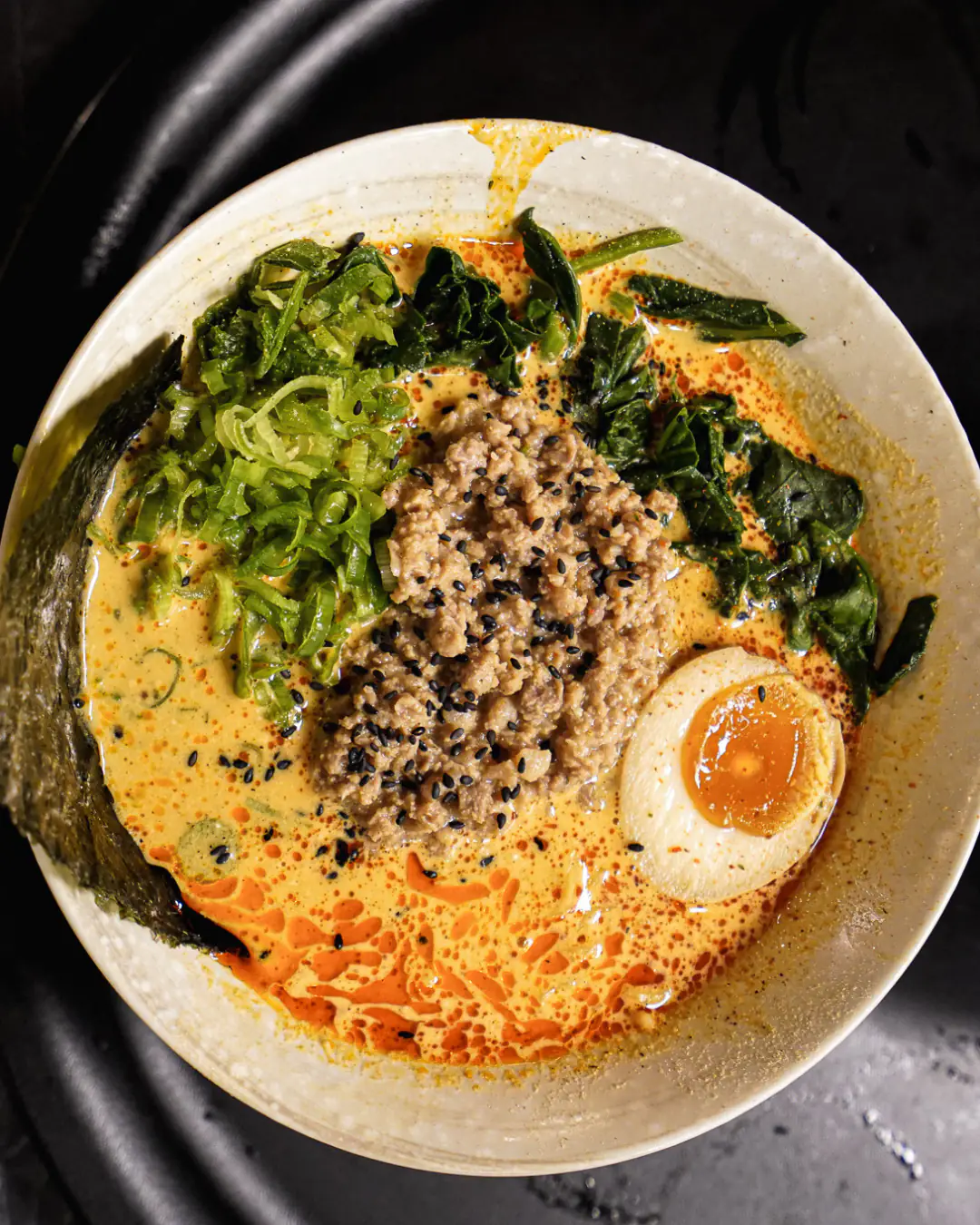

The customs
Done: slurping out loud, lifting the bowl with both hands for the last sips, eating fast, finishing the broth. Not done: planting chopsticks in the noodles, passing food chopstick to chopstick, cutting the noodles, blowing loudly across the bowl, or letting it go cold beside your phone.
Two nuances: finishing the broth is a compliment, never an obligation — the broths are rich and nobody will judge you. And slurping can be learned gradually. Ramen etiquette really comes down to one idea: respect the broth by eating it hot, right away, as it was served.
The trap
Almost every misstep comes from treating ramen as a European soup, as a pasta dish, or as something to share. None of the three works, and each costs the bowl something. They are corrected in a single sitting.
A fourth is quieter: ordering the richest broth because it has the best reputation. A very fatty tonkotsu or a fiery tantanmen is wonderful if you love it, exhausting if you endure it. For a first bowl, a clear shoyu or a round miso says more about the house.
One sweep of the chopsticks and the plating is gone: no contrasts, just uniform soup.
Swollen noodles, thinned broth, burnt mouth. Noise cools and aerates; speed keeps the bite.
A ramen is composed for one person and it does not wait. Share the starters, not the bowl.
The variants
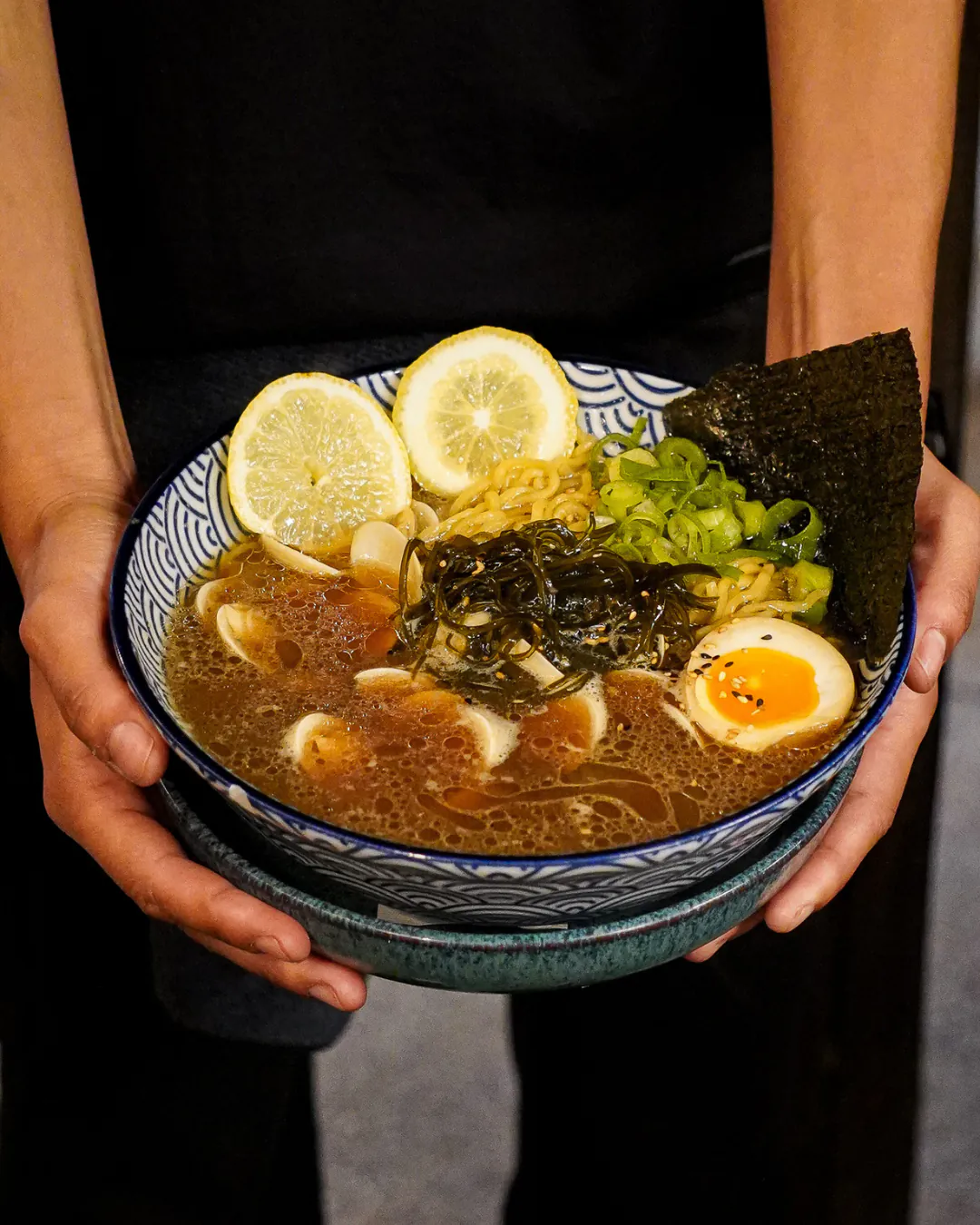
The basics never change, but each broth has its accent. A clear shoyu wants the spoon and few condiments. A miso asks for more alternation with the vegetables. A spicy bowl is managed in small sips. A clam broth is drunk almost like a consommé.
One principle ties it together: the more delicate the broth, the less you touch it; the richer it is, the more you look for fresh toppings to breathe. Keep that dial in mind and you will eat any ramen well, including one you have never tried.
Clear, saline, precise. Plenty of spoon, few condiments: it stands on its own.
Round and dense. Alternate often with spring onion and shoots to keep the palate awake.
Small sips, frequent returns to the noodles. The heat builds — do not double it.
Delicate broths, to be treated like a consommé: nothing to add, everything to listen to.
At our place
At Iwao, 27 rue Sainte in Marseille, the kitchen is open: you watch the house broths finish simmering and you watch your bowl leave the pass the second it is plated. That is why it reaches you without waiting for the rest of the order, and why we invite you to start straight away.
If it is your first ramen, say so. The team will point you to a suitable broth, show you the chopsticks and the renge, and tell you what to dip and when. Nobody expects a performance — only that the bowl is eaten hot.
FAQ
Explore
Iwao's ramen from other angles, and the rest of the house.
This guide is part of the house notebook, where we write about ramen, sake, table etiquette and Japanese pop culture, one topic at a time. Find every article in our Japanese food blog, and read them between two bowls.

Stage clear — table booked
The best way to understand a ramen is still to eat one, piping hot, plated in front of you. Book your table at Iwao and put these gestures into practice.
Or by phone: +33 4 91 54 08 27
