Soybeans
Proteins that become umami.
Contents
Guide · Japanese ingredients
Shoyu (醤油) is simply the Japanese word for soy sauce. In a ramen bowl, though, it decides the seasoning, the colour and the character of the broth.
11 min read
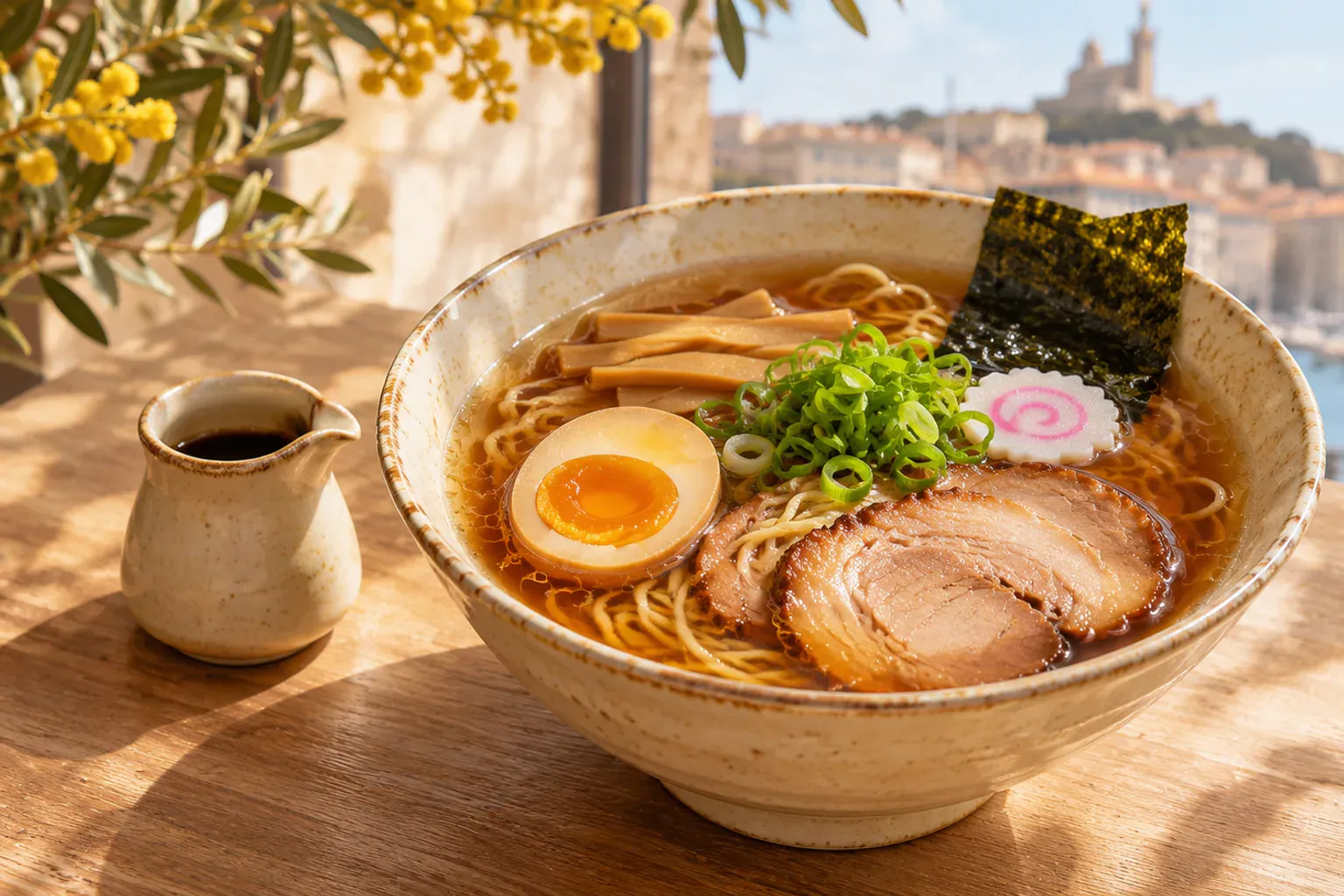
Shoyu (醤油) is the Japanese word for soy sauce, brewed from soybeans, wheat, salt and koji. Japan recognises five families, and koikuchi is by far the most common. In ramen, shoyu is not the broth: it goes into the tare, the concentrated seasoning at the bottom of the bowl. A shoyu ramen is a ramen with a soy-sauce tare — usually a clear, amber, saline, umami-rich broth. Tokyo, Kitakata and Onomichi each have their own style.
The word
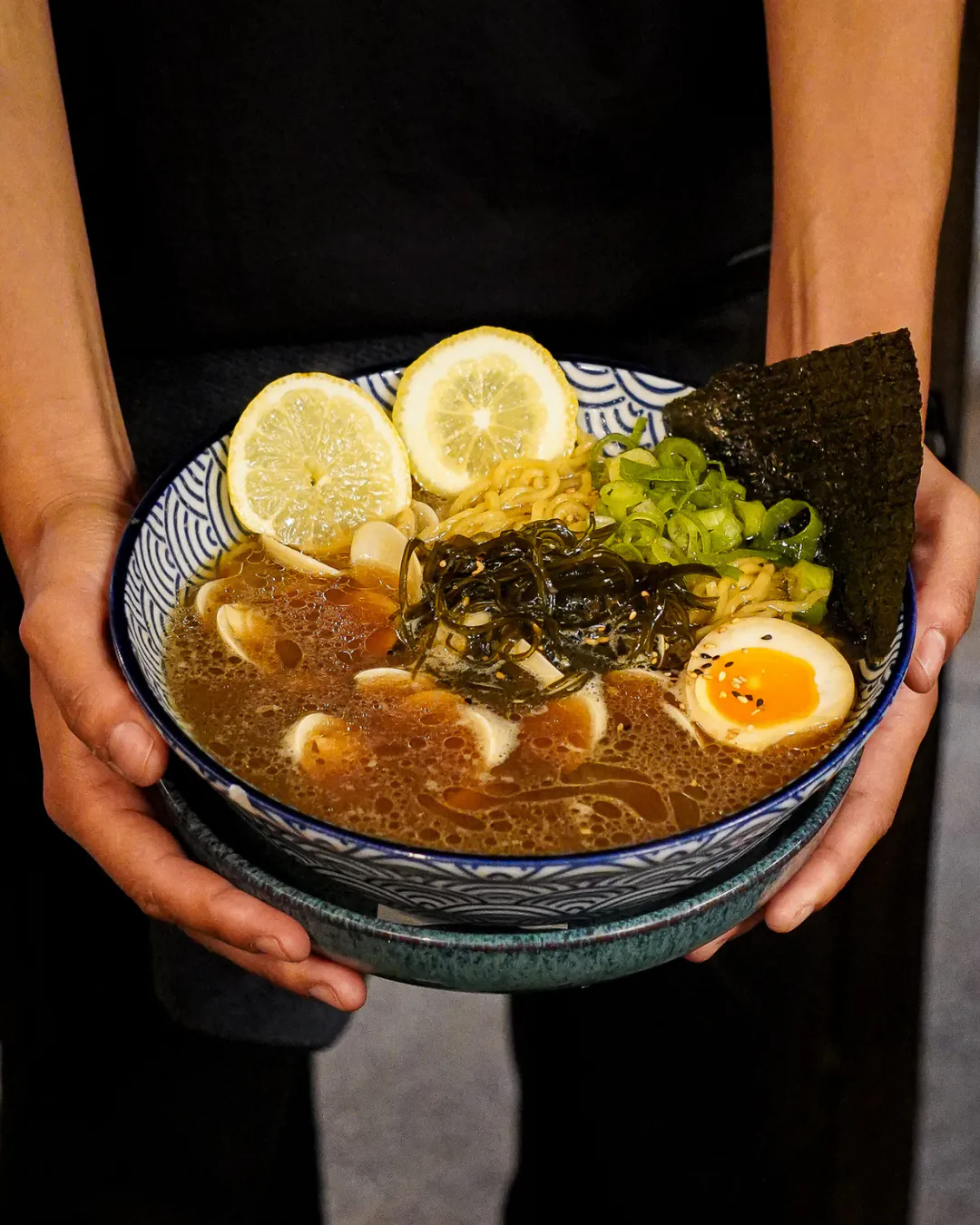
Before it is a ramen style, shoyu is an everyday Japanese word, as common as salt.
醤 refers to ancient fermented pastes; 油 here evokes a flowing liquid.
It is pronounced “shō-yu”, often politely “o-shōyu”.
Many etymologists trace the European word “soya” back to shōyu.
New to ramen? Read our guide what is ramen.
Essentially yes; shoyu points to the Japanese tradition, usually brewed with wheat.
Check the label for natural fermentation rather than chemical hydrolysis.
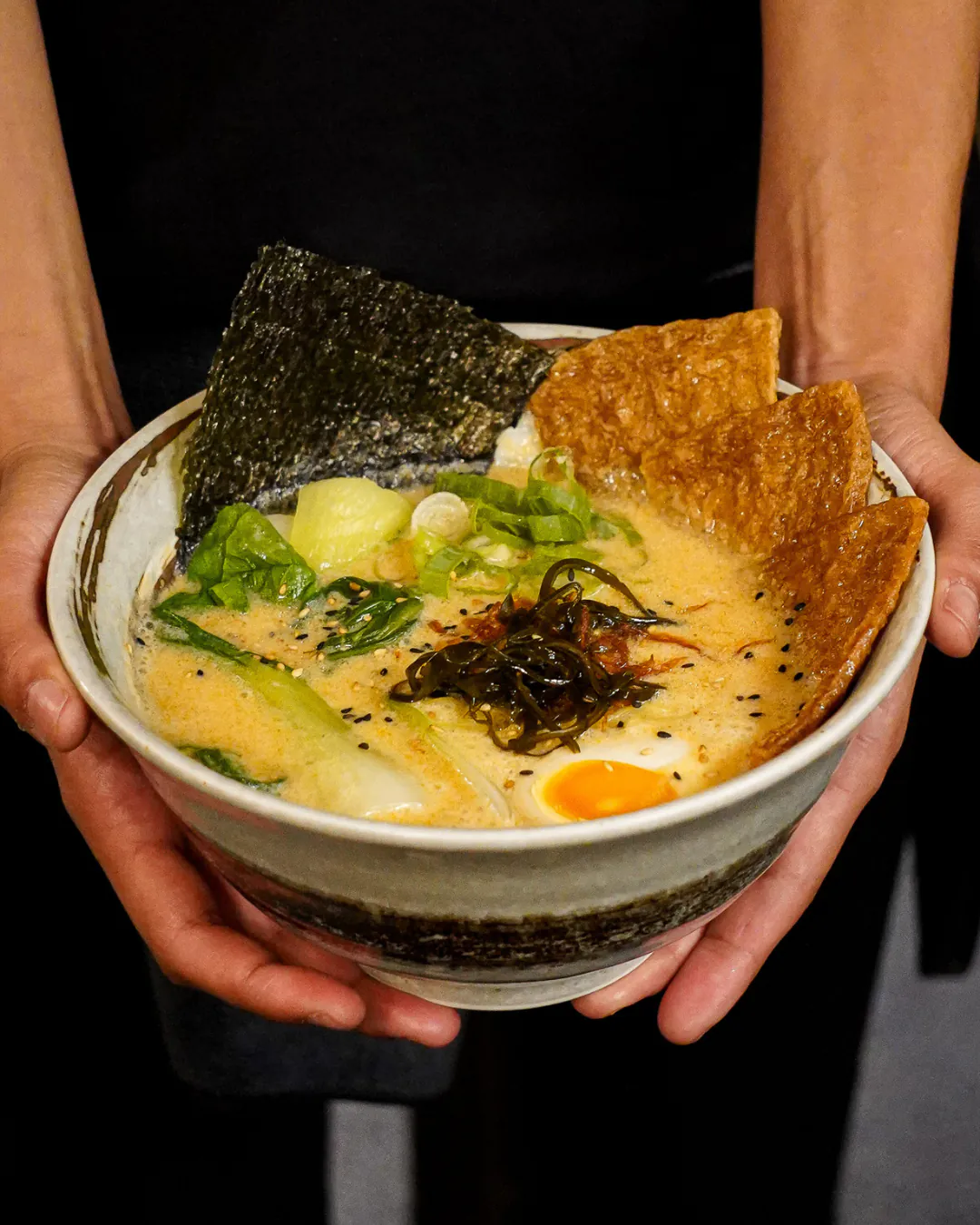
See it in the bowl with Iwao's shoyu ramen.
Brewing
Steamed soybeans and roasted wheat are seeded with koji (Aspergillus oryzae).
Mixed with brine, they become moromi, the fermenting mash.
Over months, enzymes turn proteins into amino acids, including glutamate — umami.
The Maillard reaction browns the sauce; it is pressed and briefly heated.
The result seasons a broth while adding depth, colour and aroma.
Proteins that become umami.
Sugars and roasted notes.
Protects the fermentation.
The ferment that drives it all.
Families
Japanese standards define five families of shoyu.
Koikuchi accounts for about 80% of Japanese production.
| Family | Colour | Taste | Common uses |
|---|---|---|---|
| Koikuchi 濃口 | Dark brown | Balanced, umami | All-purpose, ramen tare |
| Usukuchi 淡口 | Pale amber | Saltier, discreet | Light-coloured simmered dishes |
| Tamari たまり | Very dark, thick | Dense, little or no wheat | Dipping, glazes |
| Saishikomi 再仕込み | Very dark | Powerful, brewed twice | Sushi and sashimi |
| Shiro 白 | Very pale | Mild, mostly wheat | Clear soups |
These are trends; ramen tare is most often based on koikuchi.
In the bowl
The tare (タレ) is the concentrated seasoning poured into the empty bowl before the broth.
The broth is barely salted; the tare seasons each bowl.
Read about our homemade ramen broth.
Ramen is named after its tare: shoyu, shio (salt) or miso.
Shoyu is often seen as the classic form of modern ramen.
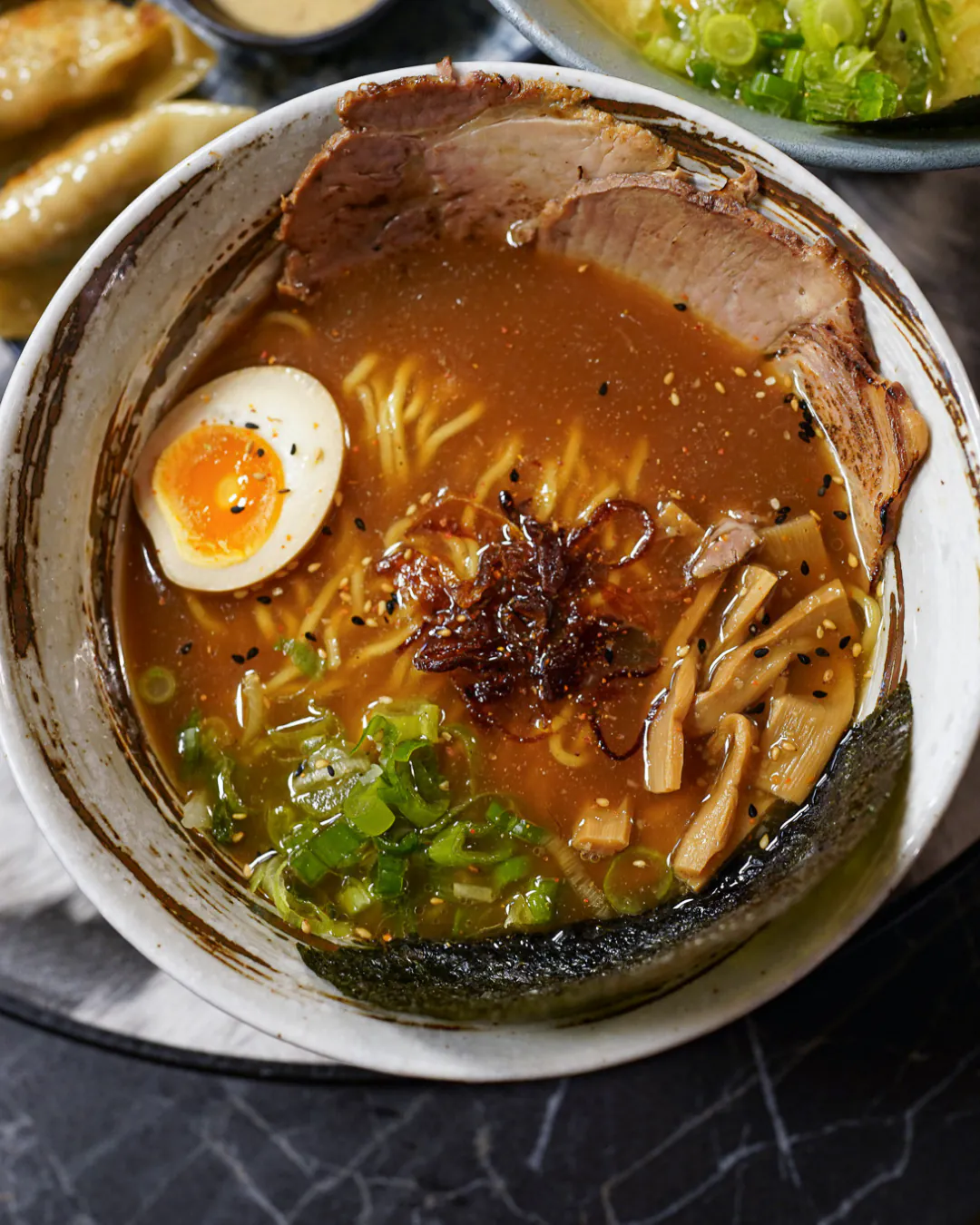
A clear, amber broth with a few beads of fat.
Saline at first, then round umami and toasted notes.
Salty, but not necessarily very salty.
Our guide to choosing your ramen helps you decide.
In Japan
One principle, many bowls: three examples among many.
東京
Clear, often chicken-based broth, thin wavy noodles, sober toppings.
喜多方
Fukushima: pork and niboshi broth, wide flat wavy noodles.
尾道
Hiroshima: poultry and seafood broth with pork back fat, flat noodles.
General landmarks: every shop interprets the style its own way.
At our place
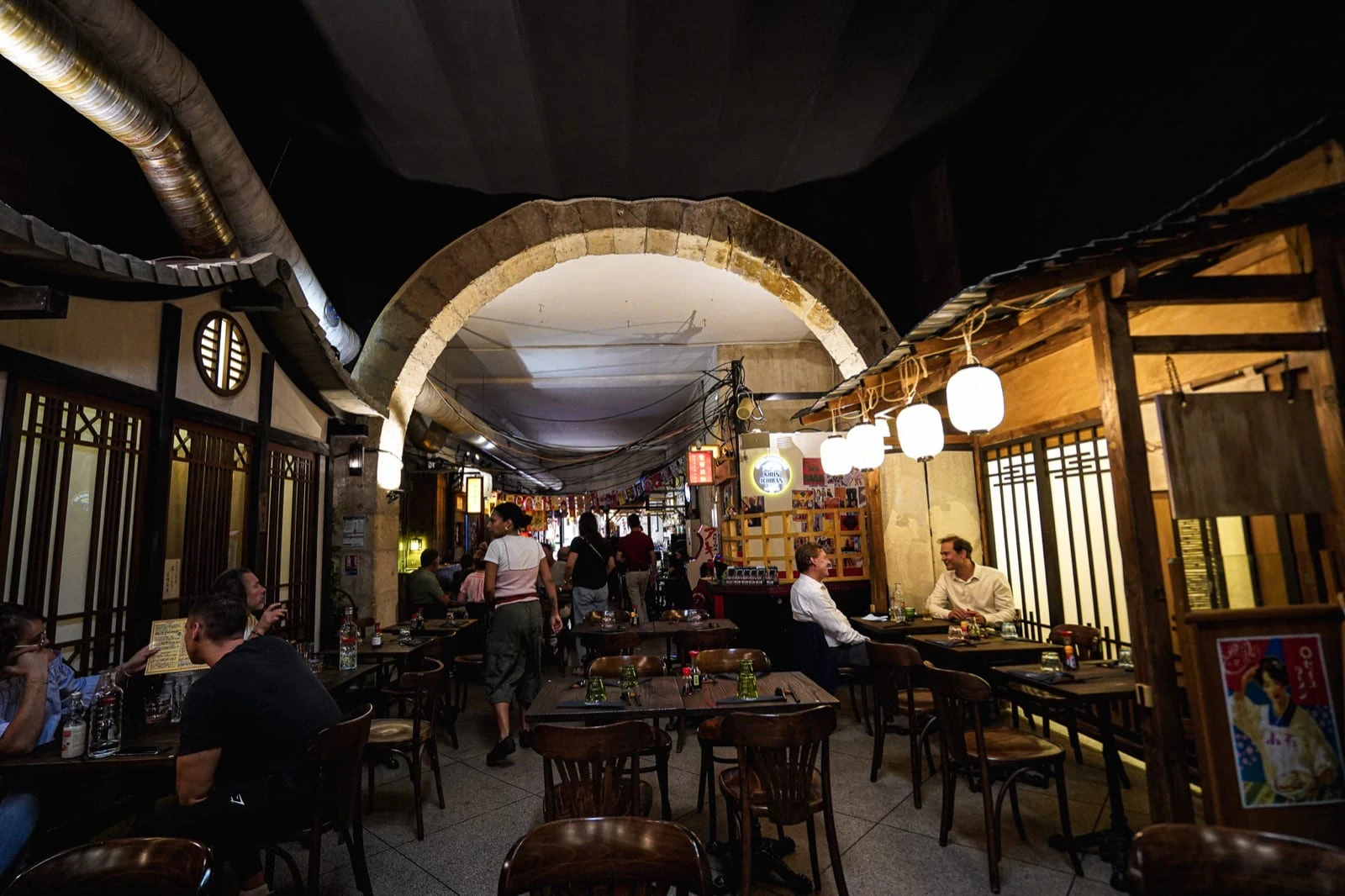
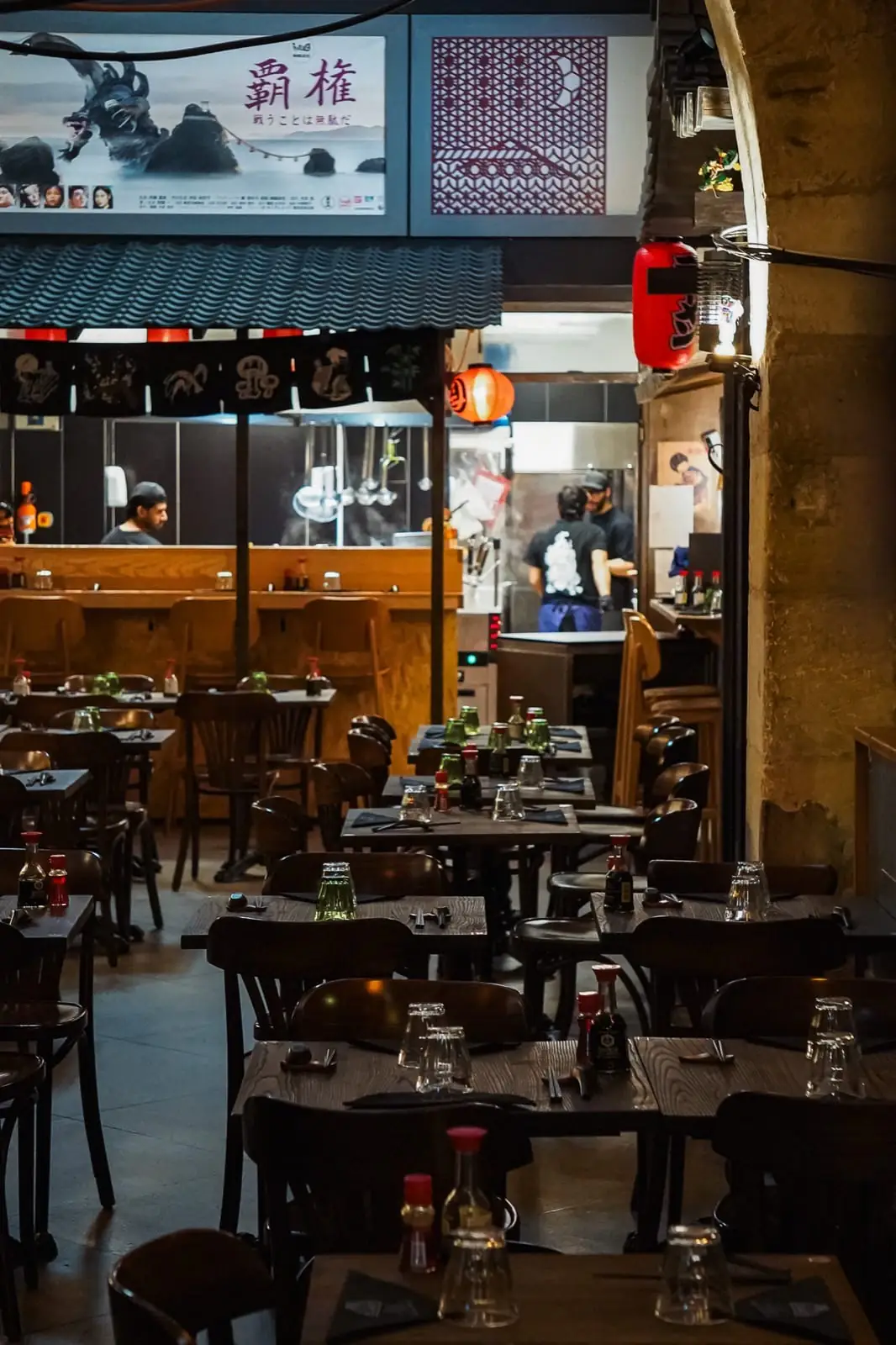
At 27 rue Sainte, shoyu is one of five signature ramen, with broths made in-house on site.
Taste it to see what the word changes in the bowl.
The 5 signature ramen
All details are on the menu.
FAQ
Explore
The shoyu bowl from every angle.
Now taste it: discover our shoyu ramen in Marseille, served on rue Sainte.
Stage clear — table booked
Shoyu is best understood with a spoon. Book your table at Iwao.
Or by phone: +33 4 91 54 08 27
