UFO Catcher
Sega, 1985: the claw machine becomes a standard and an art.

Contents
Culture · Japanese video games
Before the smartphone, there was the cabinet. Born of postwar electro-mechanical arcades and propelled by Space Invaders in 1978, the arcade cabinet made the game center a neighbourhood temple. Half a century of credits, high scores and neon — all the way to the recreated Tokyo alley on rue Sainte.
12 min read
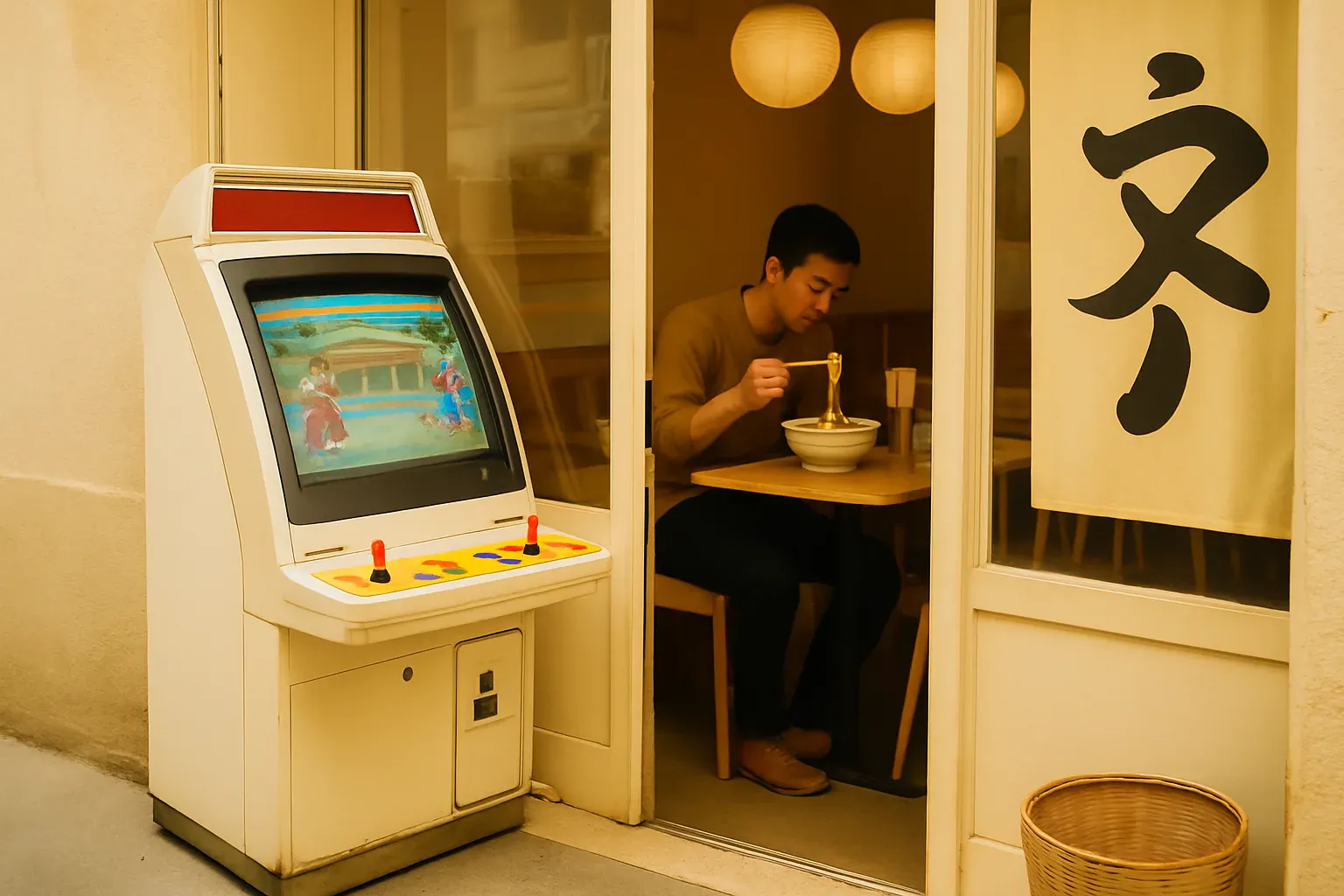
The arcade cabinet was born in postwar Japan, as makers like Sega, Taito and Namco turned mechanical-game know-how into screen machines. The real big bang was Space Invaders, released by Taito in 1978, which triggered a national craze and filled the country with 'invader houses'. Then came the golden age of Pac-Man and Donkey Kong, the rise of the game center as a social hub, and diversification — fighting games, purikura, UFO catchers, rhythm and simulation games. Challenged by consoles and mobile, cabinets declined after 2000 but survive in Japan better than anywhere, now a living heritage. At Iwao in Marseille, a cabinet carries the story on between two bowls of ramen.
The origins
To understand Japan's arcade cabinet you must go back before the screen. Through the 1950s and 60s, paid fun meant mechanical machines: pinball, light-gun games, rooftop rides for children. Sega ('Service Games'), Taito and the future Namco were already there, still making jukeboxes and rides.
The electro-mechanical turn came in the mid-1960s: Sega's Periscope (1966) was a hit even abroad. Then Atari's Pong arrived in 1973 and set off a wave of Japanese clones — the mechanical craft tipped over into electronics, and the stage was set.
1978
In 1978 Taito engineer Tomohiro Nishikado designed a game of aliens descending on the player. Space Invaders was not the first arcade game but the first social phenomenon — its rising tempo, its high-score table (a novelty) created an unheard-of addiction.
Legend says it caused a nationwide shortage of 100-yen coins. Likely exaggerated, but it captures the truth: cafés turned into 'invader houses', and the game all but invented the public place of video gaming — launching an entire industry.
The explosion
The early 1980s were fireworks. In 1980 Namco released Pac-Man (Toru Iwatani), the first true video-game mascot; in 1981 Nintendo answered with Donkey Kong, debuting a jumping character soon called Mario.
In a few years Japanese arcades invented most of the genres we still know — maze, platform, shoot'em up, racing. Each cabinet was a bespoke machine. Three titles sum up this founding golden age.
Taito starts the craze and invents the high-score table.
Namco and Toru Iwatani create the first video-game mascot.
Nintendo debuts Mario and lays the platform-game groundwork.
The place
As games multiplied, one place emerged: the game center (ゲームセンター) — a multi-floor neighbourhood institution. Crane machines and photo booths on the ground floor, fighting and rhythm games above, saturating music and blinking neon no home console could match.
It was also a coded social space: you came after school or work, met friends and challenged strangers, with top players' initials crowning the score tables. For a whole generation, from the late 1970s to the 2000s, the arcade was a second home — the very mood immersive ramen-ya try to revive today.
The makers
A handful of giants — Sega, Namco, Taito, Capcom, Konami, SNK — waged a permanent creative war. At Sega, Yu Suzuki reinvented 'sensation' (taikan) games on hydraulic cabinets: you leaned into a bike in Hang-On (1985), held a real wheel in Out Run (1986).
Then Capcom's Street Fighter II (1991) revived arcades through the one-on-one duel, making fighting games the genre of the decade; Sega replied in 1993 with Virtua Fighter, the first 3D fighter. Arcades kept a generation's lead over home consoles.
Yu Suzuki and his hydraulic cabinets: Hang-On, Out Run, After Burner.
Street Fighter II, 1991: the one-on-one duel revives the arcades.
Virtua Fighter (1993) brings 3D to arcades, far ahead of consoles.
Diversification
Japanese arcades are not only video games. A huge share of their economy rests on machines you don't really 'win'. In 1985 Sega standardised the UFO Catcher crane game — its tricky claw an art in itself — still lining every game-center entrance.
In 1995 came the purikura ('print club'), photo-sticker booths by Atlus and Sega that became a teenage-girl phenomenon. Add medal games — token machines you can't cash out — and you see why the game center speaks to everyone, well beyond hardcore players.
Sega, 1985: the claw machine becomes a standard and an art.
1995: the photo-sticker booth, star of teenage-girl culture.
Token machines, between coin pusher and skill game — a whole floor.
A whole economy of plush toys, figures and goodies under glass.

The gesture
In the late 1990s the arcade reinvented the body. Konami launched Beatmania (1997) then Dance Dance Revolution (1998): you played with your feet, on a mat, before an audience. The rhythm game (otoge) turned the cabinet into a stage; Namco's Taiko no Tatsujin (2001) added a real drum.
Cabinets also simulated reality: Taito's Densha de Go! let you drive a train with a real throttle, on the second. Dancing, drumming, driving — these physical experiences gave arcades what home could not: a dedicated machine, a space, an audience.
Konami, 1997: the turntable DJ launches the rhythm game.
1998: you play with your feet, on a mat, watched by others.
Namco, 2001: a Japanese drum struck to the beat of songs.
Taito: the train-driving simulator, real throttle in hand.
The ebb
The millennium was harsh. Home consoles caught up, then online play and the smartphone brought home what you once sought at the game center. Arcades closed by the hundred; in 2020 a historic Sega building in Akihabara closed for good.
Yet the Japanese arcade did not die. It reinvented itself around what mobile can't copy: crane machines, card-linked games, rhythm cabinets, photo booths. Chains like Round1, Taito and GiGO (ex-Sega) keep lively halls across the country — rarer, more specialised, still standing.
From the 2000s the living room matches then beats the cabinet.
Gaming fits in a pocket: the game center loses its monopoly.
Claws, cards, rhythm, purikura: betting on what you can’t play at home.
The memory
Far from vanishing, the arcade cabinet became an object of cult and memory. Retro halls like Tokyo's Mikado keep 1980s machines restored and playable; collectors prize original cabinets, which reappear in museums, films and manga.
That nostalgia crossed borders: bars and restaurants everywhere replay the game-center look — neon, posters, rows of cabinets — to offer a fragment of Tokyo. The cabinet is now a cultural symbol, like manga or ramen — three worlds that often meet under one roof.
At our place
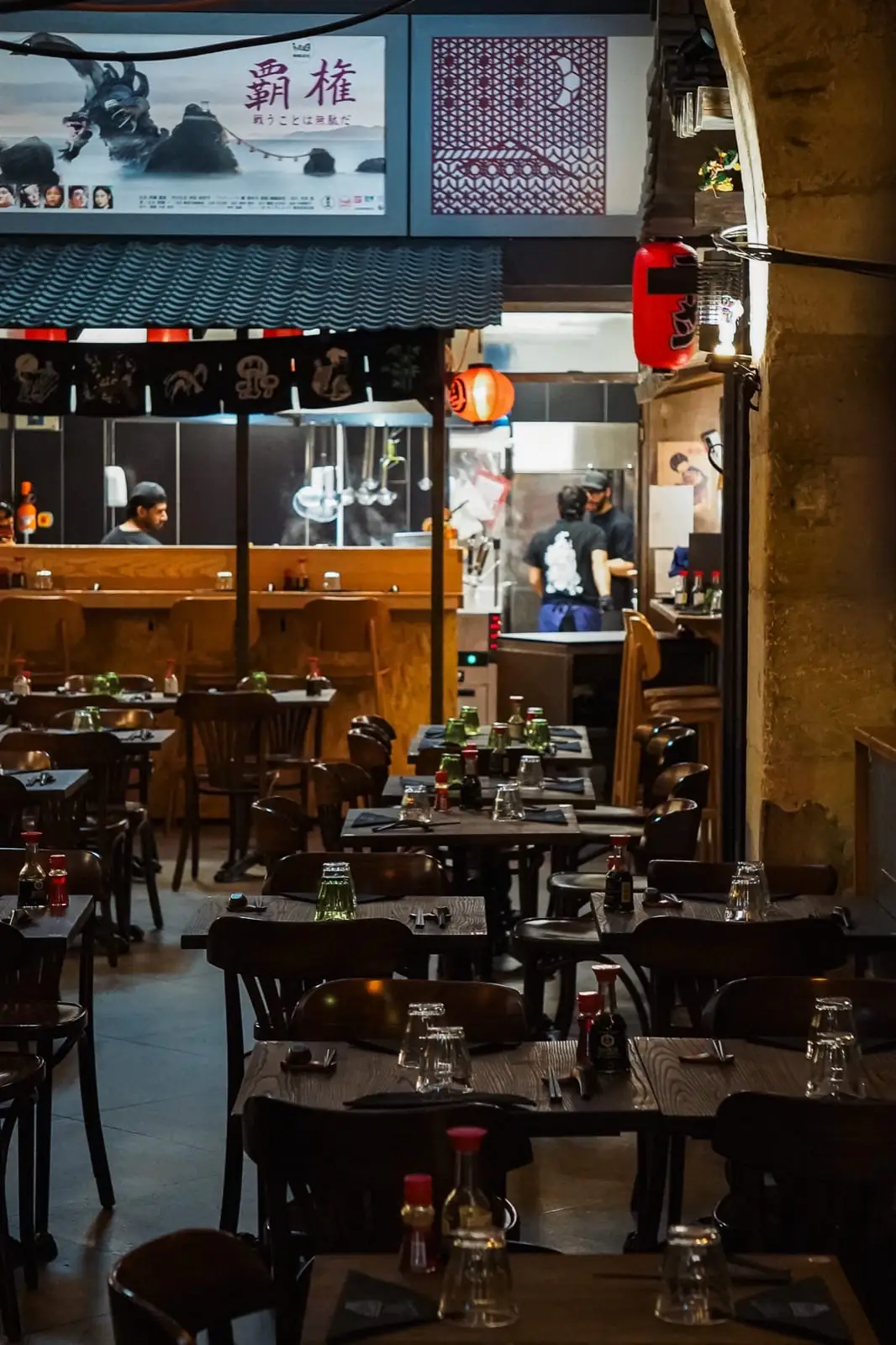
At Iwao, 27 rue Sainte in Marseille, this long history fits in one corner. An arcade cabinet stands in a recreated Tokyo alley — lanterns, weathered signs, shelves of manga. You slip a credit between two gyoza and play while your ramen arrives.
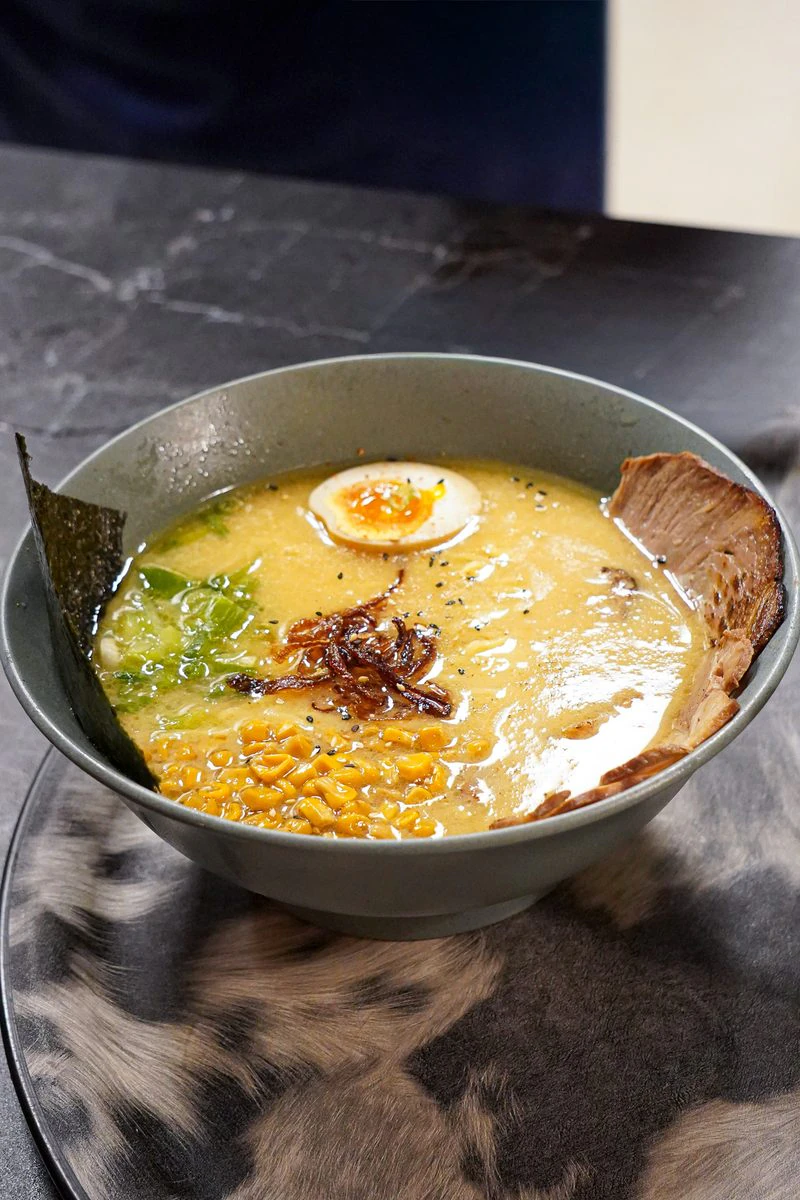
The idea isn't to museum-ify the cabinet but to give it back its first purpose: to gather people around a screen, in noise and light. Eating a house ramen under the neon, then playing a round, replays in Marseille the gesture that, since 1978, has been the salt of Japanese arcades.
FAQ
Explore
The Iwao world from other angles, and the rest of the house.
This article is part of the house notebook, where we write about ramen, sake and Japanese pop culture, one topic at a time. Find every article in our Japanese food blog, to read between two rounds.
And to stay in Japanese pop culture, discover which manga to read at the restaurant.

Stage clear — table booked
The best way to understand the arcade cabinet is still to drop a credit after a bowl of ramen. Book your table at Iwao and come push open the alley door.
Or by phone: +33 4 91 54 08 27
