Clear
Translucent, you see the bottom of the bowl. Limpidity is the goal, not a flaw.

Contents
Guide · Marine broth
Asari means clams. In Japan they yield one of the most delicate broths in the ramen repertoire: clear, briny, almost a consommé. Here is what to know about this marine bowl — its origins, how it is made and how to eat it.
10 min read
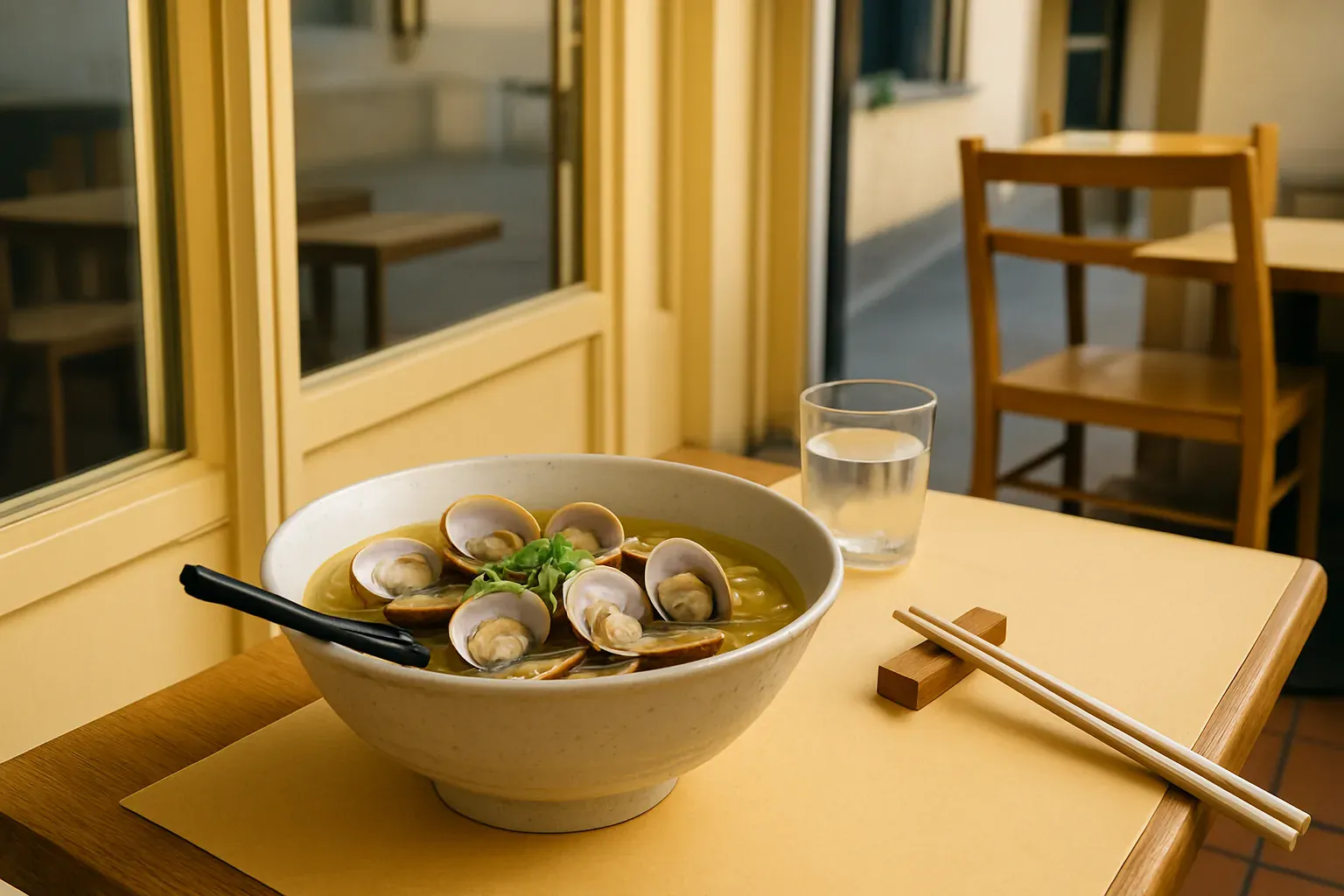
Asari clam ramen is a marine bowl whose broth is drawn from Japanese clams: clear, translucent, briny, drunk almost like a consommé. Its umami comes from the succinic acid of the shellfish — long on the palate, without the fat of a tonkotsu. It is made by purging the clams, opening them gently in water and sake, then clarifying and seasoning with a light tare. Eat it soberly: broth first, thin noodles slurped, few toppings, and very little seasoning. It is a seasonal bowl, served when the clams are at their best.
The shellfish
Before it is a ramen, asari is a clam — the Japanese short-neck clam, gathered on the tidal flats in spring. It is woven into everyday Japanese cooking: miso soup, steamed rice, sautéed in sake. Ramen simply captured what home kitchens already knew — that this shellfish yields a broth of rare purity.
What sets asari apart is its umami. Where pork bone gives gelatine and fat, the clam gives marine amino acids — above all succinic acid, which lends length without weight. The result stays light, frank and naturally briny: finesse over power, the whole identity of the bowl.
The broth
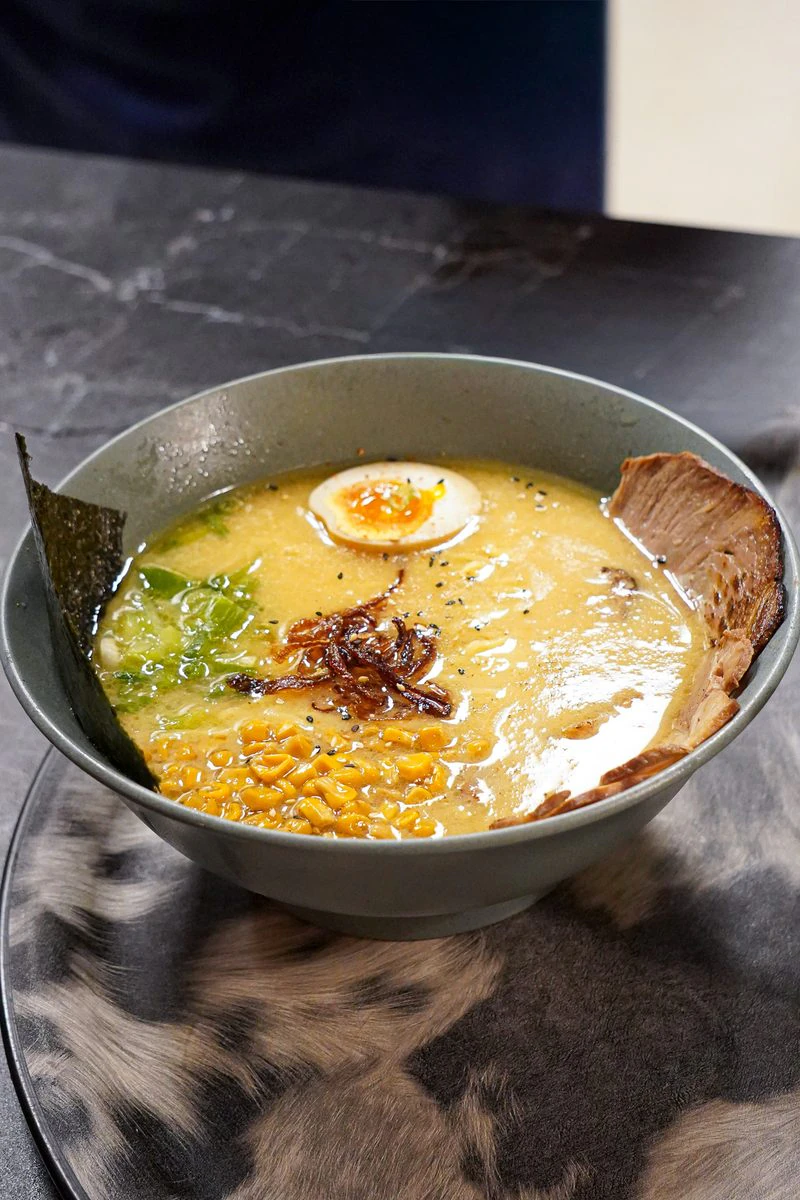
Set a tonkotsu beside an asari: one is milky and opaque, the other translucent and pale gold. That clarity is a choice — the broth is worked like a consommé, all about cleanliness and a clean iodine aroma that rises to the nose. It is a broth you smell before you drink.
On the palate: a saline attack, then a discreet, almost sweet roundness from the clam. The length is there but airy — nothing clings, nothing saturates. It is the bowl to recommend to anyone who finds classic ramen too filling.
Translucent, you see the bottom of the bowl. Limpidity is the goal, not a flaw.
A frank marine aroma — the clam — rising to the nose before the first sip.
Saline without weight. You finish it effortlessly, like a festive consommé.
The origins
Clam ramen belongs to the family of shio (salt) and assari — the Japanese word for light, clean, delicate. Broths first grew on pork and poultry; the marine versions, from dried fish, bonito, kombu or shellfish, asserted a more Japanese school, closer to dashi than to the Chinese bone broth of the origins.
Asari ramen became a signature of houses that love fish and shellfish, often on the coasts. It also appears as a limited edition, following the catch: a good clam broth depends on freshness, which makes it seasonal rather than a menu constant. That rarity is part of its charm.
The making
A clam broth takes few steps, but each counts. It begins with purging: live clams in lightly salted water, in the dark, for a few hours, so they spit out their sand. A gritty broth is a botched purge — the most common and least forgivable mistake.
Then extraction, over low heat: open the clams in water and sake, sometimes with kombu, and stop cooking the instant the shells open. Overcooked, the clam turns rubbery and the broth bitter. Strain, clarify, adjust the salt with a light tare, and keep it piping hot. The clams return as a topping.
Live clams in salted water, in the dark, a few hours. Non-negotiable.
Low heat, water and sake: cut the heat the moment the shells open.
Strain, adjust the salt with a light tare, keep hot. Clams return as topping.
The family
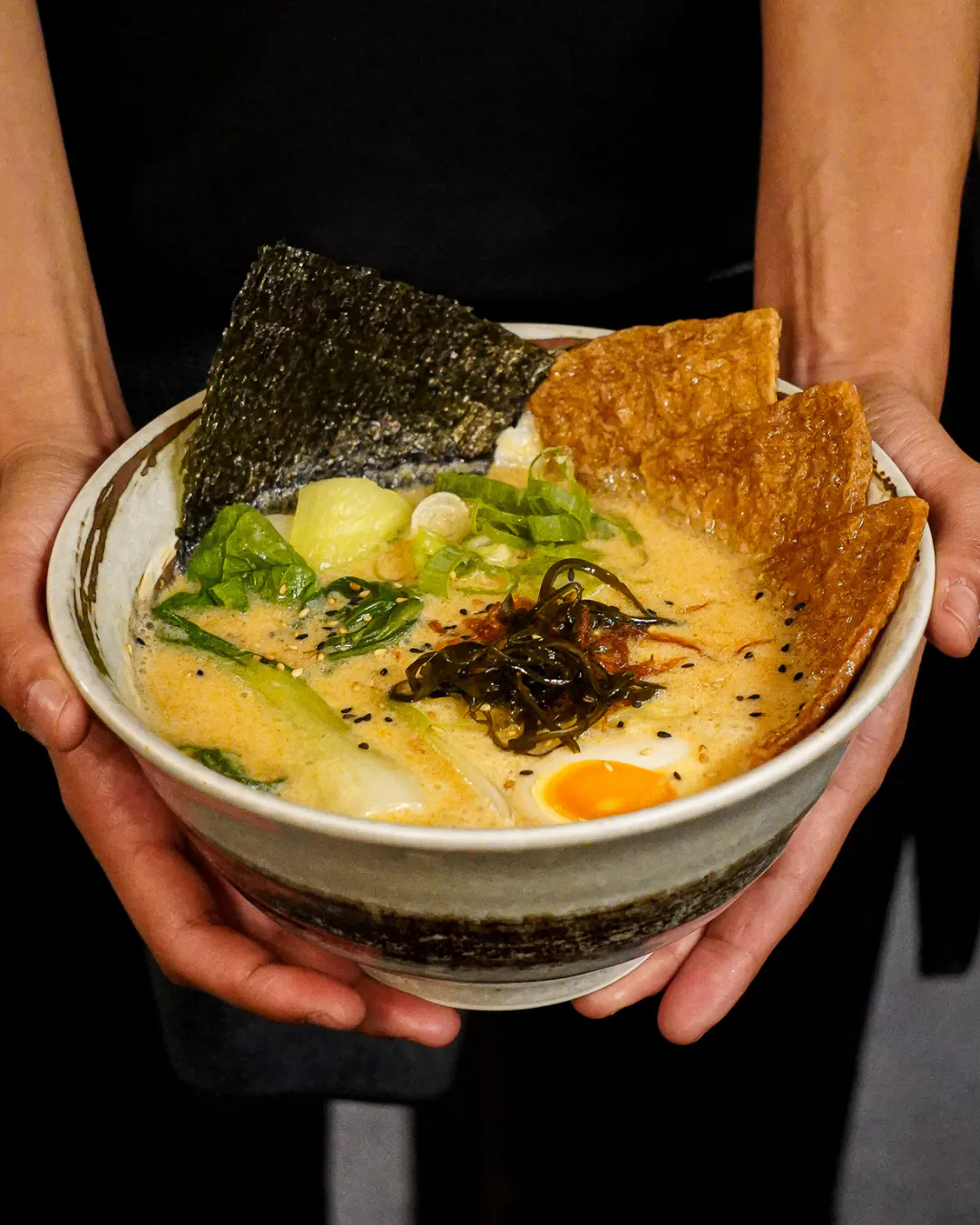
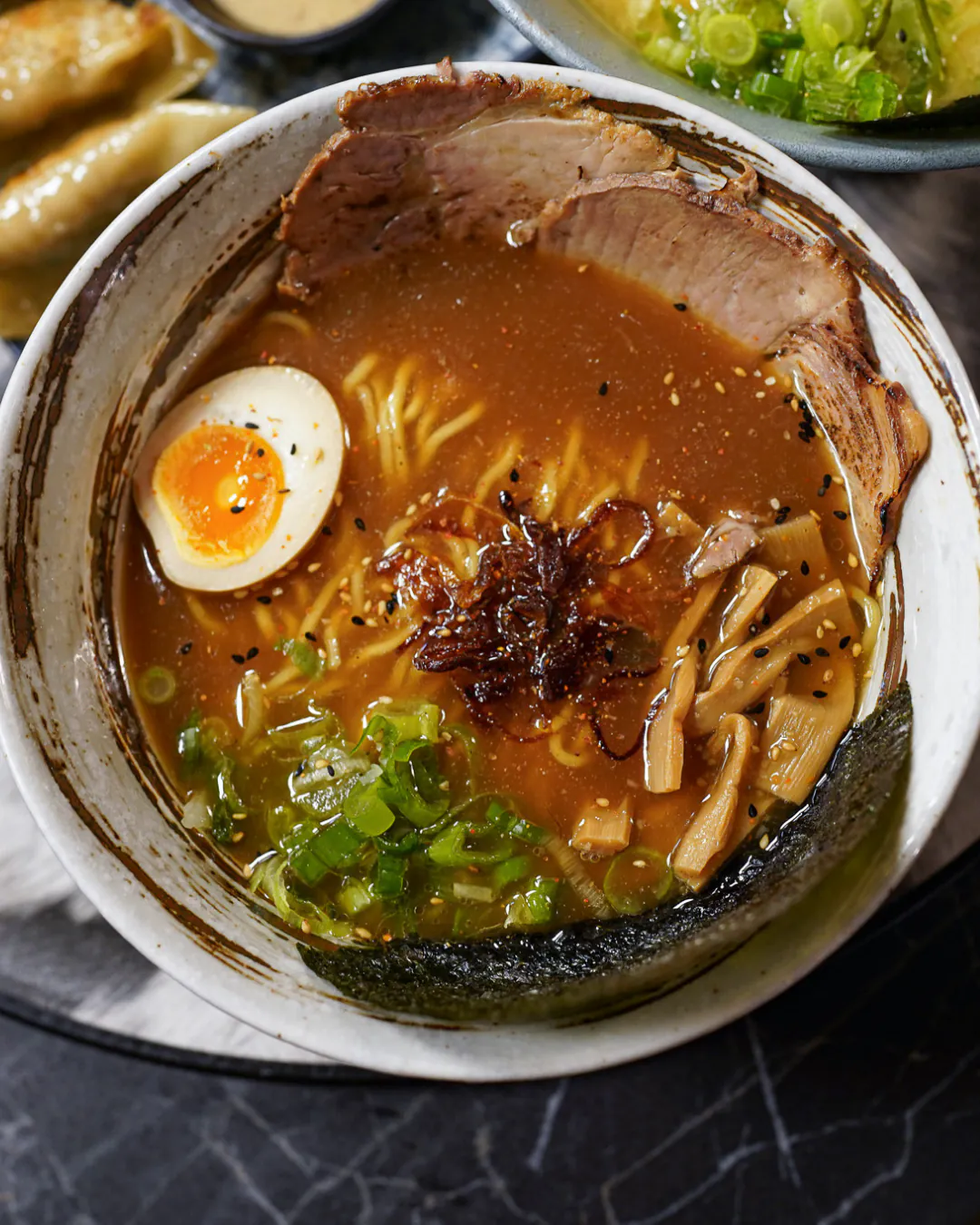
To place asari, compare it. Tonkotsu plays power and fat; shoyu, frank salt and amber colour; miso, dense fermented roundness. Asari holds a place apart: the bowl of restraint, the one that does most with least.
That changes how you eat it. Tonkotsu takes condiments; asari does not — the slightest excess covers the clam. Noodles are thin to leave room for the broth, toppings stay sober. For newcomers to marine broths, clams are the most delicate way in.
Marine, clear, delicate. Finesse: few toppings, plenty of spoon.
Pork bone, milky and fatty. Power: the exact opposite of asari.
Soy sauce, amber and saline. Clear too, but bolder than the clam.
Round, dense, fermented. A filling bowl, far from marine lightness.
In the bowl
In an asari ramen, everything is set so as not to upstage the broth. The noodles are thin and straight (hosomen): they carry the liquid without soaking it up too fast. A thick alkaline noodle, cut for miso, would crush the marine delicacy.
Toppings follow the same restraint: the clams themselves, a gently marinated soft egg, wakame, chopped spring onion, sometimes a slice of lemon (or sudachi) to lift the iodine, and a veil of sansho pepper. No mountain of fatty chashu — each element underlines the sea, never covers it.
Straight hosomen carry the broth without thickening it. Slurp them while taut.
In shell or shucked, back as a topping. Proof in the bowl of what made the broth.
Tender seaweed, a little fresh green. Marine breathing, no weight.
A slice of citrus, a veil of Japanese pepper: they lift the iodine without masking it.
At the table
A delicate broth is eaten like a consommé: listen before adding. Start with two or three spoonfuls from the edge of the bowl, before any mixing or condiment. The clam speaks; usually it needs nothing. Do not season a bowl you have not tasted — on an asari, that ruins it.
Then the noodles, slurped to aerate and cool them, then alternate: a sip of broth, some noodles, a clam, a little wakame. Keep the tempo — seven to ten minutes, as thin noodles swell fast. Any addition stays marginal: a drop of lemon, a pinch of sansho, never heavy chilli or vinegar.
Two or three spoonfuls before mixing. Let the clam tell you if anything is missing.
Firmly, to aerate and cool. Then alternate broth, noodles, clams.
Lemon, sansho, at the margin. No heavy chilli or vinegar: they cover the sea.
The trap
Most asari missteps come from treating it like a rich bowl: drowning it in condiments, letting it cool, ordering it last when it should leave the pass first. Each habit, harmless on a tonkotsu, costs a broth that plays on finesse.
The other trap is freshness. A clam broth does not forgive a mediocre shellfish: it is earned at the market, more than in the kitchen. That is why good houses serve it in limited quantity — better to enjoy it when offered than to demand it always be there.
Chilli, vinegar, garlic cover the clam. Taste first, correct at the margin, or not at all.
Iodine and aroma fade as it cools. An asari is drunk piping hot, right away.
A mediocre clam gives a gritty or bitter broth. Quality is decided at purchase.
The catch
Asari ramen is, more than any other, a catch-of-the-day bowl. The clam is gathered mainly in spring, when it is plump; that is when its broth has the most body and marine sweetness. Out of season, a good cook would rather not serve it than draw it from a poor shellfish.
This dependence on freshness is why asari appears and disappears from menus, sometimes for a single evening. Far from a constraint, it is a guarantee: when clam ramen is offered, the clams were good that day. A bowl that follows the sea, not the calendar.
At our place
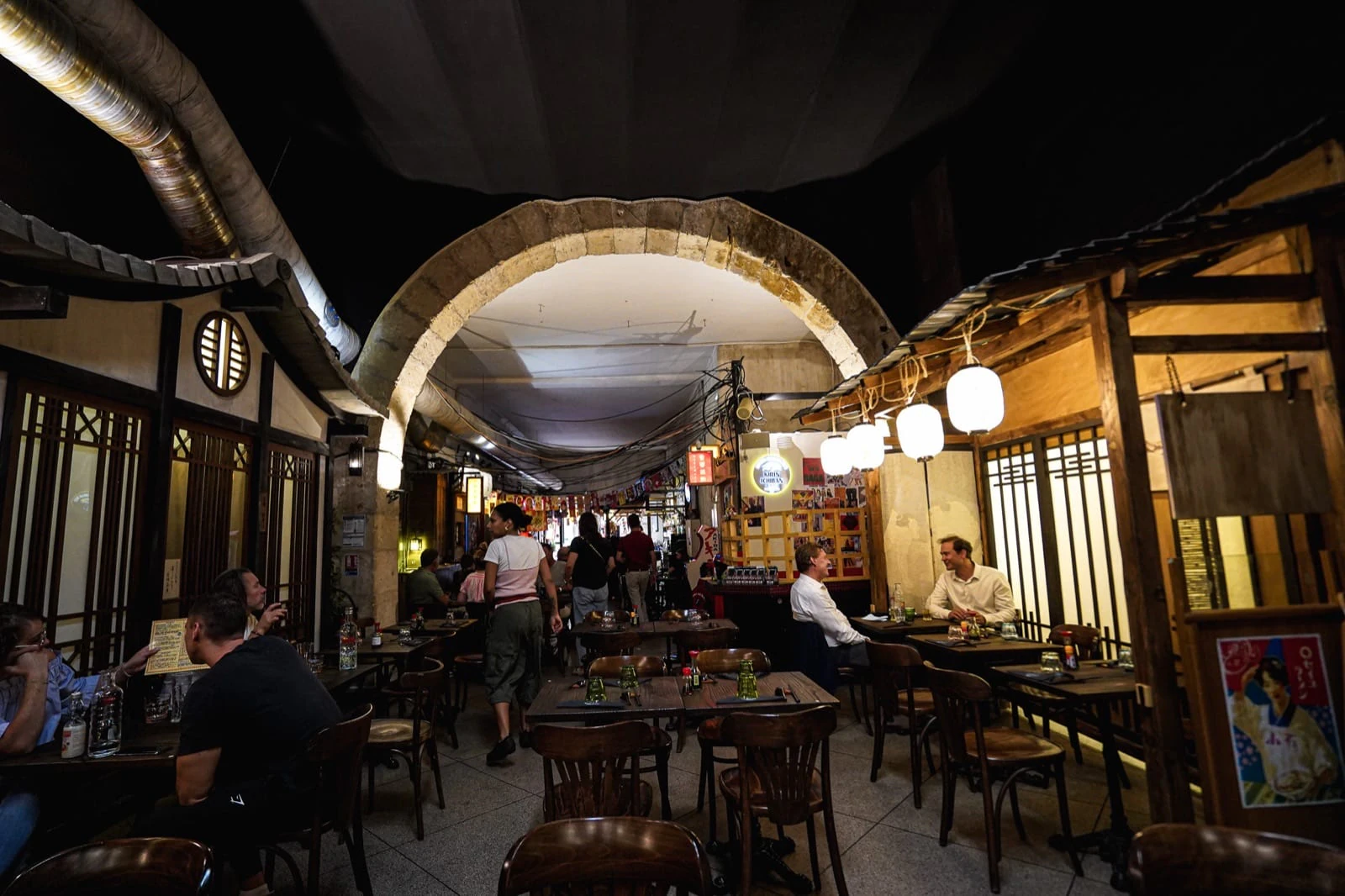
At Iwao, 27 rue Sainte in Marseille, steps from the Old Port, asari ramen is eaten as it should be: at the counter, piping hot, plated in front of you. The open kitchen shows the marine broth finishing, and the bowl leaves the pass the moment it is ready. Under the red lanterns, you slurp the thin noodles and take another sip of broth.
Because marine broths are made in limited quantity, following the catch, check the day’s menu and book. Always mention a shellfish allergy when ordering: a clam broth cannot be adjusted once drawn. And if it is your first marine ramen, say so — the team will guide you.
FAQ
Explore
Iwao's ramen from other angles, and the rest of the house.
This article is part of the house notebook, where we write about ramen, sake, table etiquette and Japanese pop culture, one topic at a time. Find every article in our Japanese food blog, and read them between two bowls.

Stage clear — table booked
The best way to understand clam ramen is still to drink one, piping hot, plated in front of you. Book your table at Iwao and come taste the marine broth.
Or by phone: +33 4 91 54 08 27
